Retaining Walls Reconsidered: Architectural Structure in Contemporary Aotearoa Landscapes
Across Aotearoa, retaining walls are shifting from background infrastructure to defining architectural elements. As residential sites become steeper, urban sections tighter, and outdoor living more integrated with built form, the management of level changes is becoming central to design thinking rather than an afterthought.
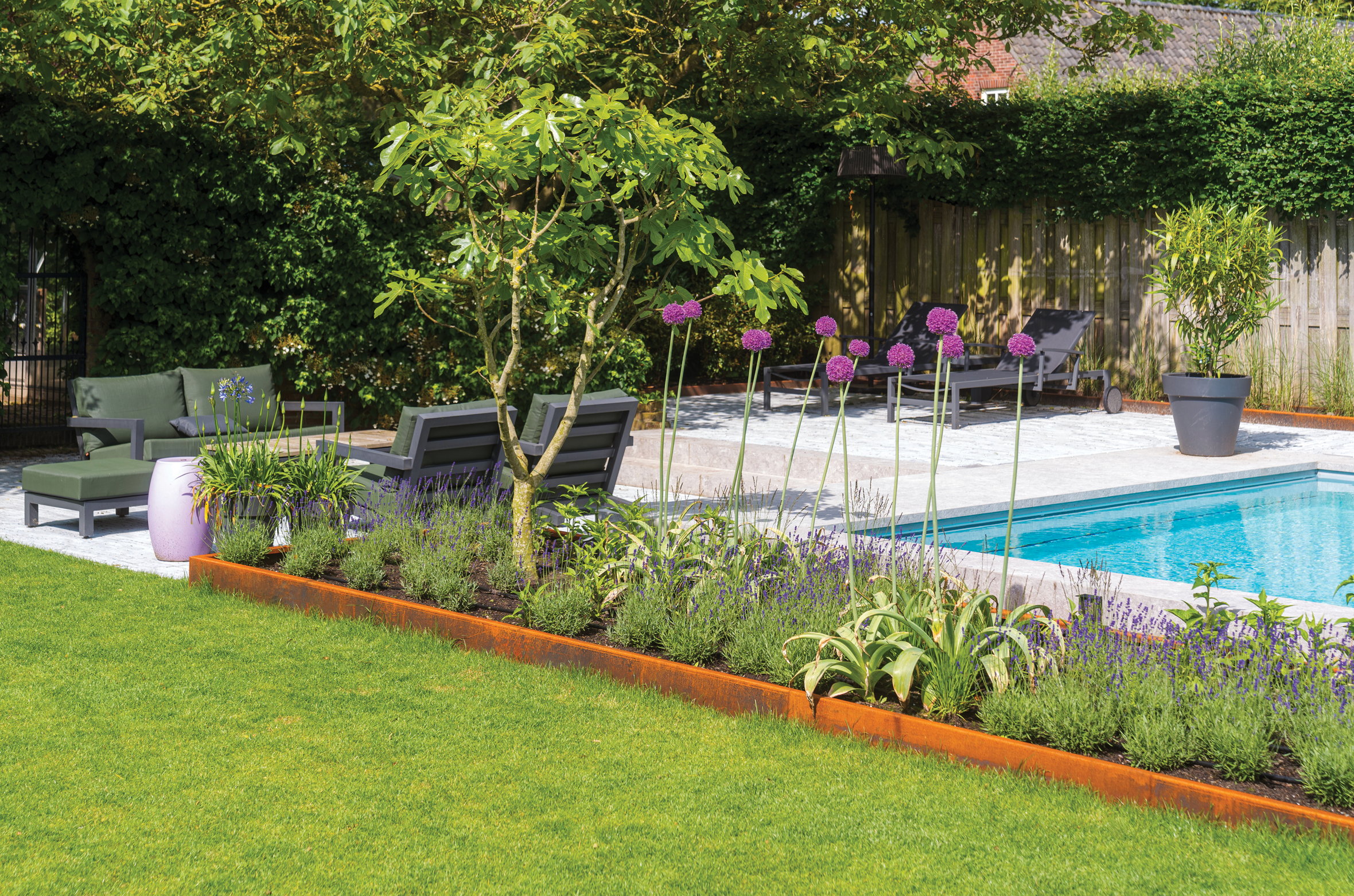
In both high-end residential and commercial projects, retaining walls are now expected to do more than hold back soil. They define circulation, create informal seating, frame planting, and establish the horizontal datum that ties landscape to architecture. This reflects a broader industry movement: landscapes are being designed with the same rigour and material clarity as buildings.
From Timber Sleepers to Architectural Materials
Timber sleepers and concrete blocks once dominated the New Zealand market. While functional, these materials often lack the longevity, precision, and refinement demanded in contemporary work. Increasingly, designers are specifying architectural steel systems, particularly in Corten and coated finishes, where materiality forms part of the overall narrative.
Corten steel continues to resonate in the New Zealand context. Its weathering properties and warm patina align with natural planting palettes and the restrained material language of modern architecture. Manufactured to European standards such as S355J0WP+AR (EN10025-5), this grade of steel forms a stable protective rust layer over time, combining visual warmth with structural performance. The patina typically develops over four to five months, allowing designers to anticipate how a project will mature or to plan for pre-weathered installation in public spaces.
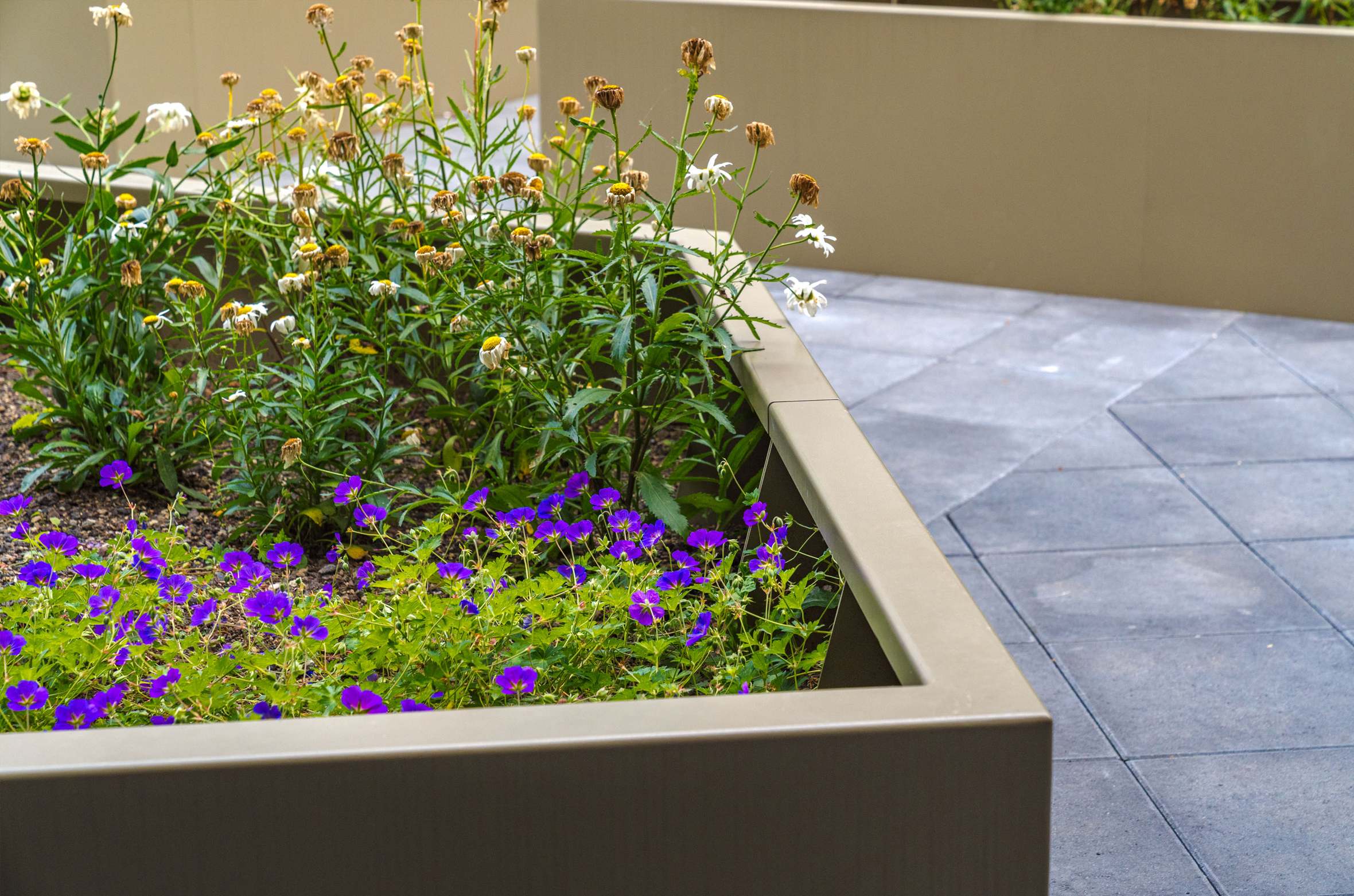
Colour-controlled finishes are also gaining traction. Sendzimir galvanised steel, finished with a primer and Qualicoat class 2 powder-coated top layer, provides access to a full RAL palette while maintaining corrosion resistance through its zinc layer. This is particularly relevant in coastal or high-exposure environments, and in projects where landscape elements must align precisely with architectural cladding or joinery colours.
System Thinking and Prefabrication
Another clear shift is toward prefabricated, modular retaining systems. As construction programmes compress and coordination between trades becomes more complex, designers are favouring systems that arrive engineered, consistent, and ready to assemble.
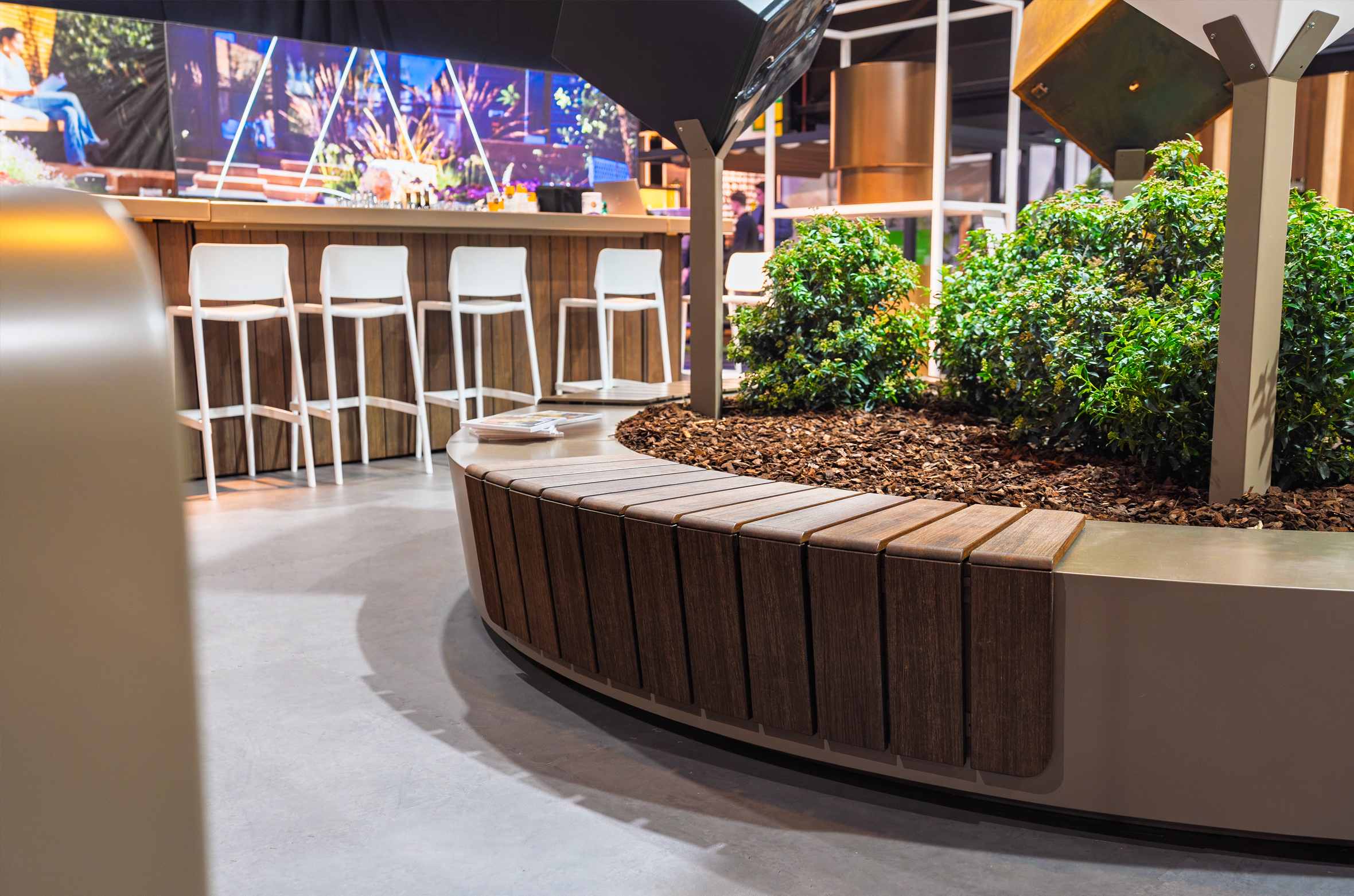
Integrated coupling systems allow clean, blind connections and consistent detailing across straight runs, corners, and curves. For landscape architects, this modularity supports design agility. Curves can be resolved without improvised fabrication on site, and junctions maintain architectural clarity.
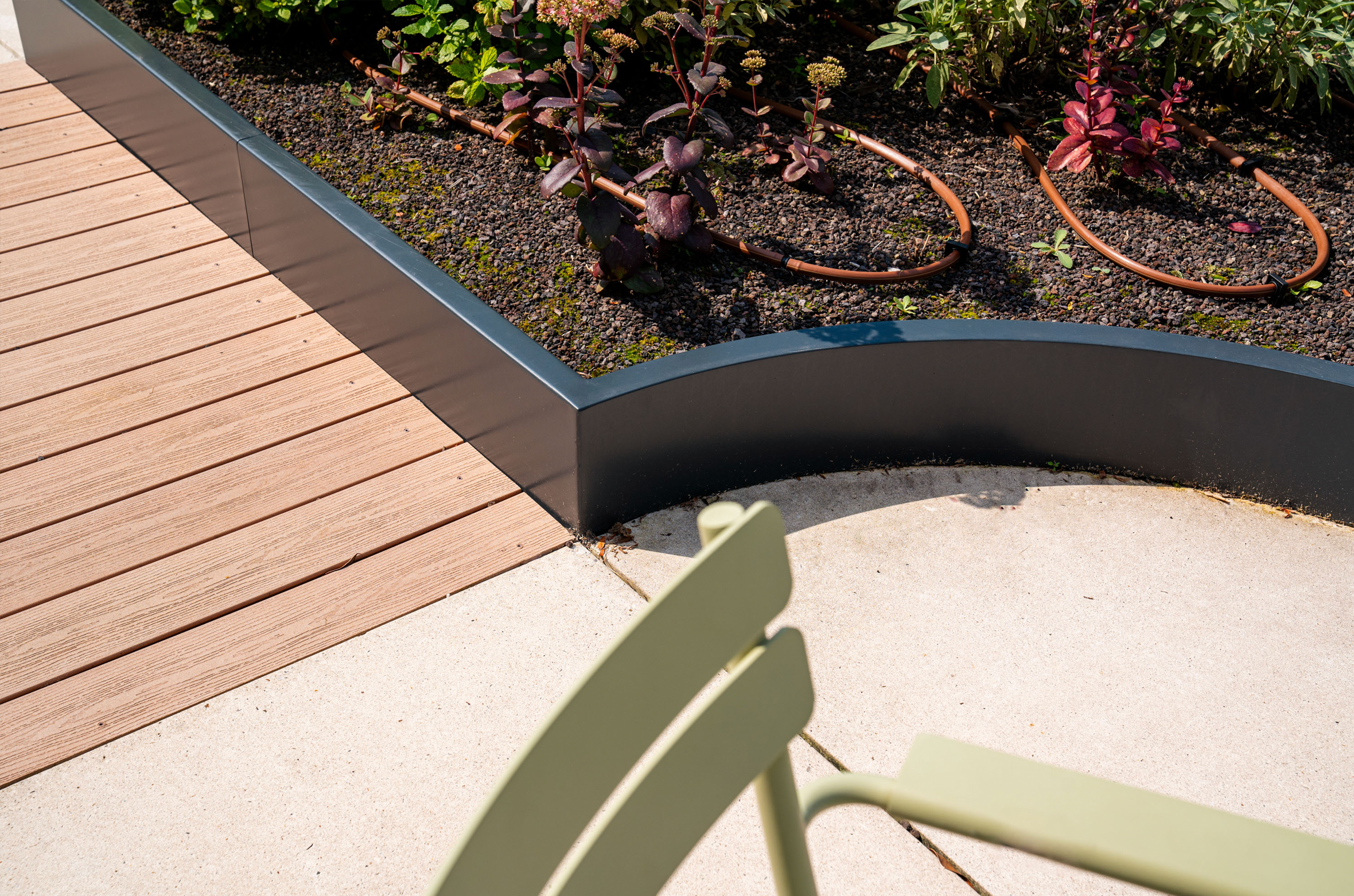
Standardised heights such as 400 mm and 600 mm reflect the growing use of retaining walls as spatial devices rather than purely structural interventions. These dimensions lend themselves to terrace definition, informal seating edges, and raised planting, reinforcing the wall as a multifunctional element within the landscape.
Durability and Lifecycle Thinking
Sustainability discussions within the profession are increasingly centred on lifecycle performance rather than simply material origin. The move away from short-lived or maintenance-heavy solutions toward robust, low-maintenance materials reflects this change.
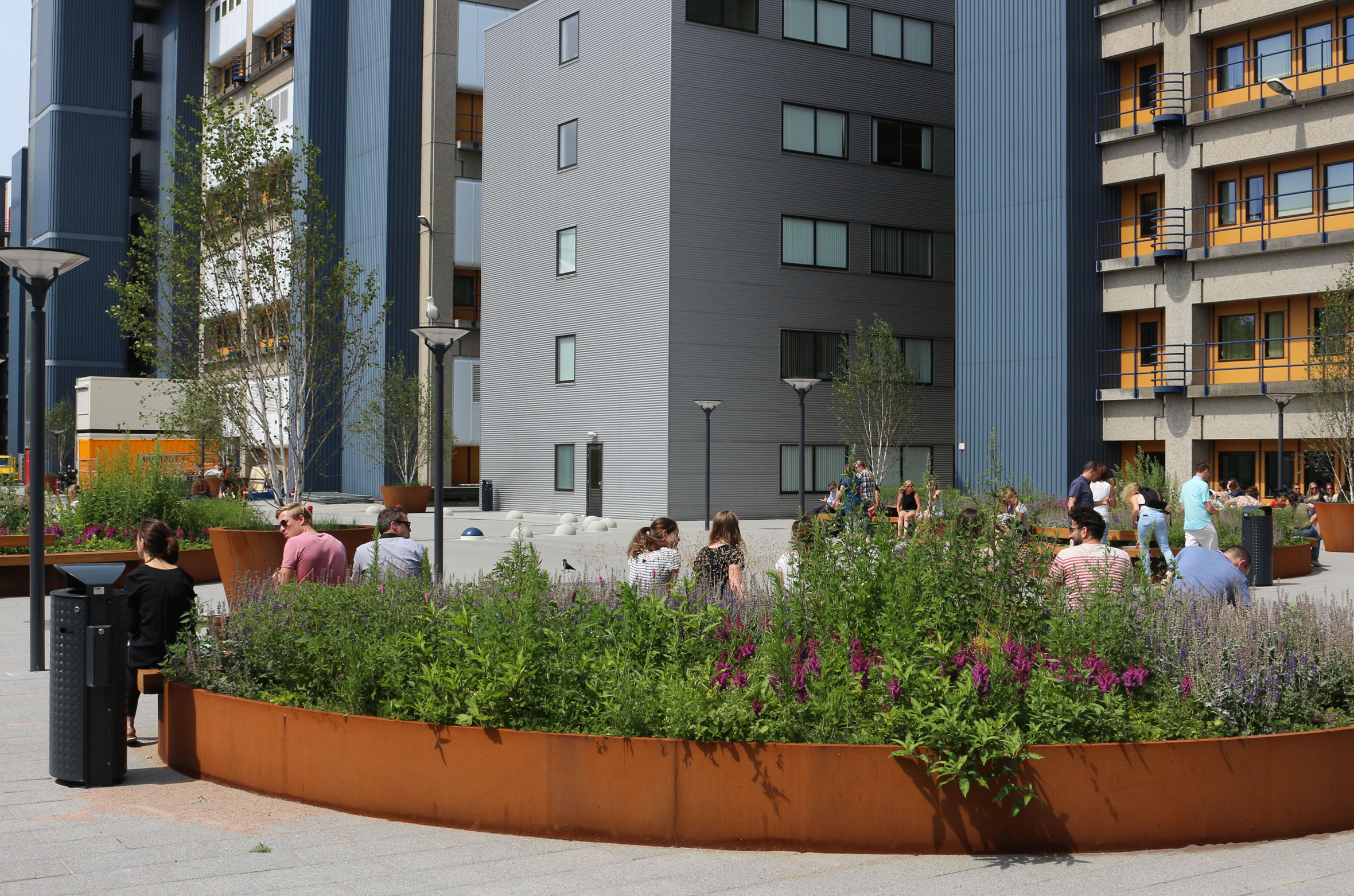
High-strength steel with European certification and longer warranty periods signals confidence in performance and supports more informed specification. For public and commercial projects, where maintenance budgets are constrained, the appeal of durable, wear-resistant, weatherproof materials is clear.
Customisation and Context
Despite the efficiencies of modular systems, New Zealand sites remain highly variable. Retaining wall systems are increasingly selected not only for their standard modules but for their ability to be customised in radius, length, or integrated detailing. This hybrid approach, combining system efficiency with project-specific adaptation, reflects a maturing sector less willing to compromise design intent to fit generic products.
Where This Points for Practice
As retaining walls evolve from utilitarian necessity to architectural device, the criteria for specification are changing. Precision of form, material integrity, lifecycle performance, and the ability to resolve complex geometries are now baseline expectations in premium residential, civic, and commercial work.
For landscape architects navigating tighter sites and more design-literate clients, the value lies in systems that support intent rather than constrain it. Archipello. aligns with this direction. Its retaining wall systems combine European-certified Corten steel with high-performance coated steel options, prefabricated coupling systems, and stainless-steel accessories within a refined, modular framework.
In a market still crowded with short-life alternatives, Archipello. represents a shift toward higher-specification landscape infrastructure. It supports contemporary practice from concept through to construction, and reflects the broader trajectory of the profession in Aotearoa: landscapes designed with architectural discipline and built to endure.