Bringing home memories of the IFLA Congress hosted in Hong Kong
by Simon Button – Aotearoa IFLA Delegate and NZILA Vice-President
Knowing that I would be city-based in Hong Kong throughout my time attending the week-long International Federation of Landscape Architects (IFLA) World Council (26-27 October) followed by the World and Asia-Pacific Regional Congress (28-30 October), I took the opportunity to get out into nature, visiting both Victoria Peak and the Tian Tan Buddha and Po Lin Monastery on Lantau Island.
These provided incredible vantage points across the city, surrounding coastal islands and the impressive bridge and tunnel infrastructure connecting Hong Kong with Macao.
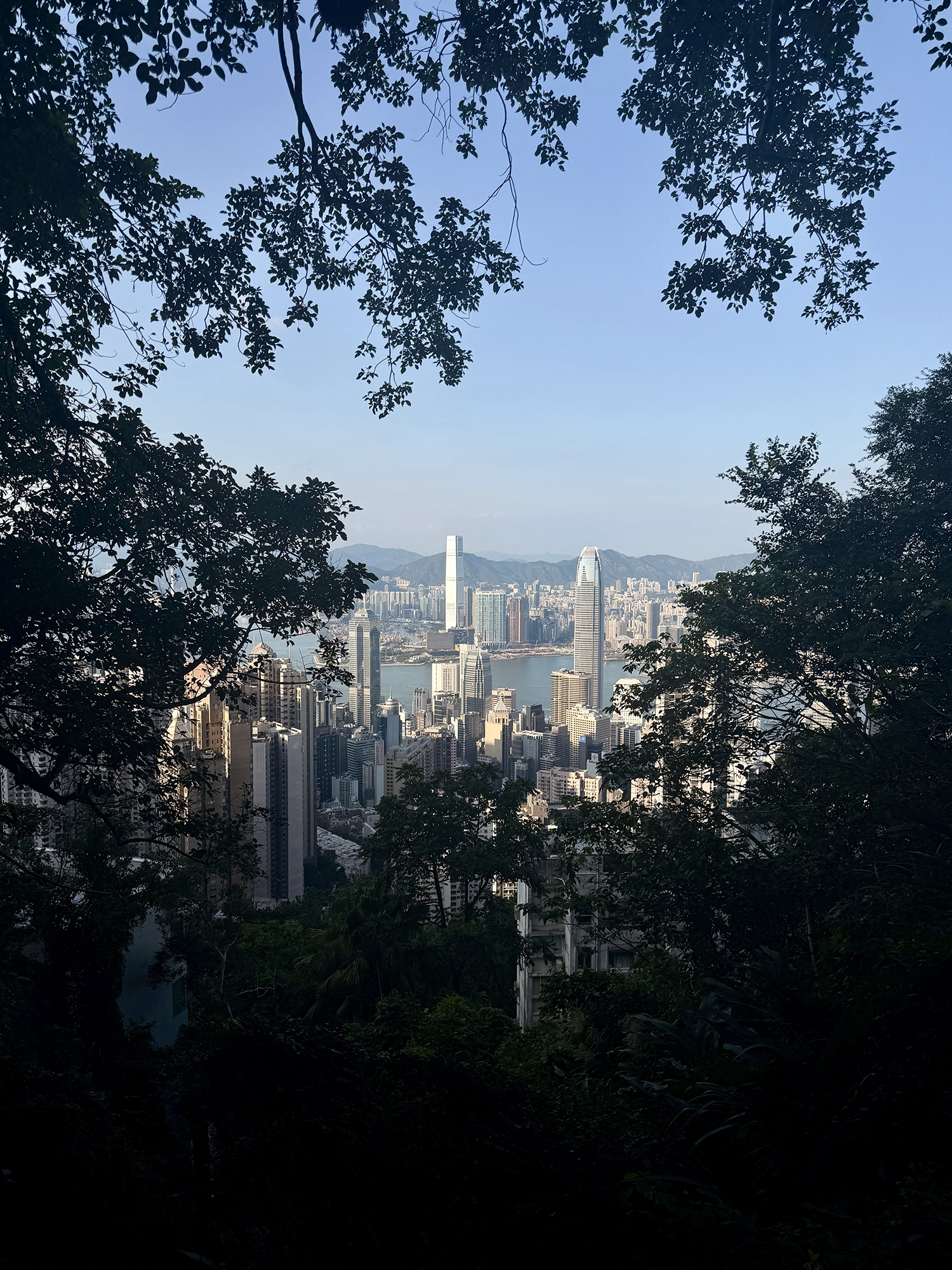
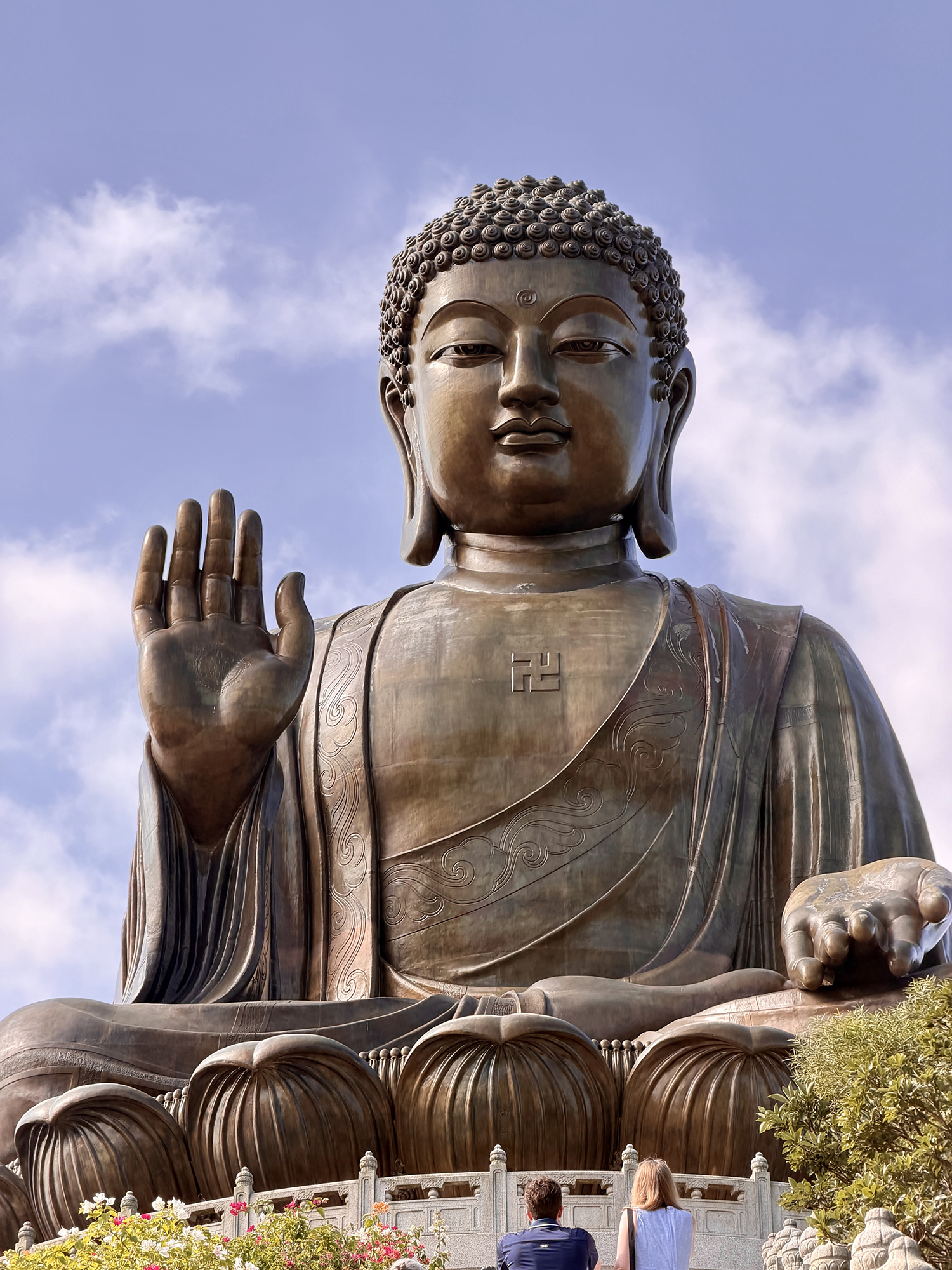
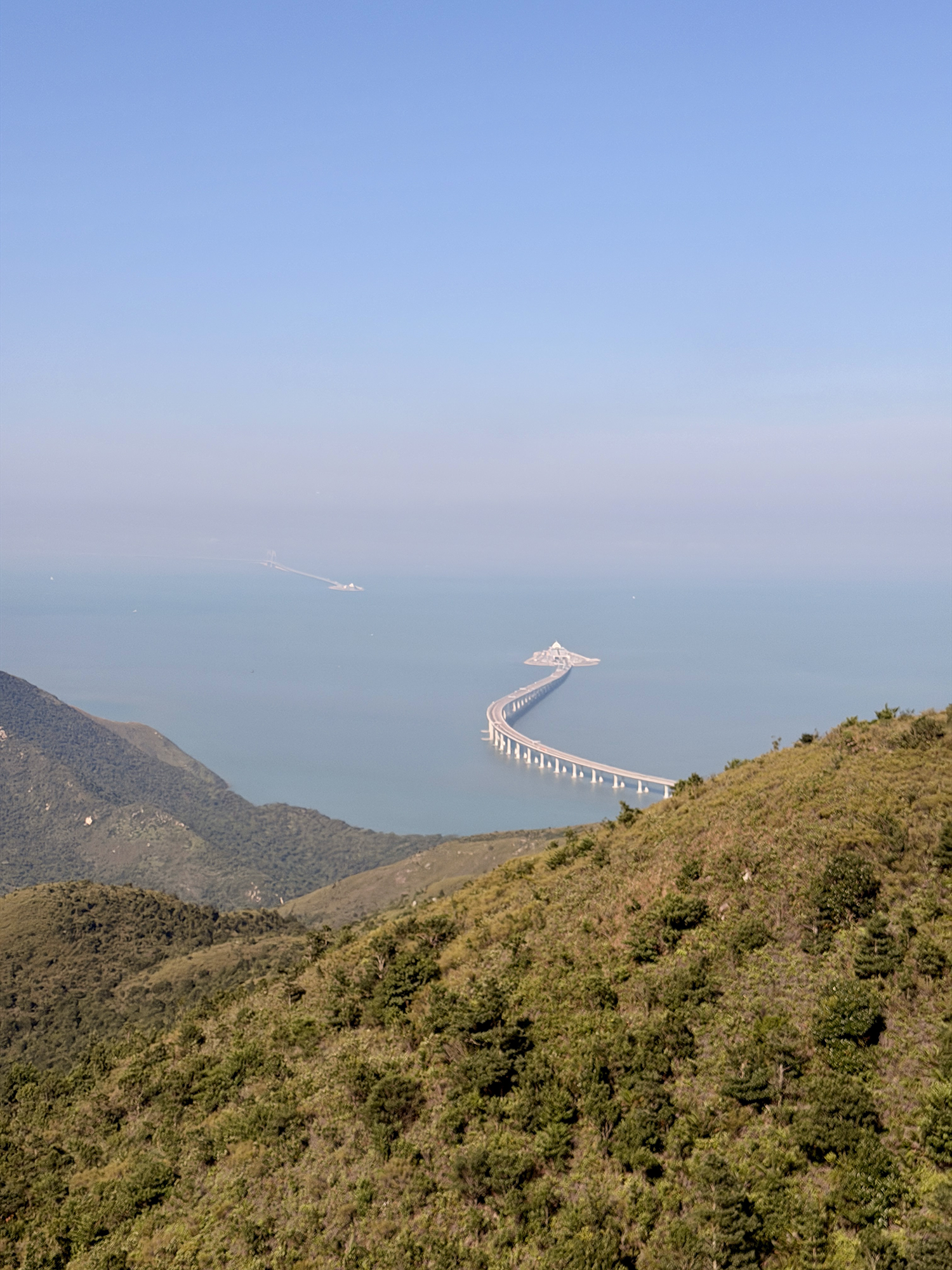
As a first-time visitor to Hong Kong, it struck me that despite being an incredibly dense environment, with around 7.5 million people living across an urban area comparable in size to Christchurch City, the city maintains an impressive balance between its intense urban environment and natural landscapes.
With approximately 25% of its land being urban and the remainder comprising natural or relatively undeveloped environments, it provides an interesting example of how urban growth and landscape protection can co-exist.
Asia Pacific Region AGM and World Council – bringing the global profession together
Monday morning came around in the blink of an eye, with proceedings beginning with the Asia-Pacific Region (APR) Annual General Meeting, led by Paul Chan from Hong Kong, President of IFLA APR.
The region currently covers up to 15 member associations, so there was plenty of catching up to do and introductions to make. Aotearoa New Zealand is the easternmost country in the region, with India at the western end, creating a time difference of 7.5 hours across member nations. It was a welcome change to have everyone together, face-to-face and in the same time zone.
The World Council session opened with a karakia from Bruno Marques – a wonderful expression of Aotearoa culture on a global stage. Ka pai!
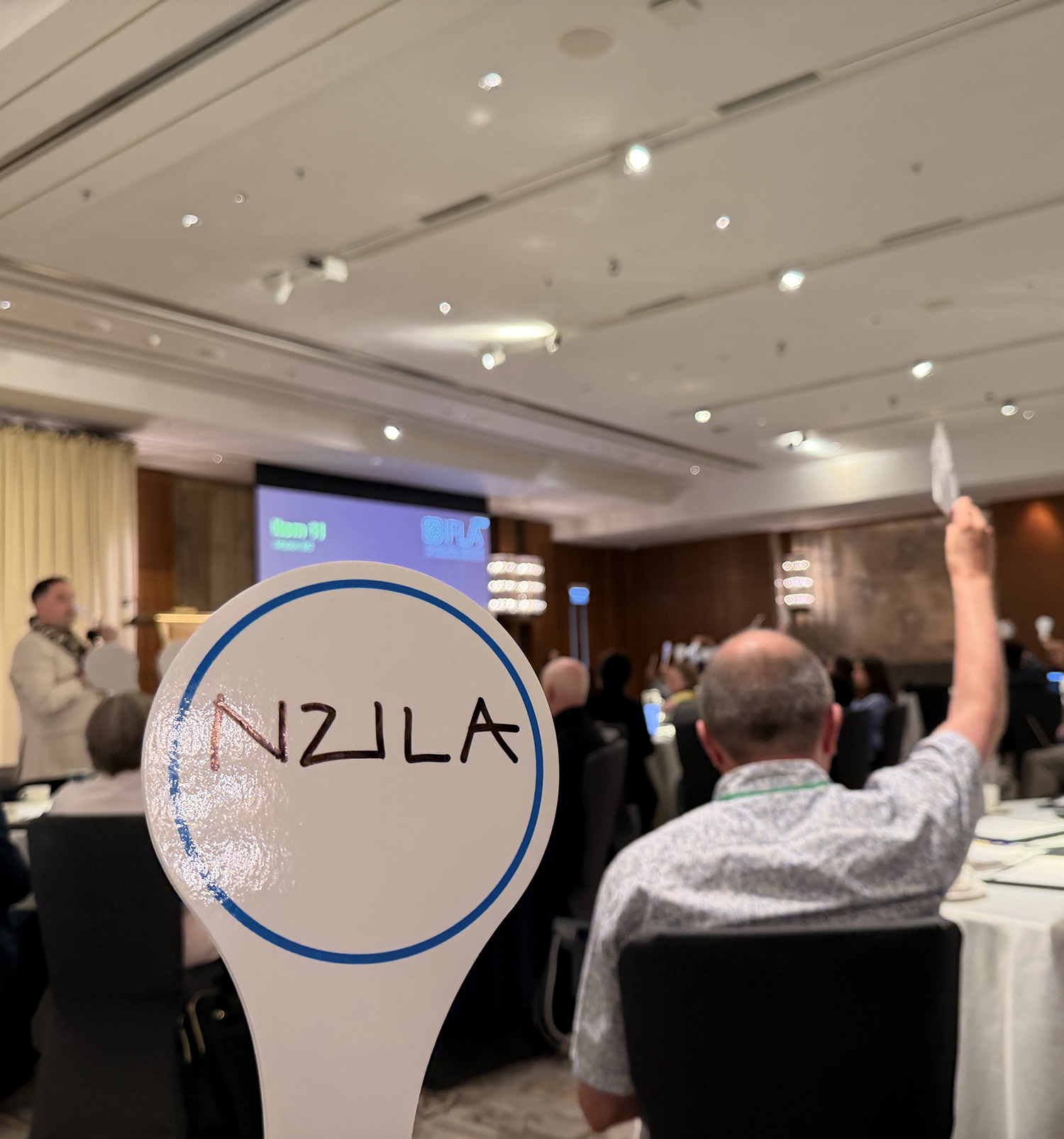
Following introductions, we moved into the formal business and voting. There was a strong degree of alignment across member associations on most matters, although there will always be some healthy debate and differing perspectives when you have representatives from 82 countries around the table.
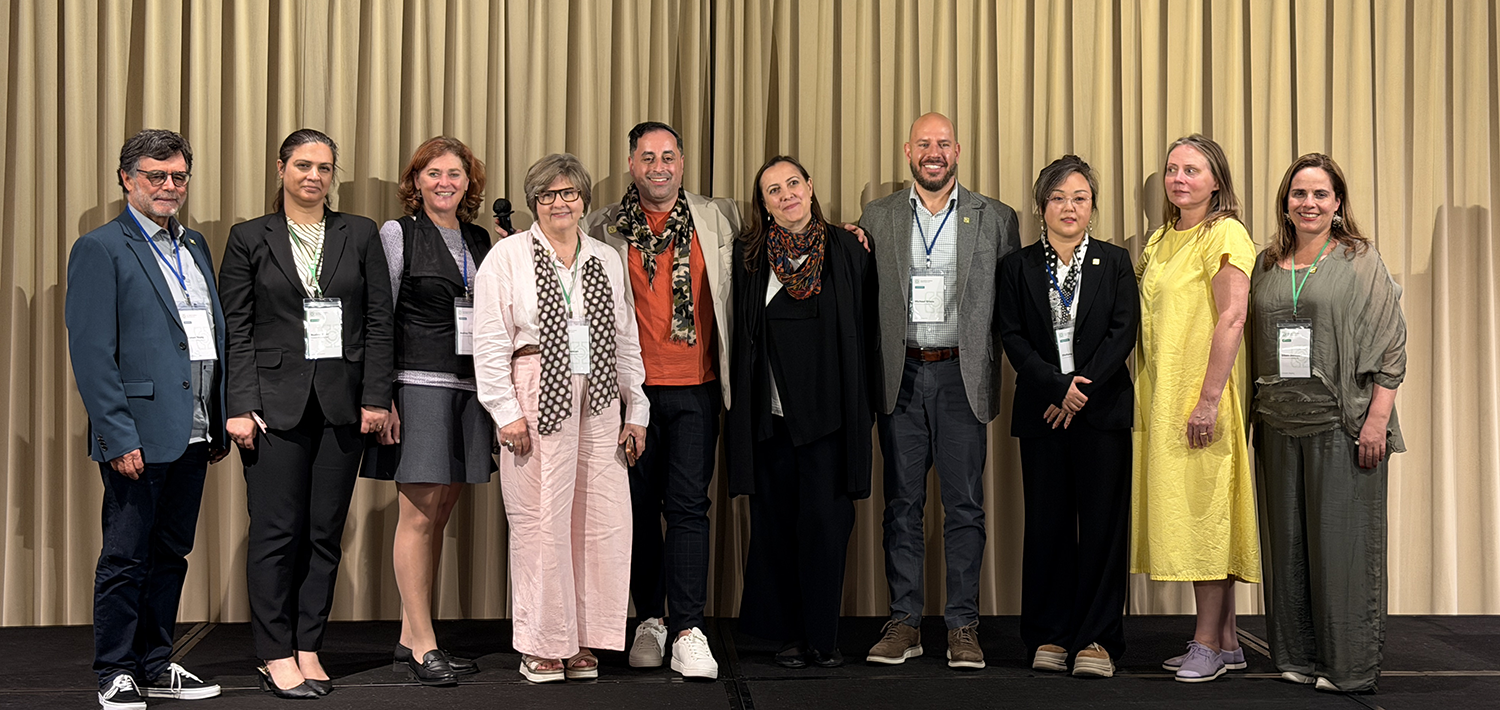
We welcomed the incoming board and farewelled Bruno as outgoing President (and now Immediate Past President). It was an emotional moment tinged with sadness around the room, but there was some comfort in knowing he won’t be going too far.
We also voted unanimously to welcome Macao as IFLA’s 83rd member – a fantastic outcome and another step in strengthening the international landscape architecture community.
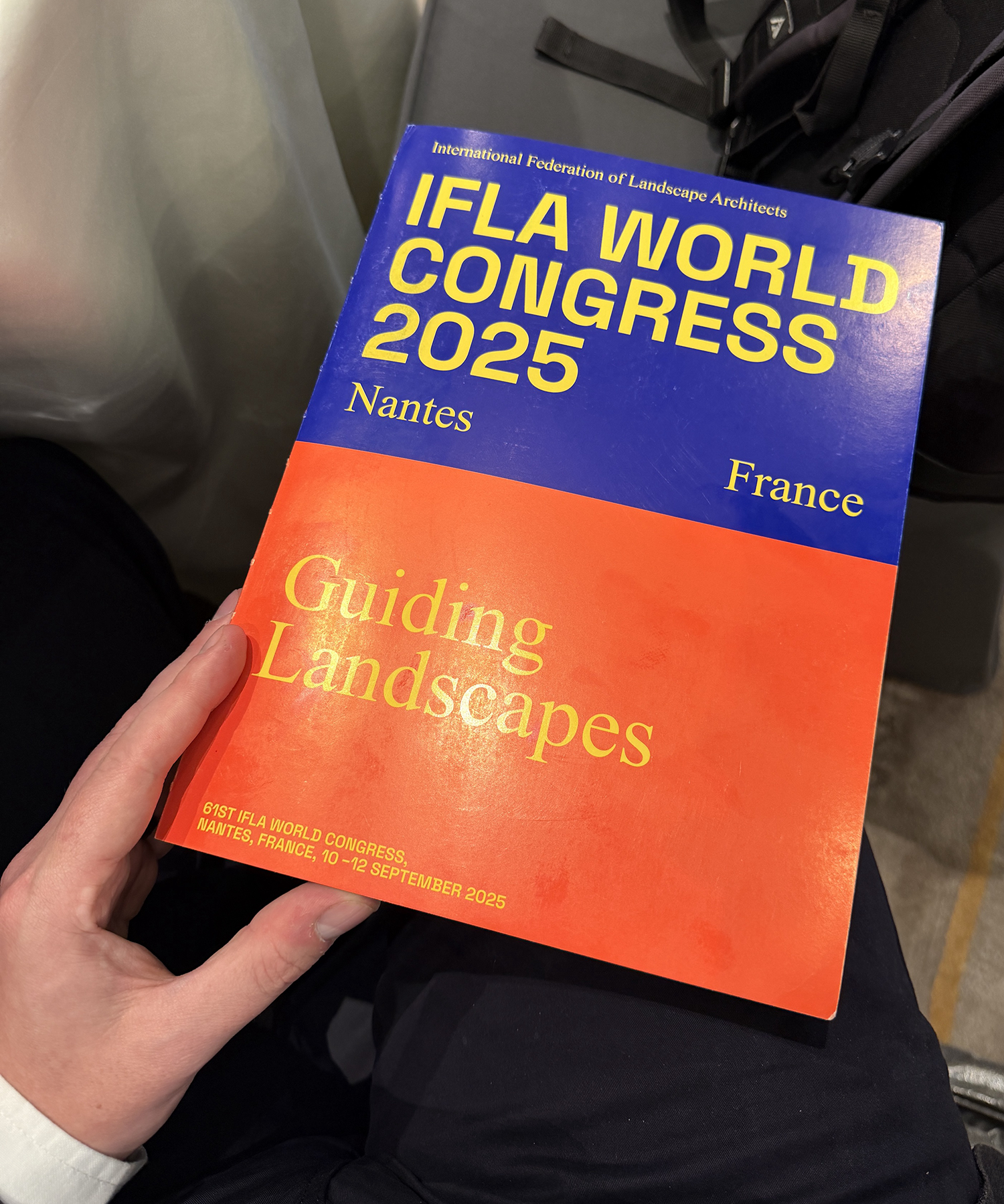
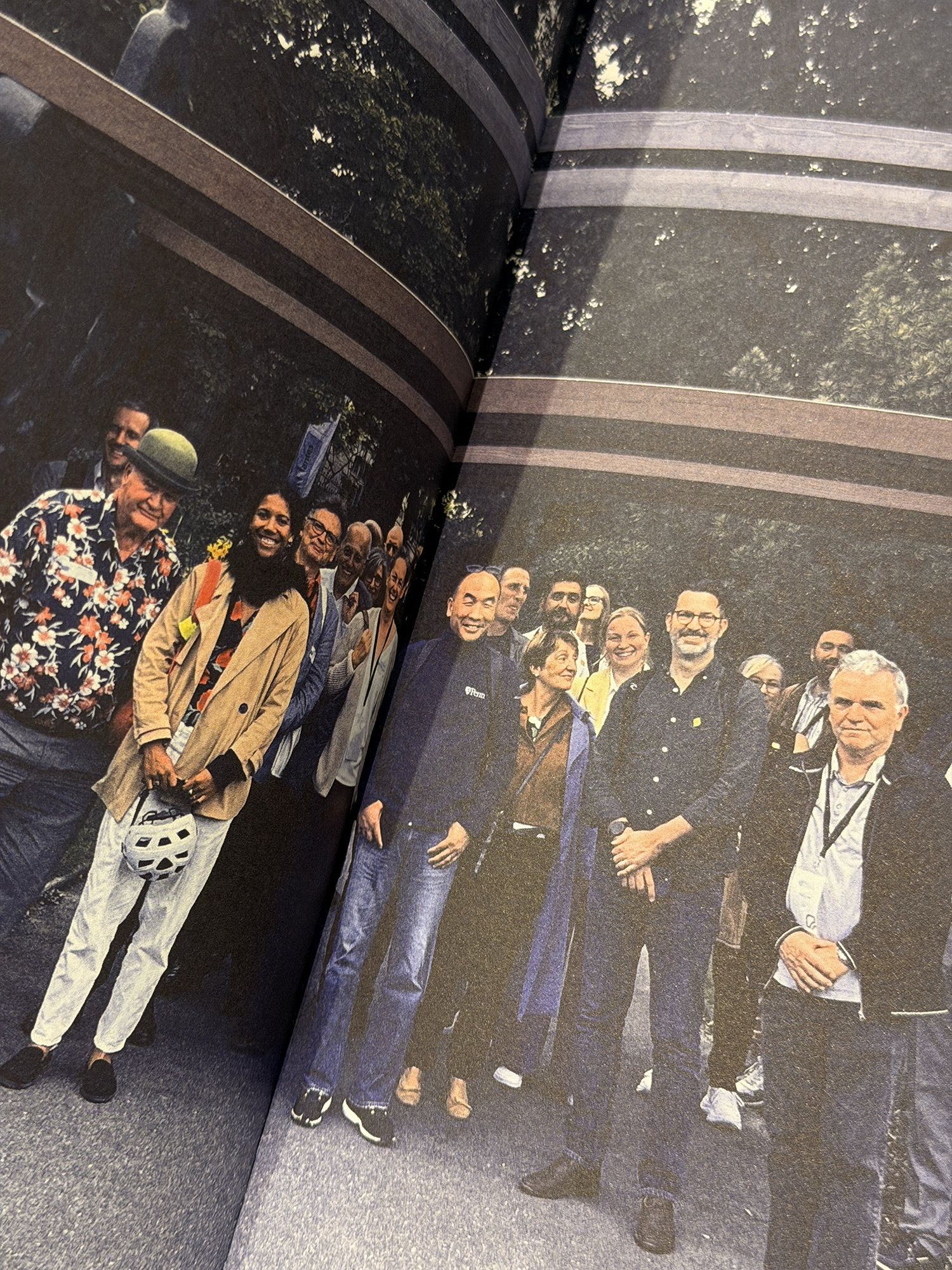
At the end of the day, we were presented with a book capturing the previous World Congress in Nantes, France, which NZILA President Ralph Johns attended. I’ll be passing this taonga on to Ralph as a memento of the event.
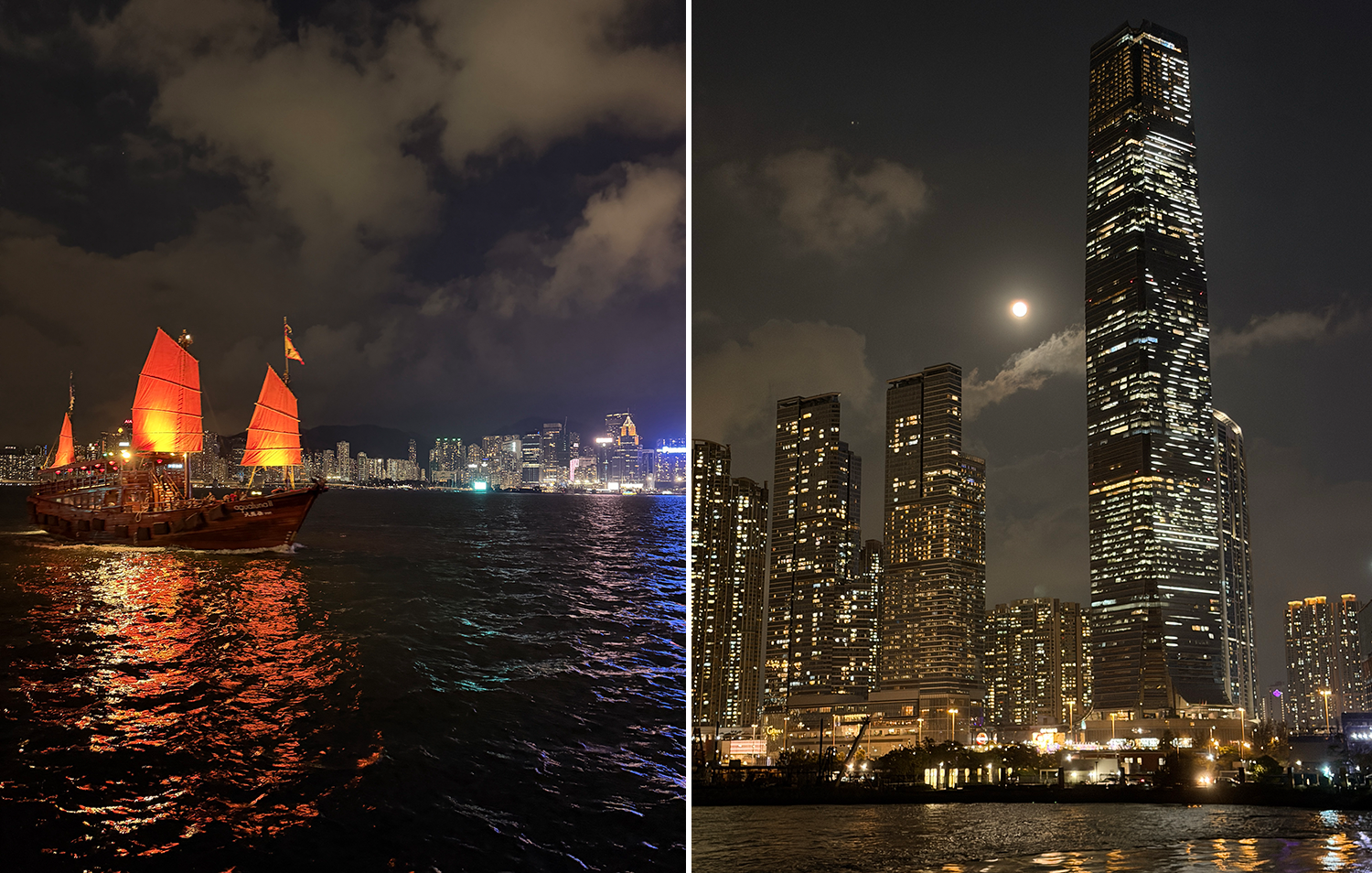
The evening concluded with a boat tour of Hong Kong Harbour, taking in the spectacular skyline and surrounding metropolis.
The second day of World Council included a series of workshops and presentations from sponsors.
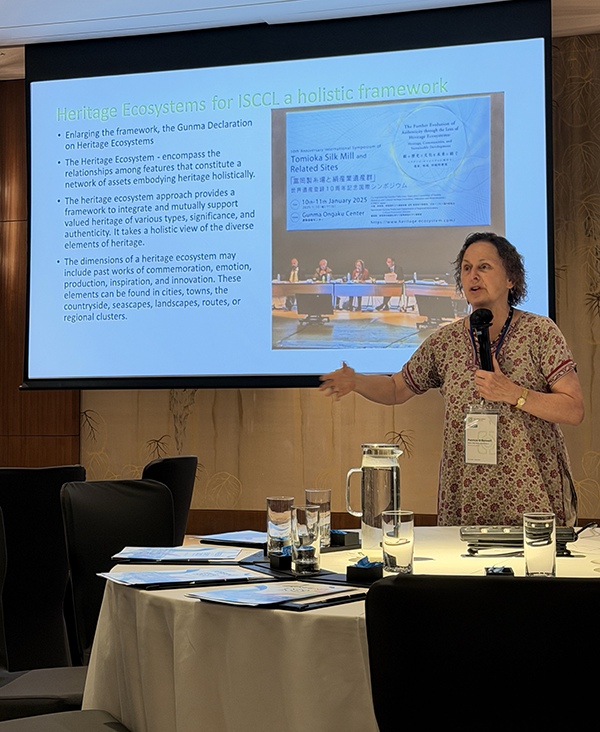
Patricia O’Donnell from the International Council on Monuments and Sites (ICOMOS, at right) led a fantastic workshop on heritage landscapes and the conservation and protection of cultural landscapes, aptly coined ‘heritage design planning’.
There was some engaging discussion around Aotearoa’s approach to cultural collaboration, Te Ao Māori worldview and how different generations bring additional layers to our understanding and appreciation of landscape.
The delegate from India explained how landscapes and forests are often intrinsically connected to deities, while a particularly thought-provoking contribution from the delegate from Palestine questioned what happens when the political boundaries drawn on a map fail to respect the land itself. Specific reference was made to the collection of olives from traditional groves, which has become impossible in some areas due to the recent conflict and occupation.
These discussions reinforced an important point: landscapes are not simply physical environments to be observed, assessed and designed. They are places of identity, whakapapa, memory and ongoing cultural connection.
Following the first workshop, there were a series of presentations from LAPPSET, Turenscape, Crystal Water Features, AIPH and CELA.
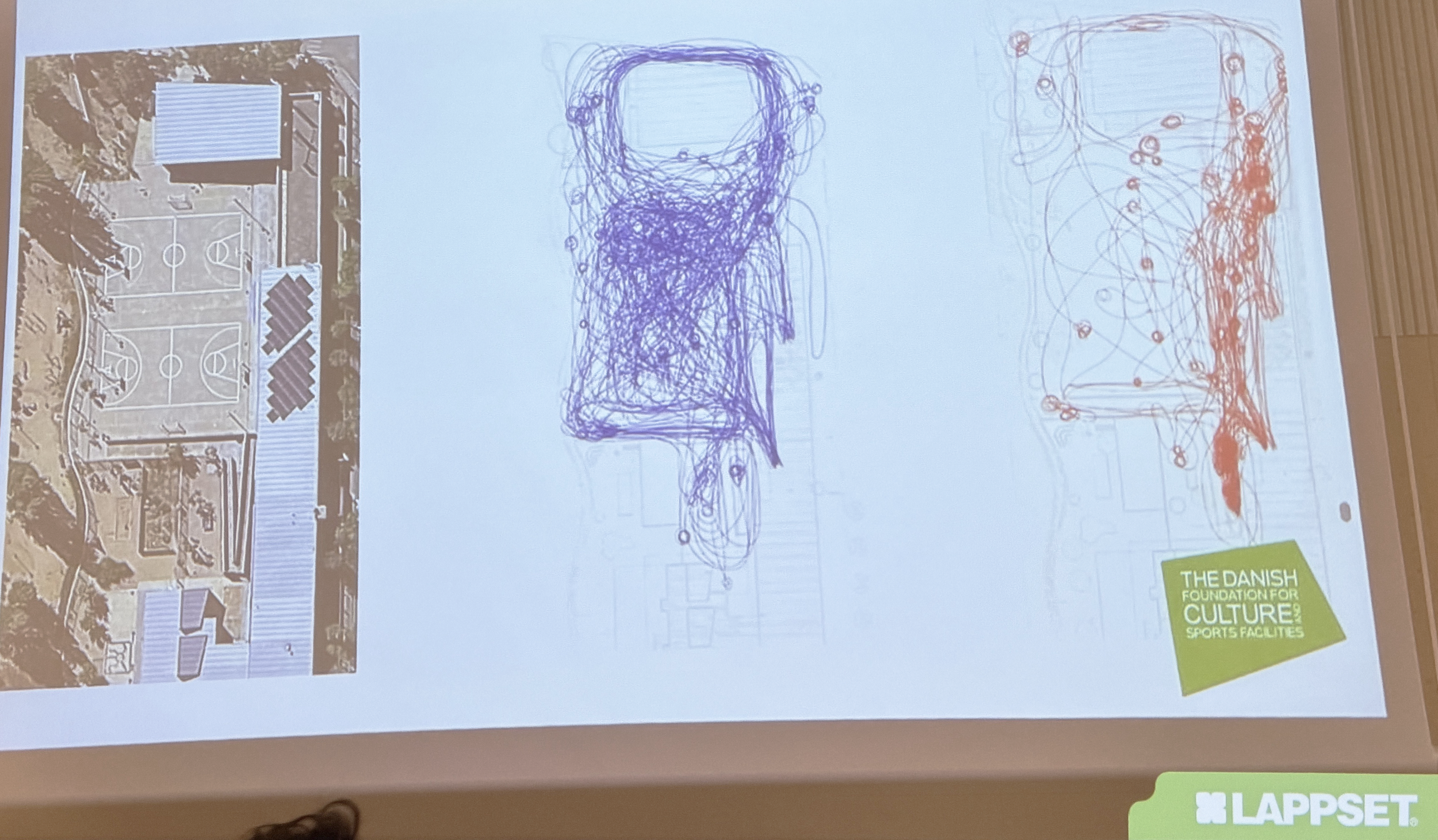
Personal highlights included LAPPSET’s comparison of movement patterns between boys and girls in a school playground (pictured below, with boys in blue and girls in red), and the surprisingly extensive health and safety considerations associated with public water features – which went well beyond the obvious!
The final workshop of World Council saw Gwendolyn Kusters from Germany introduce the IFLA Hub – a global, open-source platform intended to provide free access to guidelines, books, projects, webinars and much more.
This has the potential to become a huge asset for landscape architects across the globe, providing opportunities for knowledge sharing, professional development and advocacy. For a relatively small professional community like NZILA, access to international research, experience and technical resources is particularly valuable. I encourage everyone to check it out and consider contributing.
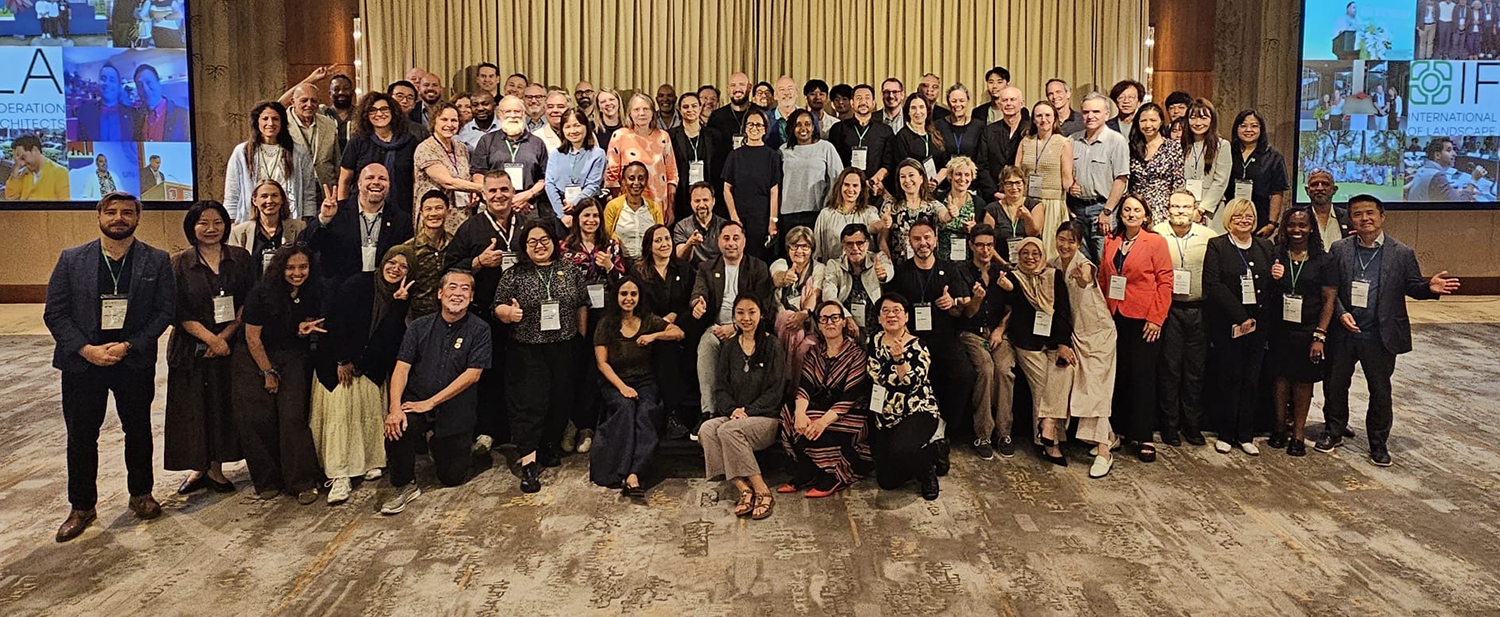
World Congress – Liminal Landscapes: Shifting Boundaries of Watersheds and Coastlines.
World Congress kicked off on Wednesday with a contemporary dance opening, ‘No Lion, No Dragon’ (complete with beatboxing!), followed by the presentation of the Sir Geoffrey Jellicoe Award to Dr Diane Menzes – the highest honour within our profession.
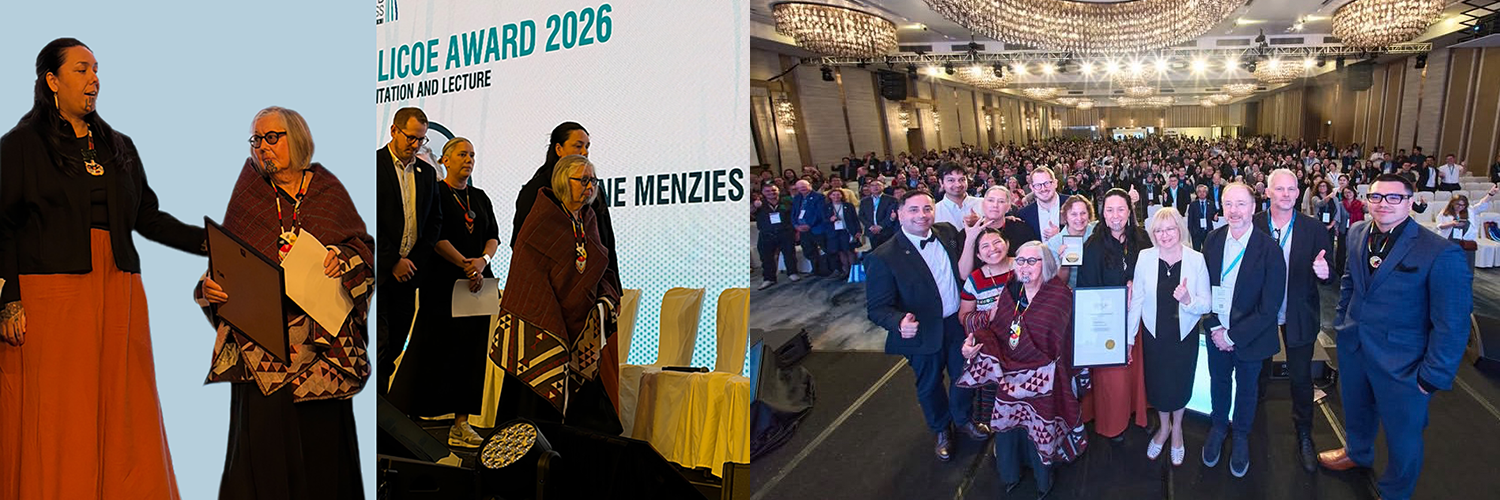
Di graciously accepted the award and delivered a fascinating presentation reflecting on her outstanding career. She was joined on stage by those who have stood beside her throughout that journey.
I was privileged to attend and represent Tuia Pito Ora NZILA, although I was slightly nervous about singing an opening and closing waiata to an audience of around 1,500 people. A very special moment and a real privilege to be part of.
The morning’s keynote speakers included Kate Orff (USA), who discussed designing at the edge of the earth, including her work on Living Breakwaters and the promotion of softer, more accessible public shorelines as an integral component of successful and resilient cities.
A particular favourite of mine was Michael Grove (USA), who spoke about broad-scale, landscape-led development. His presentation covered an impressive range of projects, including case studies from Ho Chi Minh City, a panda sanctuary (with a focus on non-human stewardship, where scientists wear panda costumes to minimise human imprinting), and the transformation of Greece’s former international airport into an ecological and civic landscape.
The airport, which closed in 2001, is being transformed into a significant public landscape, with carbon considerations embedded in the design from day one. The ambition is for the project to become carbon neutral within 35 years and subsequently transition into a carbon sink.
What connected these presentations was the recognition that landscape architecture is increasingly operating beyond the traditional boundaries of parks, streetscapes and public realm design. We are seeing the international profession contribute to broader ecological systems, infrastructure, urban growth and climate resilience.
These examples resonated strongly with the challenges facing Aotearoa New Zealand. From coastal erosion and sea-level rise to increasingly frequent and intense rainfall events, we are having to reconsider how our settlements interact with natural systems. There is an important role for landscape architects in connecting ecological networks, infrastructure, public spaces and community resilience.
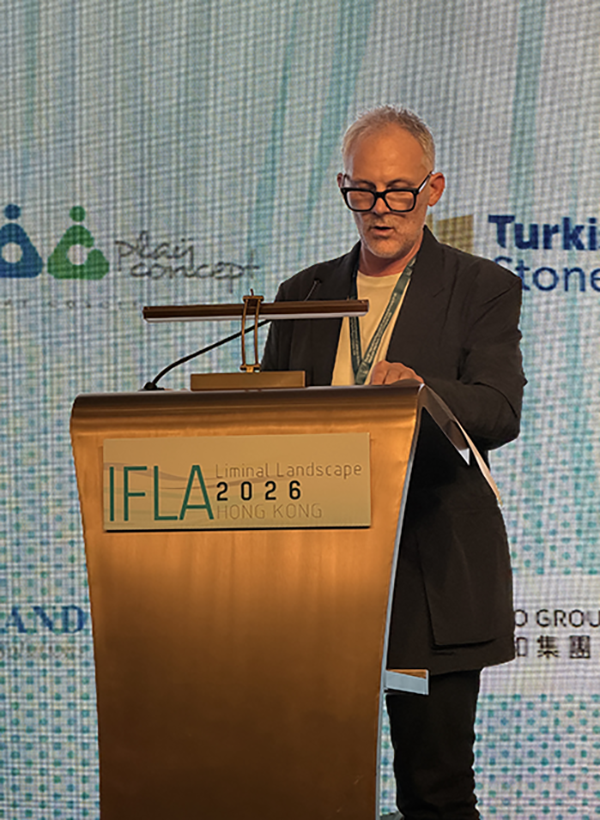
Wednesday afternoon brought more workshops, including one with a familiar face – Henry Crothers of LandLAB, who presented and moderated a panel on ‘Cities to Systems’.
The discussion explored the changing scale of cities, from medieval settlements through industrialisation to today’s global urban systems, and the resulting impacts on the wider environment.
This was a particularly relevant conversation for New Zealand. As we navigate urban growth, infrastructure investment and changes to our planning system, there is an opportunity to move beyond considering individual development sites and instead recognise the importance of broader landscape systems and their interconnections through spatial planning.
Other working groups explored disaster resilience, nature-based solutions and nature-based recovery, led by Maria Gabriella Trovato (Norway and 2026 IFLA President’s Award winner); how we can become more effective agents of change and bring landscape back into the conversation; and the International Landscape Convention – a document which, once finalised, will hopefully be adopted by multiple countries to formally acknowledge the importance of landscape.
The discussion around advocacy was particularly pertinent. With the implementation of New Zealand’s new planning framework underway, there is an important opportunity for our profession to articulate the value of landscape on a global level. Landscape is an integrating framework for ecological, cultural, social and economic considerations, and we need to be better at demonstrating its contribution to the long-term functioning and resilience of each nation.
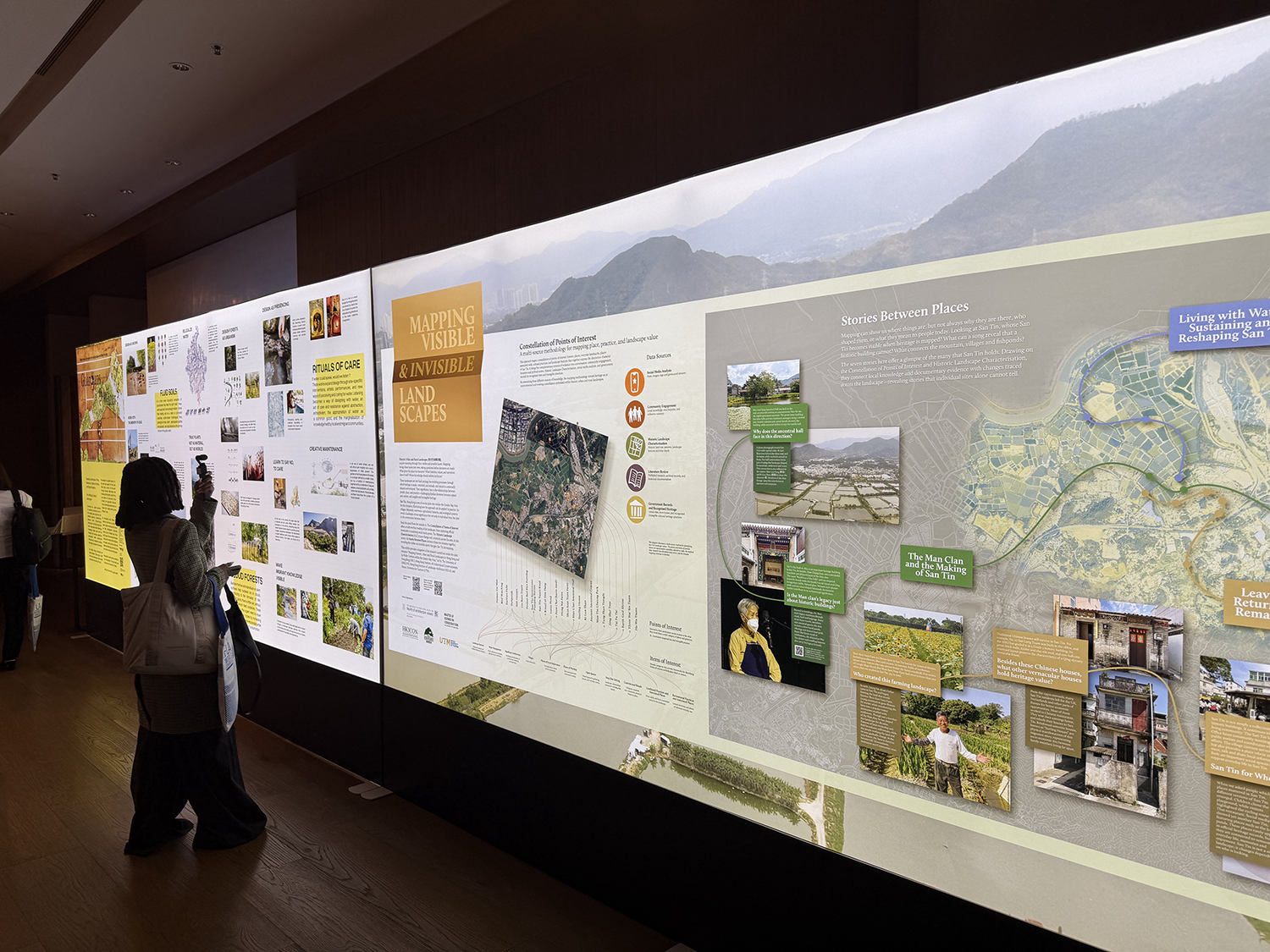
Working with nature, not against it
Day two of World Congress brought another fascinating presentation, this time from Marina Cervera (Spain and IFLA President-elect), who discussed the concept of ‘liminal grounds’.
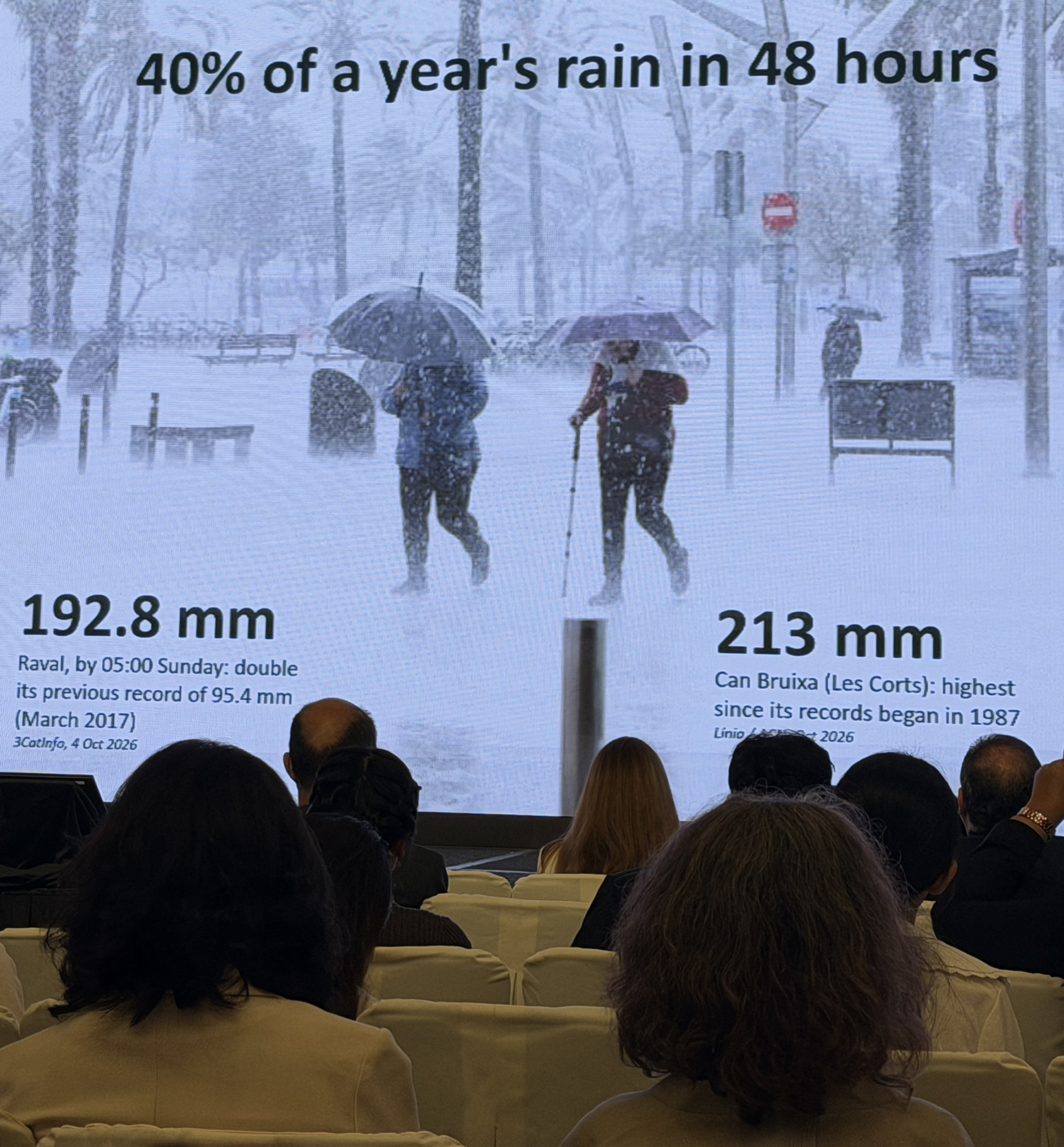
Her presentation focused on two projects along a river corridor in Barcelona, following a period of extreme weather events. The city had experienced three years of drought, followed by a Mediterranean hurricane that delivered approximately 40% of its annual rainfall within a 48-hour period.
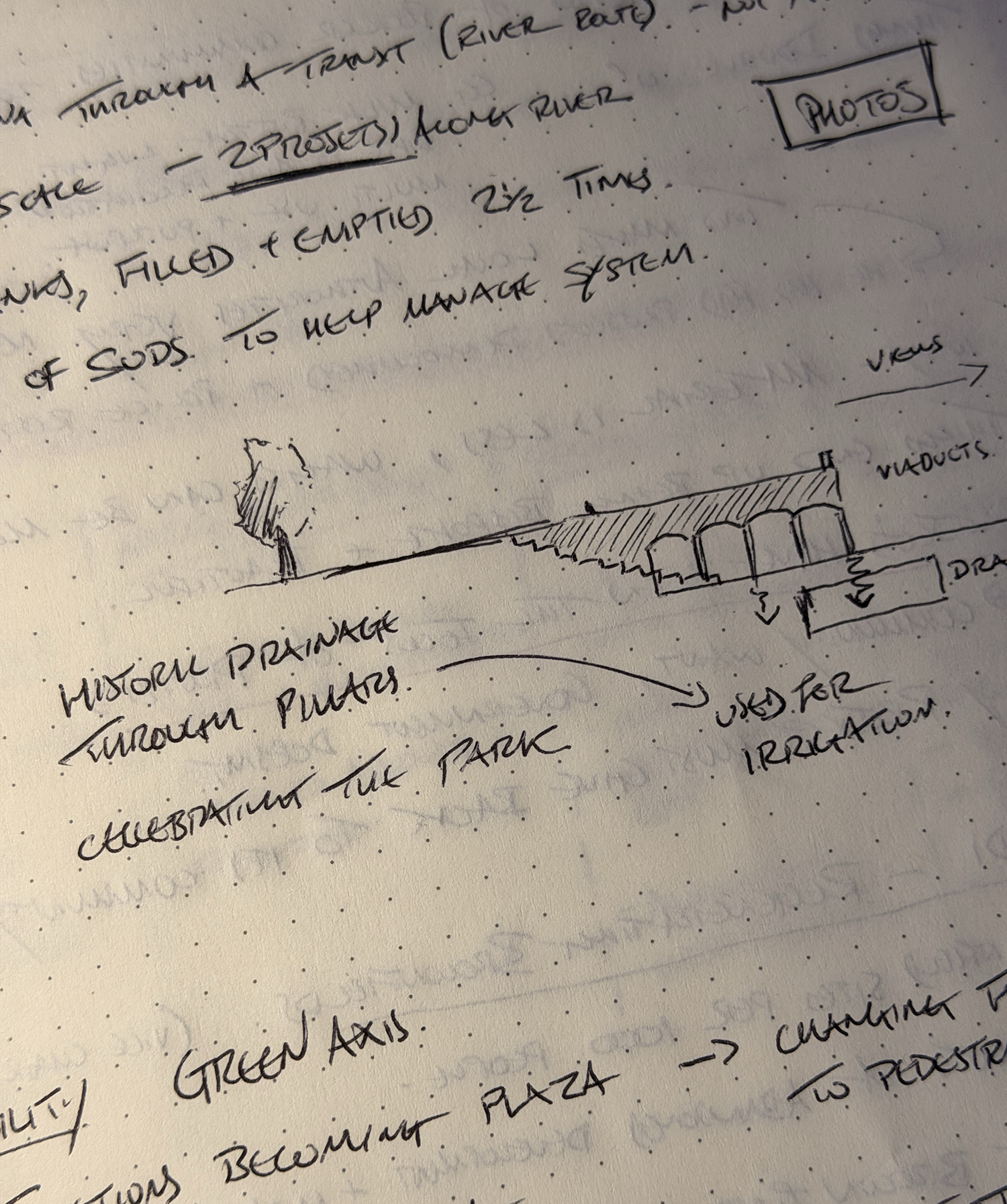
Despite the severity of the event, the city was able to manage the impacts through a combination of underground storage tanks, sustainable urban drainage systems and the re-establishment of historical drainage networks, which had been repurposed as civic spaces.
The projects demonstrated how infrastructure, landscape and public space can work together, rather than being considered as separate or competing objectives.
There are some obvious parallels here with Aotearoa’s own experience of extreme weather events and flooding. The value of nature-based solutions, integrated stormwater management and designing with natural processes rather than against them is becoming increasingly apparent.
These are not simply environmental considerations; they are fundamental to how we design and plan resilient communities.
Thursday evening included celebrations with Di at the karaoke bar. There may or may not be some videos which will never see the light of day – but Di, I can honestly say those are memories for life!

The final stretch
And just like that, dusting ourselves off from the previous night, it was the final day of World Congress.
Friday brought an incredible presentation from Ng Sek San (Malaysia) on ‘Making the Third World’.
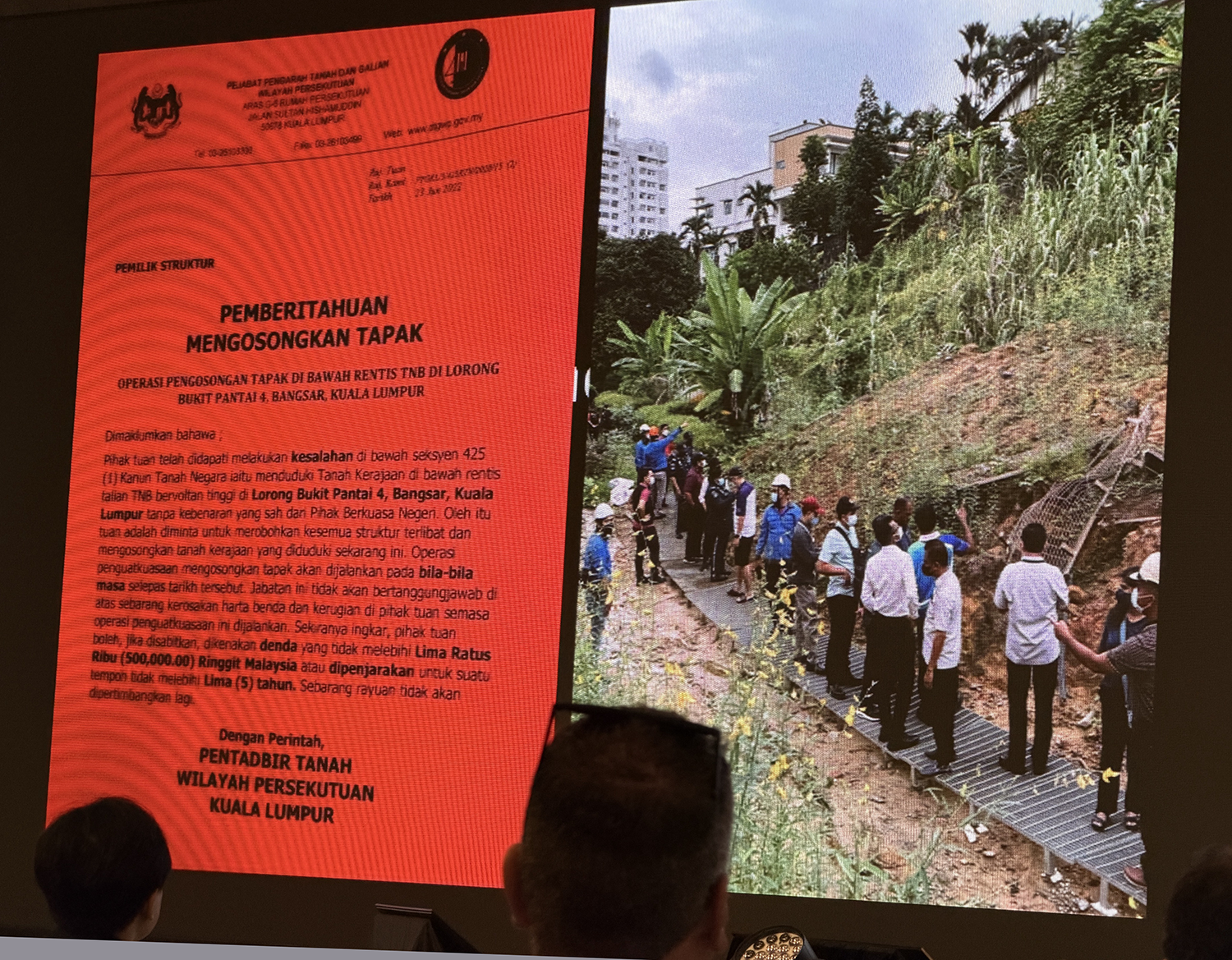
The presentation explored multi-use spaces and multifunctional objects, using the resourcefulness and aesthetics of less privileged communities to inform design.
His own studio doubles as a public library, event space and Wi-Fi hub – a great example of making the most of limited resources and creating spaces that serve multiple community needs.
He was also the first to acknowledge that his approach to design makes local authorities very nervous! He has had projects demolished, red notices issued and even faced threats of imprisonment and fines. His projects have also been the focus of protests, where strong community support has been met with equally strong government disapproval.
It was a fascinating reminder that good landscape architecture isn’t always about delivering polished or conventional outcomes. Sometimes it is about challenging established thinking, responding to the needs of communities and finding innovative ways to make places work.
The second keynote presentation was from Zheng Xiaodi (China), who discussed the regeneration of brownfield sites.
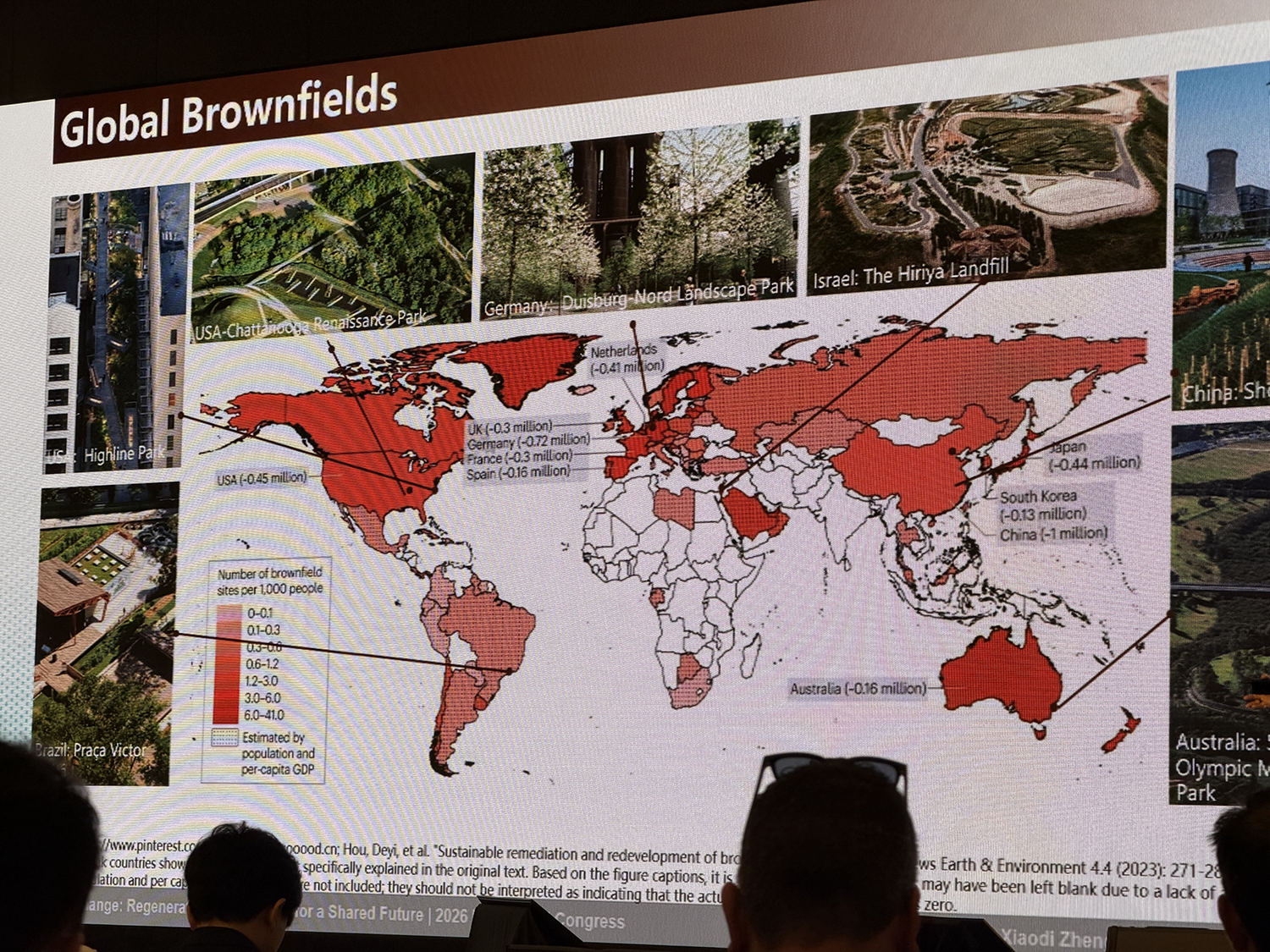
The presentation included some fascinating mapping and analysis of brownfield sites per capita, alongside Chinese case studies, including the world’s largest iron and copper mine, an enormous excavation more than 400 metres deep which now sits abandoned.
The scale of these projects was incredible, but the underlying message was familiar: previously developed and degraded landscapes can provide significant opportunities for ecological restoration, regeneration and new civic uses.
There are clear parallels with opportunities here in New Zealand, where the reuse and regeneration of brownfield land can help address development pressures while reducing the need to continually expand into greenfield environments.
The closing presentations included a philosophical discussion from Gareth Doherty, who studied under Sir Geoffrey Jellicoe. He posed a deceptively simple question: What is landscape? And how do we define it?
His recent project work included community engagement and action in an African city where people have adapted to living on the water, although rising temperatures continue to present significant challenges.
It raised an interesting question: what do we do when there is no ‘land’ to ‘scape’? And when some of our more familiar design responses, such as providing passive shade through tree planting, are no longer sufficient or possible?
It was a fitting way to conclude the Congress, challenging us to think beyond conventional definitions and approaches to landscape architecture.
Bringing it back to Aotearoa
Sitting on the plane back to Aotearoa as I write this, I can honestly say that the depth and breadth of IFLA has given me a new sense of perspective.
While the presentations, projects and approaches were incredibly diverse, a number of common themes emerged throughout the week:
Landscape advocacy: As a global profession, we need to be more effective at communicating the value of landscape and ensuring it is recognised in strategic planning and decision-making.
Cultural landscapes: Our understanding of landscape must recognise the deep relationships between people, place, identity and culture, including the importance of mātauranga Māori and partnership with mana whenua. As always, context is king.
Climate resilience: Landscape-led and nature-based solutions have an increasingly important role in addressing flooding, coastal change, biodiversity loss and the impacts of climate change.
Thinking at scale: We need to move beyond individual sites and projects to consider the broader ecological, cultural and urban systems within which they sit.
Knowledge sharing and collaboration: International connections provide an enormous opportunity to learn from one another, strengthen our collective voice and contribute to the advancement of our profession.
Many of the challenges discussed in Hong Kong are challenges we are already experiencing here in Aotearoa. Whether through climate change, biodiversity loss, urban growth, cultural landscape recognition or the changing planning environment, there is a real opportunity for landscape architects to play a more influential role.
In particular, as New Zealand transitions to its new planning framework, I believe we have an important responsibility to ensure that landscape is not simply something we respond to or manage the effects upon, but something that actively informs how we plan, develop and manage our environments.
We need to be involved at the beginning of strategic decision-making, be more confident in our advocacy and be better at communicating the broader environmental, cultural, social and economic benefits of landscape architecture.
For Tuia Pito Ora New Zealand Institute of Landscape Architects, I see considerable value in strengthening our international connections, sharing knowledge and ensuring that the experiences and perspectives of Aotearoa are represented in these global conversations. The IFLA Hub is one practical opportunity to help achieve this.
The level of passion, respect, engagement and cross-regional collaboration throughout the week was nothing short of inspiring. Dare I say it, we landscape architects are often a funny bunch, but it is reassuring to know that the challenges we face are not ours alone.
I return home with a renewed appreciation of the opportunities ahead, new friendships, plenty of ideas (and perhaps a slightly questionable karaoke reputation!).
A huge thank you to IFLA, IFLA APR, NZILA and everyone who made the week such a memorable experience.
Ngā mihi nui – and here’s to continuing the conversation!