Reflections on a judging panel odyssey
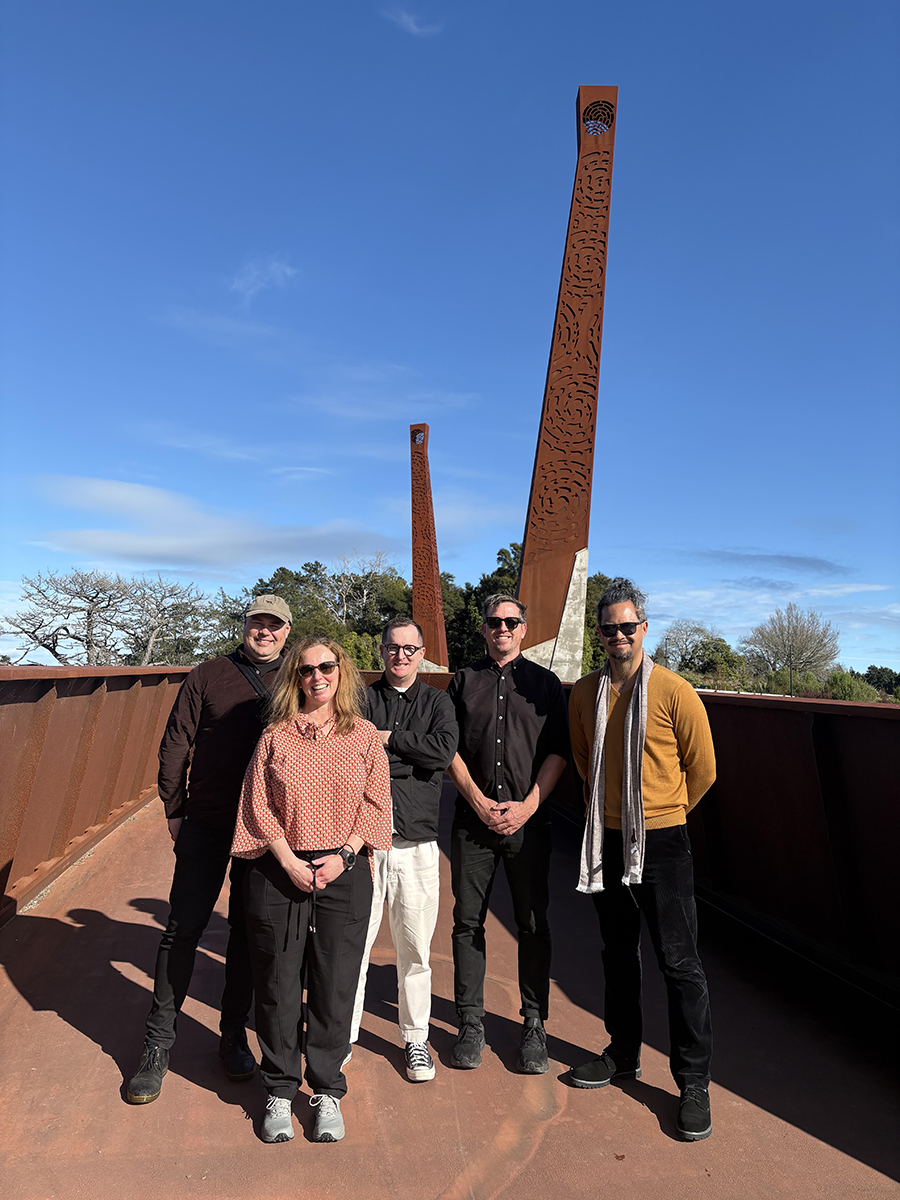
Five on the road: Sam Bourne (head judge), Kirstie Thorpe, Andrew Norriss (Design stream lead), Hugh Smith and Whare Timu (guest judge).
by Sam Bourne, chief judge 2026 Resene NZILA Awards
Taking a road trip with the Design panel judges for the 2026 Resene NZILA awards programme saw our terrestrial odometer clock up approximately 1,740 kilometres in a Kia Carnival mini-van, with road stops for refuelling with regular strong coffees and a medley of local cuisine.
The primary task constantly in front of us was to engage at depth with every single one of 31 projects: The 25 design projects spanning all categories, four He Iti Pounamu (small projects) and three enduring landscapes. It was a meaningful time to reflect on the short-listed entrants, and to gain additional insights.
We took to the road first through the lower and central north island – Te Whanganui-a-Tara Wellington, to Manawatū Gorge, Ngāmotu New Plymouth, Tauranga, and on to Kirikiriroa Hamilton. Then it was off to the lower south island, to Tāhuna Queenstown and Ōtepoti Dunedin, before Ōtautahi Christchurch.
Lastly we headed to the upper north island – to Te Pēwhairangi Bay of Islands, Whangārei, Ti Point, and Tāmaki Makaurau north, central and south Auckland areas. All this was rounded out with a great virtual tour and interview online of Te Kopikopiko o te Waka near Fox Glacier, given that in-person time wasn’t an option.
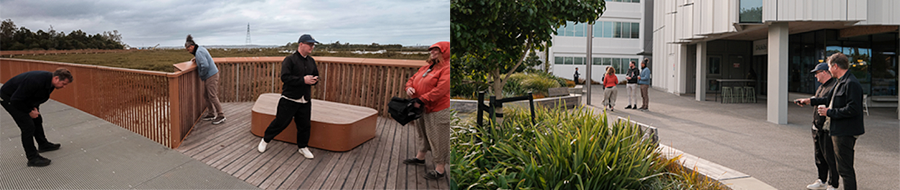
From the beginning each individual design judge brought their own unique perspective to the appraisals. The road trip and visits enabled us to get together as a team and re-engage with each shortlisted submission on the ground in real time.

Absorbing the details with clients, custodians and community representatives provided a richer understanding. We heard how the places took shape from their foundations, their formation to fruition, and saw the results first hand.
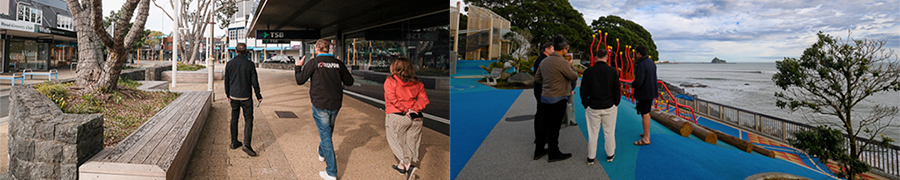
Visiting many of these designs for the first time enriched our appreciation and understanding of the deep connections made between people, place and the designer/s, where practical performance needs met wider aspirations for shaping urban and rural landscapes.
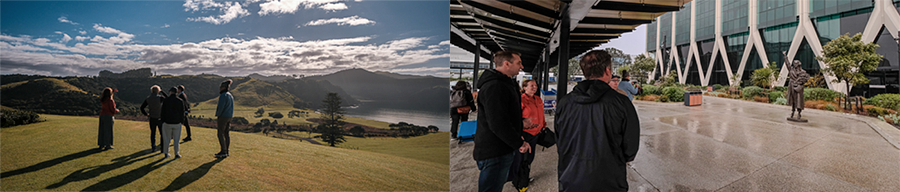
Many of the shortlisted projects had a backdrop of having to overcome the adversity and difficulties of the Covid-19 pandemic period and major weather events. These impacted timelines, supply chains, project processes, and in some cases access was cut off requiring work-arounds. It is a testament to all involved that the work overcame these setbacks, including the ensuing economic realities and tough decisions this all carried.
That’s the thing about being on site with those clients and Kaitiaki, we reflected not just on the outcome but on the road to get there. Resilience rose up to meet us as a theme, and in this, it reframed our perspective.
Within our review the fundamentals, but also the synthesis loomed large – the ecological health, human/ public use, and infrastructure as a fusion of functional and resilient systems. Did this work feature the kind of landscape architecture that engages histories, systems and universal needs of people?
The trip brought back a lot of project sites and memories for me from past times. As landscape architecture is so intertwined with the way in which people interact with their landscape, many enduring relationships are always forged.
This was a common view we heard from many of the people we met on site.
___________________
I want to acknowledge here a couple of people who, on our travels, we heard were no longer with us:
Hugh Te Kiri Richard Rihari. Along with other members of Tuia Pito Ora New Zealand Institute of Landscape Architects (NZILA) I still recall a conference in Kerikeri in 2011 where Hugh welcomed and guided us through the Purerua Peninsula in the Bay of Islands, sharing the area’s rich cultural history.
I first met Hugh while working for clients in the region as a young landscape architect, during what you might call my formative years. At the time, Hugh was the Ngāti Torehina kaumātua and was actively involved in efforts to protect the site of New Zealand’s first permanent European settlement.
On this road trip with panel judges I took them to visit Rangihoua Heritage Park, which Hugh had helps shape, established in 2014 through a partnership between the Marsden Cross Trust Board, Ngāti Torehina, the Rangihoua Native Reserve Board, and the Department of Conservation. The park has since been recognised as part of Tohu Whenua.
Warren McGrath. We were on site at the Peacocke development in Kirikiriroa Hamilton when we received the news that Warren had passed away. A highly respected Tainui master carver, Warren leaves an enduring legacy through his many works. I had the privilege of working alongside him on the carving of the historic gateway unveiled in 2012 to commemorate those who fell during the 1863 Battle of Rangiriri (part of the Raupatu/ New Zealand Wars). Landscape architects involved in projects across the Waikato will have known Warren and will recognise his significant contribution to Aotearoa New Zealand through his dedication to the art of whakairo rākau. His craftsmanship, cultural leadership, and commitment to preserving and sharing mātauranga Māori have left a lasting mark on the landscape.
___________________
A ROVING MONTAGE
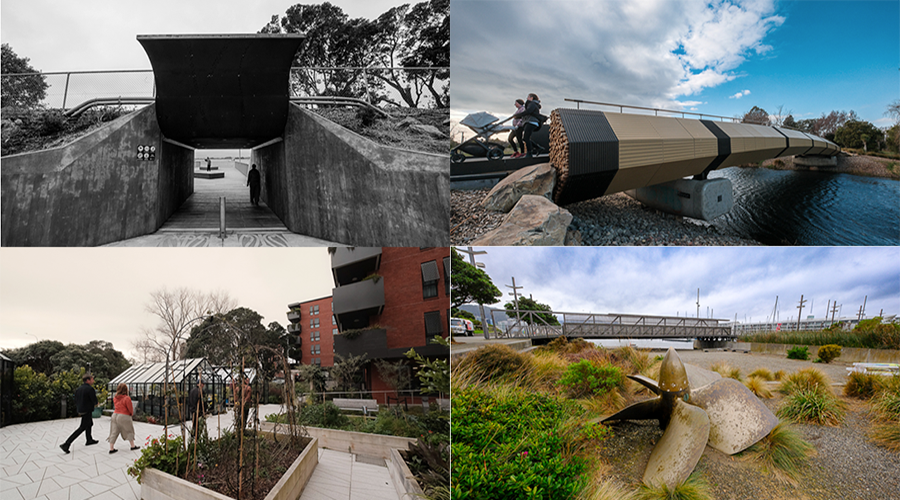
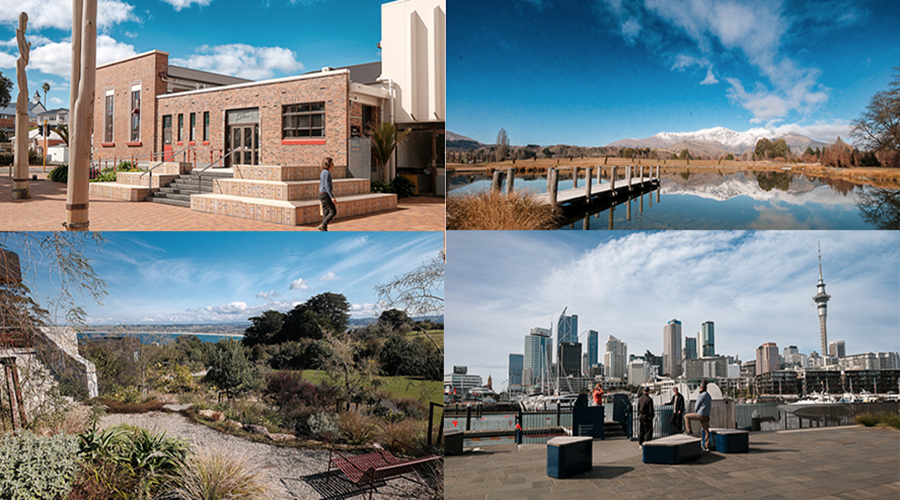
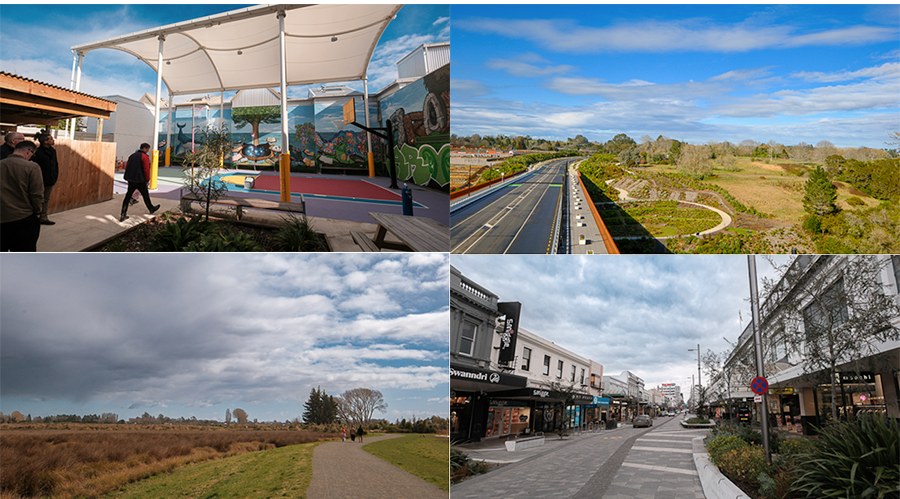
As can be widely appreciated, this judging activity is no easy task. The road trips affirmed for me the irrefutable contribution that landscape architecture has made around the motu, and the way it can lead to positive change.
There are many insights that are still resonating with me. These arose from a range of general observations, including:
Dedicating spaces for children as an important part of the everyday built environment. Ensuring inclusive access, and the well-being of kids (of all ages) in urban street spaces, playgrounds and these areas as a catalyst investment is at the heart of urban regeneration.
Cultural integrity by design, and making the time to engage and understand a place as part of the essential process allows for the embedding and expressing of values, traditions, history and knowledge unique to each place.
Interdisciplinary partnerships were a defining feature of many projects, particularly in the integration of landscape, architecture, and engineering systems. These projects demonstrated a high degree of interconnectedness, with landscape architects influencing building and infrastructure design, and vice versa, to create fully integrated and enduring places. Seeing nature and three waters infrastructure within the built environment spoke to resilience, biodiversity, and long-term green infrastructure – enabling developers to come in without the worry of needing to address the water at a site-by-site scale.
The detailing of hardscape, structures, and material palettes demonstrated a strong commitment to local sourcing and whole-of-life sustainability. Planting design was equally considered, responding to site-specific environmental conditions, infrastructure requirements, and aesthetic aspirations. Together, these elements produced landscapes that were functional, resilient, and deeply connected to place.
What stood out overall was the visible care in the execution and thoughtful resolution of landscape components, from the junction of materials to the overall composition. The result was a level of craftsmanship and attention to detail that communities can recognise and appreciate (beyond simply engineered solutions).
Another strong theme observed by the judging panel were the routes dedicated to health and leisure, supporting both recreation and transport connections. Far more than just facilitate movement, conditions were put in place to encourage active lifestyles, improve physical and mental wellbeing, strengthen connections with nature, and create opportunities for social interaction. In many instances these corridors looked to be transformative.
An absolute privilege
Not often do we have the time to truly look at this number of projects across this island nation’s landscape.
It drives you towards re-embracing an appreciation of the extraordinarily diverse environments that abound around us, where great landscape architecture stands out in balance with the values of our place, and resilience needed ahead, and with a point to make about the level of care and intent needed in the world.
It has been my absolute privilege to be in service to the NZILA on this awards trip, to share this experience and time with a great judging team of Andrew, Kirstie, Hugh, and Whare as our guest judge. Everyone brought their own unique lens and generous sets of insights to each project site – a logistical feat facilitated by Angela Hunter and Trina Edwards of NZILA, thank you.
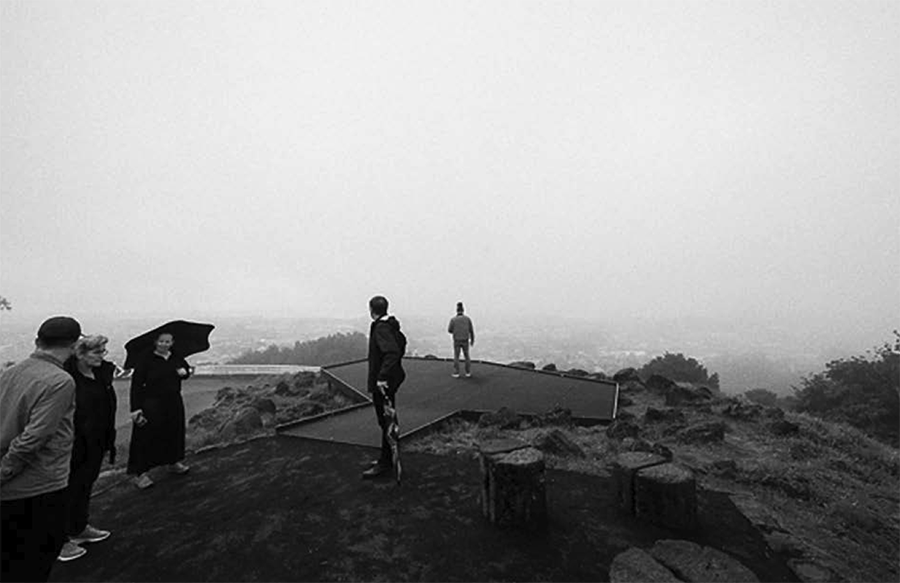
For me the cumulative joy of the road trip was rendered into trying to capture what we heard back through the camera lens. Such a brief ‘snapshot’ to absorb it all. I hope some of the images shared here convey a few such moments and experiences – not just familiar to fellow landscape architects but to a much wider audience.
Lastly, in my role as head judge, I have been reminded of and guided by the wisdom I gained from attending the 2014 Venice Architecture Biennale where curator Rem Koolhaas implanted the theme of Fundamentals – focusing not on ‘starchitects’ but on the “inevitable elements of all architecture used by any architect, anywhere, anytime.”
These awards provide some necessary ingredients … so we are all really looking forward to being part of a collective celebration at the Awards Gala event in November, when we can look back on the clear significance of this body of work that’s happening around us.
______________
Thank you to Sam for access to his images - his Instagram handle is @sambourne_landscape
The 2026 Resene NZILA Awards Gala will take place at the One NZ Stadium in Ōtautahi Christchurch on the evening of Thursday 5 November. You can view the full shortlist here.