Landscape first: Why great communities begin with the land
Contributed by James Paxton, Reset Urban Design
Before the first road is drawn, before a lot boundary is set and long before homes appear on a plan, every successful masterplan should answer one question: what kind of life does this land want to support?
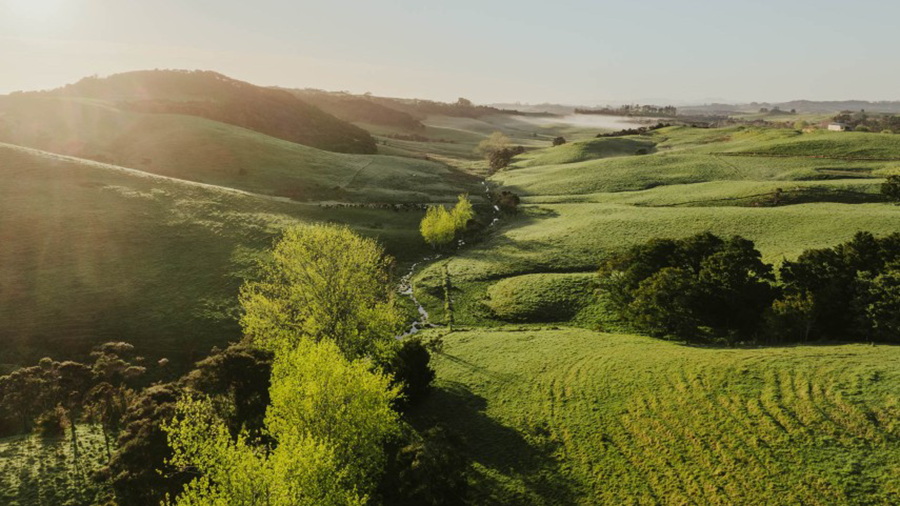
Too often, development begins with engineering, yield and transport before asking how people will experience a place. Parks and open space become the land that remains after the ‘important’ decisions have been made. Landscape is treated as an amenity rather than the framework that gives a community its identity.
At Reset, we believe the sequence should be reversed. The landscape should lead. When ecology, landform, water, movement and public life become the starting point, development produces communities that are healthier, more resilient and more memorable.
Few projects, we believe, demonstrate this philosophy better than Mangawhai Hills. From Patrick Fontein's original vision and the early masterplanning by Doug Leighton of EDG Planning & Design, the site's ridgelines, wetlands, native bush and long views shaped the community before subdivision design began. Reset joined the project during the Private Plan Change process and has continued through consenting, detailed design and construction, helping carry that original landscape-first vision into reality.
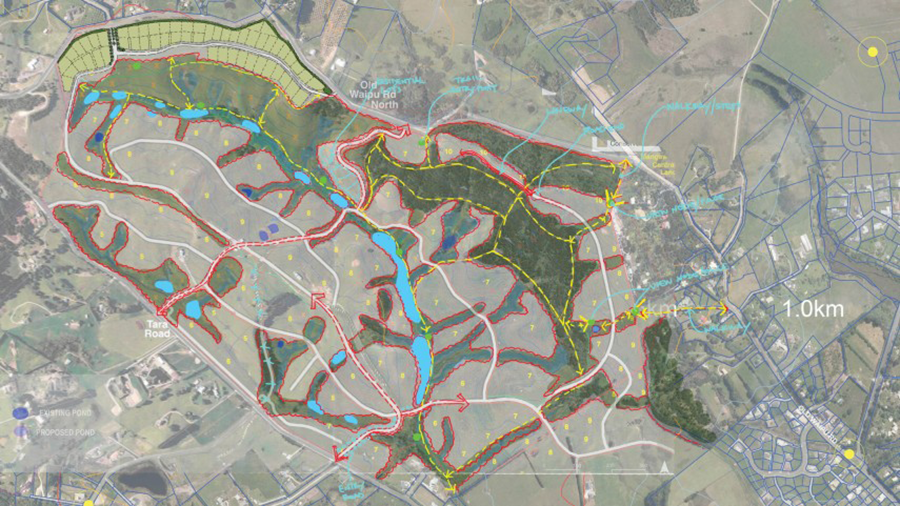
More than half of the 185-hectare site has been protected for conservation, native bush restoration and wetland regeneration. That decision did more than preserve open space, it determined where development should occur and how the community would function.
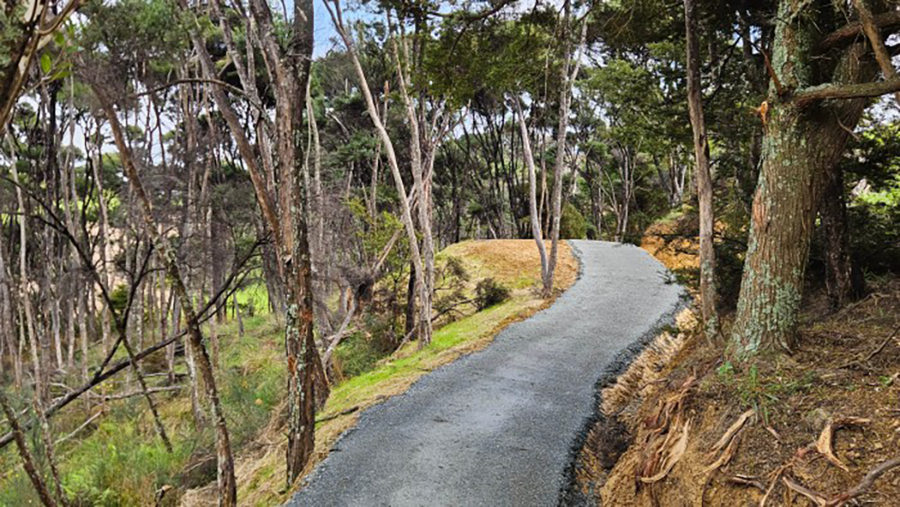
Once the landscape becomes the organising framework, recreation naturally becomes infrastructure. Around 15 kilometres of publicly accessible walking and cycling trails connect neighbourhoods with restored bush, wetlands and ridgelines. Rather than being destinations visited occasionally, these landscapes become part of everyday routines.
Imagine leaving home for a morning walk beneath regenerating native forest, children riding to visit friends along bush paths, or neighbours meeting at a lookout or reserve with views over the landscape. These moments are small, but together they shape stronger communities.
Technology is important, but it is not what gives a place character. Solar generation, water systems, stormwater treatment and low-carbon infrastructure all contribute to environmental performance. Their greatest value, however, is that they support a masterplan already grounded in the landscape.
Stage 1 includes approximately 65,000 native plants, wetlands, stormwater attenuation and integrated environmental infrastructure. These investments are experienced through the trail network and restored landscapes rather than hidden behind fences.
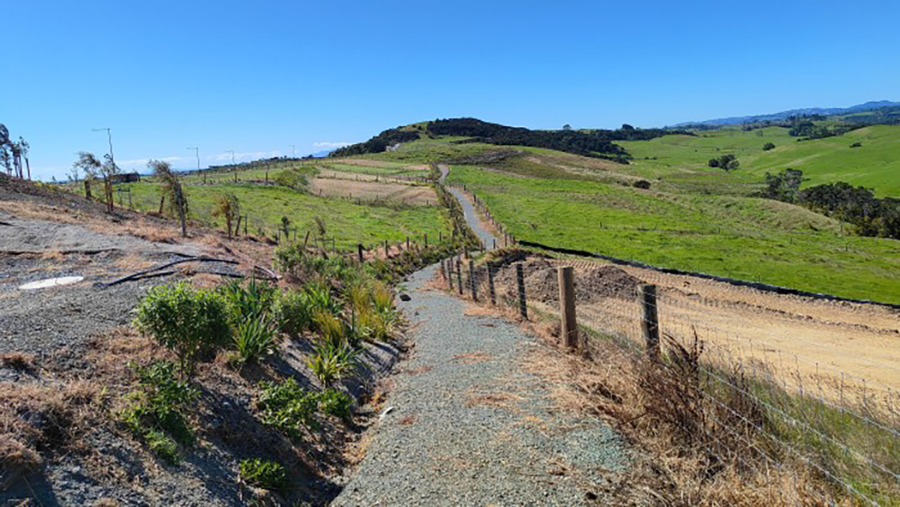
One of the greatest challenges in large-scale development is preserving the ambition of the original masterplan. Budget pressures, engineering requirements and changing priorities can gradually dilute the qualities that made the vision compelling. Remaining involved from planning through construction has enabled the landscape-first philosophy to continue informing decisions as the project evolves.
This approach is not unique to Mangawhai Hills. Other projects such as Waimānawa, Tauriko West and the Rotokauri Greenway demonstrate the same belief that ecological systems, movement networks and public space should organise development rather than be fitted around it.
Great communities are rarely remembered for the width of their roads or the efficiency of their lot layout. They are remembered for the places where people gather, the landscapes they inhabit and the experiences that become part of daily life.
Mangawhai Hills illustrates that choosing to protect land can create greater long-term value than maximising what can be built upon it. It is a reminder that landscape architecture and urban design is not simply about designing parks, it is about shaping how communities live.
James Paxton: “The best masterplans don't begin with a subdivision. They begin with an understanding of the land. Everything else follows”.