Cross-overs between architecture and landscape architecture
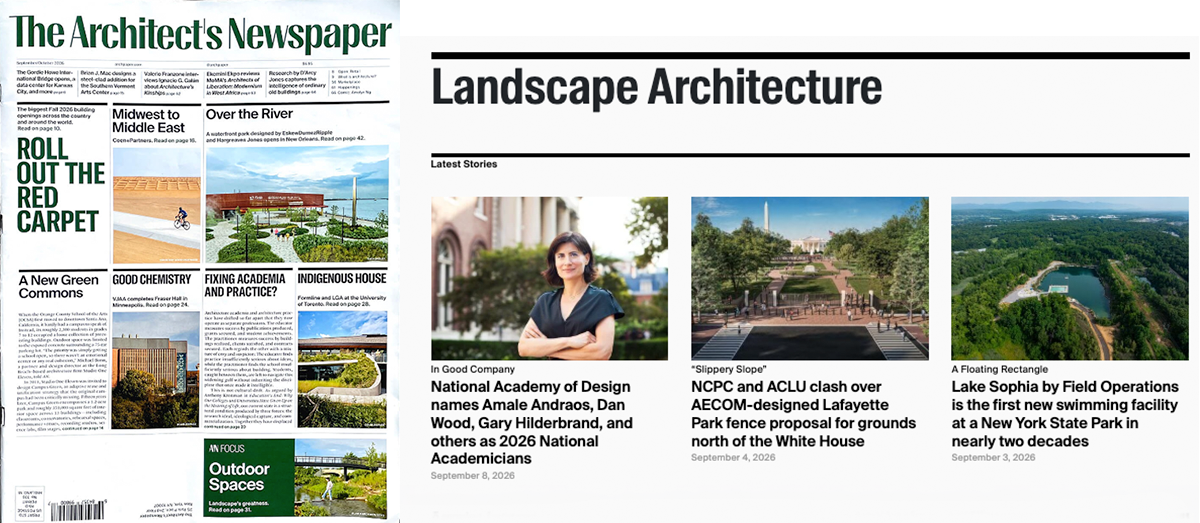
Just in time for the 2026 Conference of the American Society of Landscape Architecture in Los Angeles from 16-18 September, the September/October issue of The Architect’s Newspaper (known as AN) is featuring landscape architecture as its focal theme.
The content features a studio visit with Coen+Partners and a thinkpiece on the importance of parks to combatting loneliness for David Rubin of Land Collective, as well as stories about a park along Manhattan’s East River designed for flood resilience, a park in New Orleans that connects a string of riverfront destinations, streetscape improvements across Philadelphia, and Surfacedesign’s work at a winery in California.
In an editorial piece to mark this special issue, AN’s editor-in-chief Jack Murphy noted, with examples from the controversial political climate in the USA, that there are “many competing forces … at play within landscape architecture projects, from nature to infrastructure, maintenance, and time”.
In other news carried on the Archpaper.com site last week the National Academy of Design announced that it had elected 12 individuals from across the United States to the ‘Class of 2026’ as new National Academicians in recognition of their contribution to art and architecture.
The Academy is an honorary association of American artists, founded in New York City in 1825 to which membership is limited to 450 people. While architects were recognised and included from the Academy’s inception in 1825, landscape architects only joined its membership in 1973, when pioneering modernist landscape architect Thomas Church (of California) was elected as an Associate Academician.
Members of the Class of 2026 who will be formally inducted into the Academy next month are made up of eight visual artists, one sound artist, two architects and one landscape architect - Gary Hilderbrand of Reed Hilderbrand.
Gary Hilderbrand currently holds the Peter Louis Hornbeck Professorship in practice of landscape architecture at Harvard GSD and has written monographs on landscape architects Innocenti & Webel, Daniel Urban Kiley, and Eero Saarinen. His firm’s own monograph, Visible | Invisible, won an ASLA communications award.
As with past classes, each new academician is invited to donate a work to the Academy’s permanent collection, a practice that has built the institution’s holdings to more than 8,000 paintings, sculptures, works on paper, architectural drawings, and models.
Notes:
AN also runs the multi-category Archpaper Awards programme in the US covering Best of Practice (2026 winners here with LA firms listed by region), Products (now in the judging phase) and Design (still open for submissions until 18 September).
The first issue of AN was ‘soft launched’ on 10 November 2003. Its driving force has been Diana Darling. AN prints seven national editions annually, with a dedicated focus on landscape architecture and urbanism traditionally designated to its early autumn issue.
‘Architecture as a team sport’
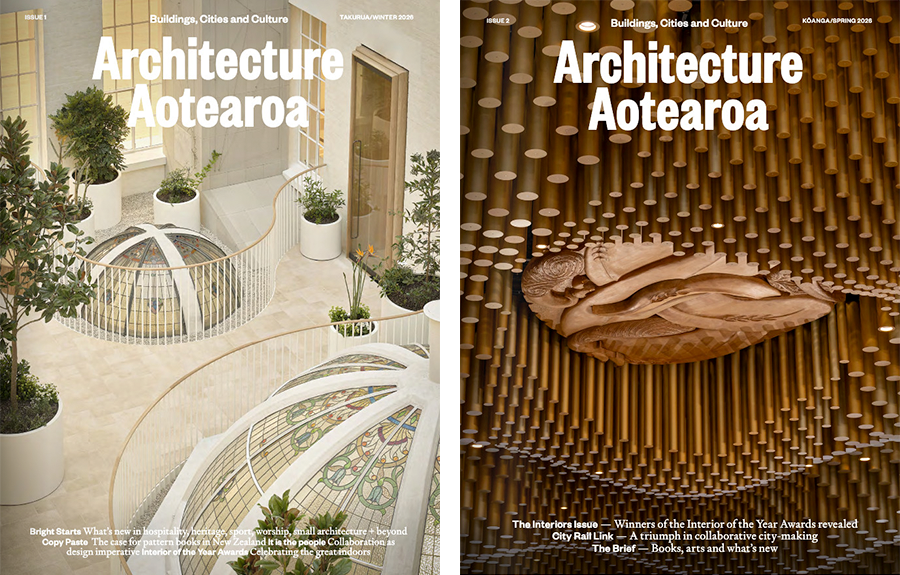
Here in Aotearoa New Zealand, Nook Publishing’s new magazine Architecture Aotearoa: Buildings, Cities and Culture has powered through its first two issues - with the digital Spring edition running to 148 pages.
The inaugural issue of Architecture Aotearoa - which is filling the space occupied for so long by the now defunct Architecture NZ - set forth its vision to be a champion of “architecture as a defining force in New Zealand's built, cultural, political, and everyday life,” along with holding a responsibility to document “the built environment as experience, system, and narrative; connecting Aotearoa to the wider world while sharpening what makes it distinct”. To support this kaupapa, and the exploration of architecture within wider contexts of urbanism, engineering, arts, design, business, policy, and beyond, an editorial board is being assembled.
As a sign of the pursuit of a progressive discourse that enhances different disciplines, this first issue gave a voice to a cross-section of professionals on the topic of how they approach making spaces and places that resonate in Aotearoa, in a section called Collaboration.
This included an excellent point of view on ‘Shared authorship’ from Debbie Tikao, former president of Tuia Pito Ora New Zealand Institute of Landscape Architects. Debbie emphasised that achieving meaningful outcomes is a matter of focusing on “what we are leaving behind for future generations”.
As Debbie wrote: “We're here to shape cities and landscapes that express two world views - Māori and Pākehā. As we rethink urban and rural areas in the face of climate change, those Māori principles — of mahinga kai, of the lightest footprint, of ki uta ki tai - become not just culturally important but (result in us becoming) resilient and adaptable to the changing world we live in”.