Matariki reflections: Henry David Thoreau, landscape, and the search for a Deliberate Life
Regular LAA contributor Garth Falconer has been reflecting on Henry David Thoreau’s life and writings and their relevance to Landscape Architecture – prompted, Garth says, “by a curiosity that his works constantly featured in the early establishment of LA going through to even Harry Turbott”. From his reading of Thoreau, Garth divines a need to refer to history to navigate contemporary and environmental issues.
_____________
by Garth Falconer
In these wide-ranging and challenging times of social unrest, new obligations through subscriptions, algorithmic distractions, and growing unease about continued environmental decline, the nineteenth-century American writer Henry David Thoreau (1817 -1862) might seem an unlikely guide — yet his works, speak directly to many of the questions confronting us today: How much do we really need? What happens when economic systems consume more of life than they give back? And how should ordinary people respond when institutions lose moral legitimacy?
For landscape architects the work of Thoreau, a profound observer of landscape, was seminal to the early establishment of the profession and leaders such as Fredrick Law Olmsted and Dan Kiley. Thoreau’s works, especially Walden; or, Life in the Woods (1854) and Civil Disobedience (1849), still continue to challenge assumptions about land use, productivity, settlement, labour, and the relationship between humans and the environments they inhabit.
The lesson from Walden Pond
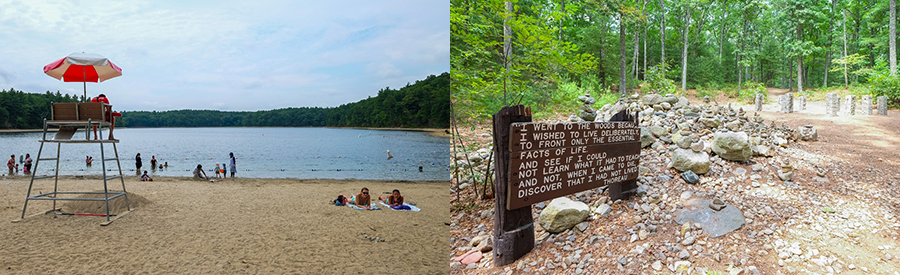
Walden pond across the sands of time. (Images provided: Wiki Commons)
When Thoreau built a small cabin beside Walden Pond outside Concord, Massachusetts in 1845, and lived there for two years, two months and two days, he sought to test how little was required to sustain a meaningful life.
He constructed his own modest dwelling, cultivated food, recorded seasonal changes, and reduced dependence on industrial systems that he believed fragmented both labour and consciousness. For Thoreau, landscape was not scenery or property. It was an active medium through which ethical, social, and ecological relationships could be clarified.
This perspective has increasing relevance in contemporary New Zealand. Landscape architects today work within a seemingly bi-partisan context shaped by housing unaffordability, ecological degradation, flood vulnerability, infrastructural pressure, and the continuing privatisation of land and resources. At the same time, there are signs of nascent public interest in regenerative landscapes, low-impact living, urban agriculture, indigenous planting, and forms of settlement that reconnect people to local ecologies.
Machine-like life for humans
One of Thoreau’s most enduring critiques was directed toward the division of labour that accompanied industrial modernity. He argued that increasingly specialised economic systems separated individuals from the practical and ecological realities that sustain life.
Shelter, food, energy, and materials became abstracted through distance, complexity and appeals to vanity. In spatial terms, even back in the mid-19th century Thoreau discerned that industrial society produced landscapes of extraction and consumption rather than reciprocity and stewardship.
Contemporary New Zealand exhibits many of these same patterns. Urban residents may live physically close to extraordinary natural systems while remaining functionally disconnected from them. Much suburban development continues to prioritise private consumption and automobile dependency, even as cities face intensifying climate risks and social fragmentation. Neither of these settings easily allow for an explicit recognition that landscape is inseparable from social structure and daily life.
Thoreau’s emphasis on building and growing also has particular relevance for design disciplines. His cabin at Walden Pond was intentionally modest, constructed from reclaimed materials and carefully accounted for in both labour and cost. This was not merely an aesthetic decision but an ethical one.
Simplicity, for Thoreau, represented freedom from unnecessary economic dependence and freedom from landscapes organised entirely around accumulation. His notes about the then 50% rate of home ownership and the perpetual cycle of indebtedness are still strikingly current today.
Landscape architects increasingly confront the contradiction between sustainability rhetoric and highly resource-intensive development models. Thoreau’s insistence on sufficiency rather than excess offers a counterpoint to design cultures still heavily shaped by spectacle, consumption, and growth.
At the same time, his essay Civil Disobedience extends Thoreau’s thinking from personal practice into political responsibility. His argument that individuals must resist unjust systems has continuing significance for environmental planning and landscape advocacy.
Neutrality is not always possible
Across New Zealand, disputes over freshwater degradation, coastal development, mining, and infrastructure projects increasingly place designers, planners, iwi, and communities in ethical rather than purely technical positions. The profession itself is often asked to mediate or compromise between ‘economic imperatives’ and ‘ecological limits’.
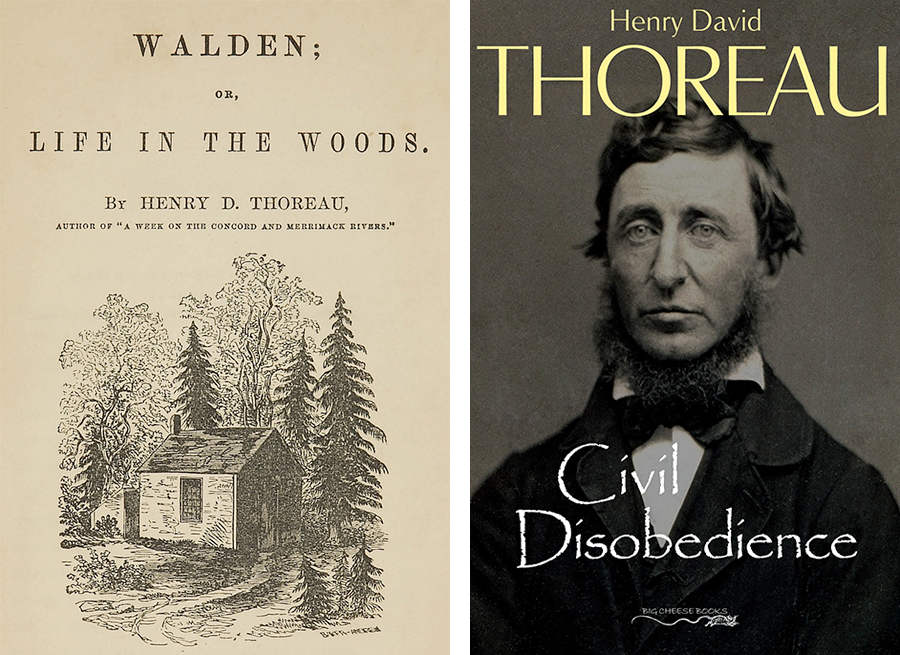
Thoreau’s work suggests that neutrality is not always possible. Fundamentally landscape is political because it reflects decisions about whose values, histories, and futures are prioritised. This insight aligns in important ways with Māori approaches to whenua and kaitiakitanga, where land is understood not as an inert resource but as a living relational system involving responsibility, ancestry, and care.
While Thoreau emerged from a very different intellectual tradition, his attentiveness to seasonal cycles, ecological observation, and moral relationships to land can be said to create productive points of dialogue with contemporary bicultural environmental thinking in Aotearoa.
Importantly, Thoreau was not advocating total withdrawal from society. Nor does or can his work provide a literal blueprint for contemporary settlement. Modern cities necessarily depend upon cooperation, infrastructure, and technical specialisation. Yet he asks how much of modern complexity genuinely contributes to human flourishing, and how much simply entrenches dependence, alienation, and environmental decline.
For landscape architects, this challenge is marked by urgency. As climate adaptation increasingly becomes a defining condition of practice, the discipline must consider (or reconsider) not only how landscapes perform technically, but how they shape cultural values and patterns of living. Thoreau reminds us that design is never only about form-making. It is also about structuring relationships between people, labour, ecology, and time.
In this sense, Walden remains deeply contemporary. Its enduring relevance lies not in nostalgia for wilderness, but in its insistence that landscape can still function as a site of ethical inquiry and cultural transformation.
For New Zealand — where questions of land, identity, ecology, and settlement remain central to our national life — Thoreau’s vision of deliberate inhabitation offers a framework that is both critical and generative.