For book lovers: A bouquet of anniversaries and new titles
What are a book’s constituent parts?
Ten years ago Ralph Johns answered that question on the acknowledgements page to Isthmus’s Coast. Country. Neighbourhood. City. with this: “To words, photos and drawings, you might add patience, optimism and generosity of spirit”.
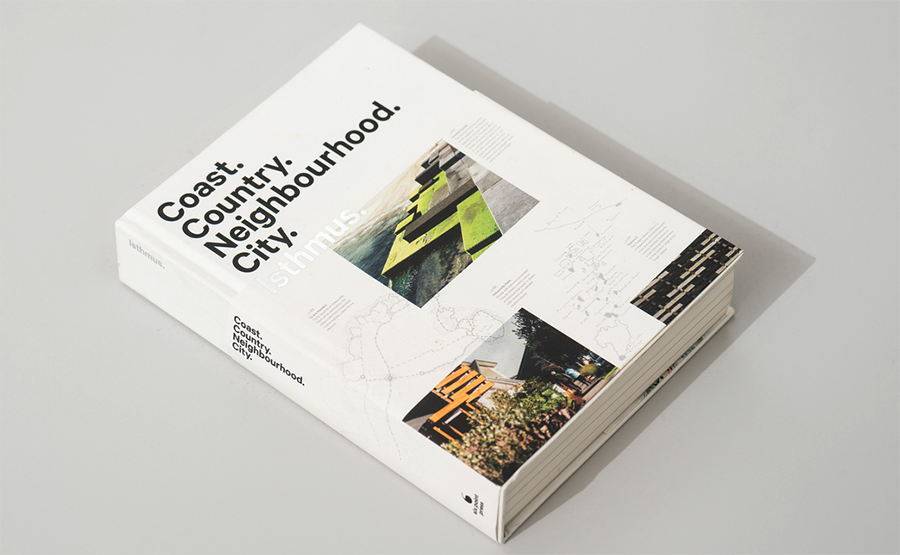
This chunky 454-page book, published not far shy of the firm’s 30th anniversary by six point press, was edited by Michael Barrett - with Ralph and Sarah Bishop as co-editors. In his foreword Barrett stated it was a book that “serves to explain the DNA of the practice”. It was the NZILA Category Winner for Communications in 2017 and won the NZILA Charlie Challenger Supreme Award that same year, as well as picking up a Best Design Award for Inhouse Design in 2016.
Writing for NZ Geographic, reviewer Vaughan Yarwood classified the compendium of 25 projects, prefaced with four essays, as more than the sum of its parts. He pays it this compliment:
What rescues the book from being a 450-page CV—albeit a beautifully designed and presented one—is the attention it gives to the philosophical underpinnings of the projects. In doing so, it becomes a meditation on how, as New Zealanders, we might best interact with the land, and through the built environment express and reinforce our sense of identity and community. It encourages, in Barrett’s words, “deep thinking about the nature of place”.
For context Yarwood’s review singled out Transpower’s North Island Grid Upgrade and Hobsonville Point, as well as Dr Jacky Bowring’s quotably on-point observations about Critical Regionalism; a counterpoint to the visual representations of seductive “perfect places” flooding magazines and websites.
Jacky’s brief essay, ‘Between here and there: Designing the Landscape in 21st Century New Zealand’ characterised arrival of the Isthmus book as a “timely moment to pause and take stock”, and closed off with a central question: Does a fluid sense of practice set up an expanded field in which professional distinctions are less important than a common concern with the design of place?
An aside: Fast forward to 2025 and Isthmus principals Helen Kerr and Andre de Graaf were part of Te Pare School of Architecture and Planning's annual lecture series at the University of Auckland in April. Their lecture compared growth challenges in changing environments, including adaptation master planning in regional towns with declining populations and measures of urban wellbeing in rapidly growing city neighbourhoods such as Hobsonville Point. A video of the lecture is available to access on the Isthmus site.
A second book that marked its 10th anniversary in 2025 is Vernacular: The Everyday Landscape of New Zealand (Potton & Burton, 2015), penned by Philip Smith of O2 Landscapes with photographs by David Straight.
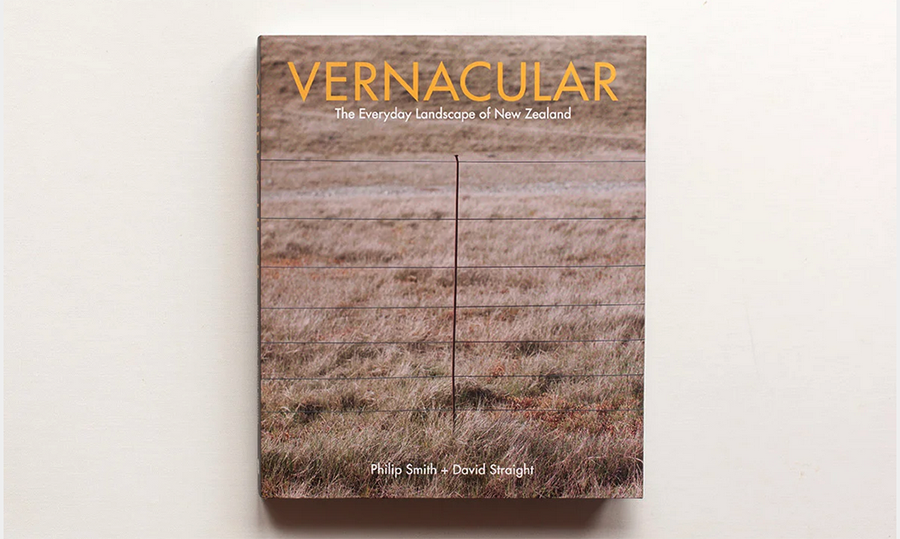
As stated in its ‘Final Words’ chapter, fundamentally it’s a book concerned with “the act of looking”. Think John Berger. The way it elevates the ‘mundane and ubiquitous’ has parallels to the 55 text-only vignettes found in Matt Vance’s 2024 book Innerland, also published by Potton & Burton.
Now sadly out of print, the writing in Vernacular provides an accomplished and compelling survey of everyday elements of everyday landscape. Words and pictures perform in a sympathetic choreography, and for both followers and practitioners of landscape design they present a wealth of “source material” that coincides with a myriad of often taken-for-granted layers of our built environments - be they urban, suburban, rural, wild places, industry and infrastructure, or cultural.
Vernacular challenges the idea of ‘authorless’ landscape, pointing instead to the significant level of originality made real by the “responses (of) disparate individuals within distinct contexts”. Such closer observation of the everyday landscape can, Philip suggested, “act as a lens for developing approaches that bear many possibilities”.
Thankfully Philip’s way with words is in full flourish through the prolific online ‘journal entries’ and essays that give O2 Landscapes its edge.
To round out this trio of notable anniversaries, another book that is as timely now as it was 15 years ago is Beyond the Scene - landscape and identity in Aotearoa New Zealand (Otago University Press, 2010).
At the time Dr Diane Menzies, a Life Member of Tuia Pito Ora NZILA, was President of the International Federation of Landscape Architects and contributed the book’s foreword. As Diane writes, while it was apparent there was change happening to perceptions and professional evaluations of landscape, the dominant representation of landscape as a “scene out there” rather than a “kaleidoscope of memories, messages and people” had persisted for too long, placing the dialogue on landscape under “self-made limitations”.
As well as contributed chapters by the book’s co-editors Jacinta Ruru, Janet Stephenson and Mick Abbott there are nine other authors featured in Beyond the Scene, including a Canterbury poem sequence from former poet laureate David Eggleton.
The premise of the book was to ask writers to choose a landscape that was important to them and to write about it from the perspective of their life experience and knowledge.
The co-editors, who dedicated Beyond the Scene to inspirational ecologist Geoff Park (1946-2009) for his “meticulous research and evocative writing on the interlocking of ecological, historical and cultural imperatives”, found a concordance across the chapters on certain themes. Put simply those themes were:
Landscape is as much emotional as physical
Landscape contains an enduring record of our stories
Landscape merges space and time
Landscape is highly social
Landscape is immersive
The ‘wrap’ was that, ultimately, landscape is at the heart of identity and is best regarded as an ongoing dialogue.
A flowering of books in 2025
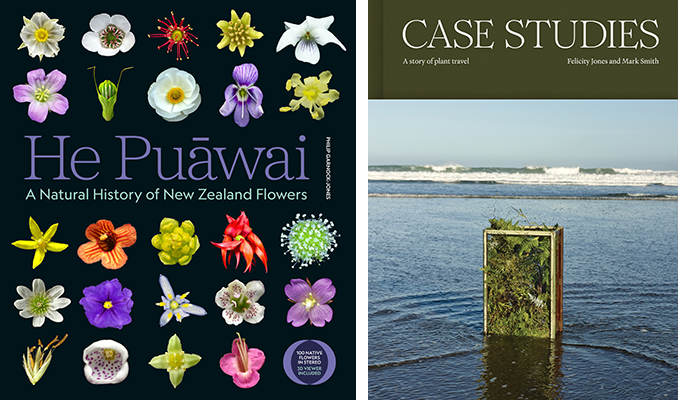
He Puāwai : A Natural History of New Zealand Flowers
Auckland University Press
Blurb: Aotearoa has at least 2,200 native species of flowering plants that have evolved in our unique conditions, and the vast majority of them grow nowhere else on earth. This has made New Zealand a natural laboratory for studies of flower biology and a vibrant wonderland of gardens and bush for Māori and Pākehā to enjoy. He Puāwai is a natural history of New Zealand flowers, focusing on 100 native species to represent the full range of flower phenomena of Aotearoa – from familiar iconic flowers of kōwhai, mānuka and pōhutukawa to oddities like the water-pollinated flowers of eelgrass, bat-pollinated blossoms of kiekie, and the world’s smallest flowers, Wolffia. Each flower’s text describes and explains its structure and functions, alongside over 500 remarkable photographs that enable the reader (with the viewer included in the book) to view the flowers miraculously in 3D. For gardeners and foragers, for bush walks and coffee tables, He Puāwai is an inspirational natural history of the native flowers of Aotearoa.
Case Studies: A Story of Plant Travel
Massey University Press
Blurb: In 1829, London physician Dr Nathaniel Bagshaw Ward sealed a plant inside a glass container — a simple experiment that helped change the way plants were transported across the world, transforming gardens, ecosystems and lives in the process. This book traces that story through photographs and essays, pairing striking contemporary images of cased plants — shot in New Zealand and in the United Kingdom — with reflections on the implications of plant transfer/ movement. Across six essays by Gregory O’Brien, Dame Anne Salmond, Luke Keogh, Mark Carine, Markman Ellis and Huhana Smith, the book considers not only the scientific and colonial ambitions that drove botanical exchange, but also its consequences: ecological disruption, the spread of invasive species, and the marginalisation of Indigenous knowledge systems. Case Studies also gives space to other voices — those speaking to mātauranga Māori, to tino rangatiratanga over native species, and to the ongoing work of conservation and reclamation. It is not only a record of historical movement, but also a reminder of the values and choices that continue to shape the land beneath our feet.
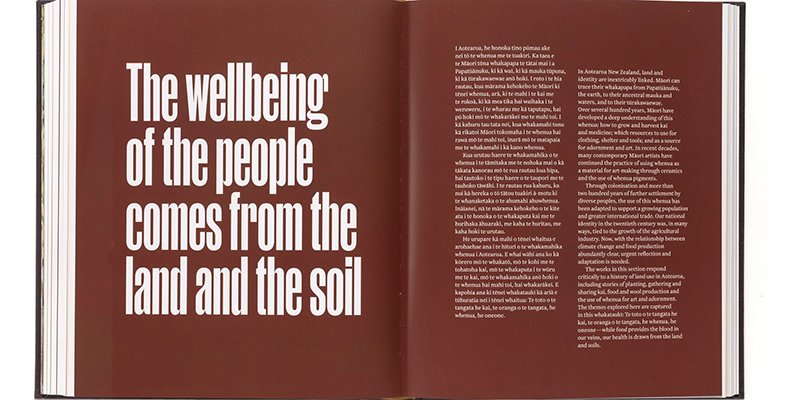
Whenua
Christchurch Art Gallery
Blurb: This book emerged out of ‘He Kapuka Oneone—A Handful of Soil’, an expansive, many-layered exhibition of artworks from the collection of Christchurch Art Gallery Te Puna o Waiwhetū. Exploring ideas of kaitiakitaka, environmentalism, land use, migration and activism through historical and contemporary artworks, Whenua brings together a rich variety of voices and perspectives affirming the innumerable ways that the land has informed identity and belonging in Aotearoa New Zealand. Whenua contains almost 150 artwork images, along with text from numerous contributors and interviewees including: Hana O’Regan, Rebecca Rice, Jenny Sew, Hoy Agnew and Trevor Agnew, Jacinta Ruru, Riki Manuel and Ranui Ngarimu, Peter Vangioni, Mark Adams and Bridget Reweti, Matariki Williams, Maire Kipa, Paora Tapsell, the Kaihaukai Collective, Chloe Geoghegan, Kirsty Dunn, Emalani Case, Lily Lee, Bev Moon and Jacquelyn Greenbank, Melanie Oliver, Su Ballard and Huhana Smith.
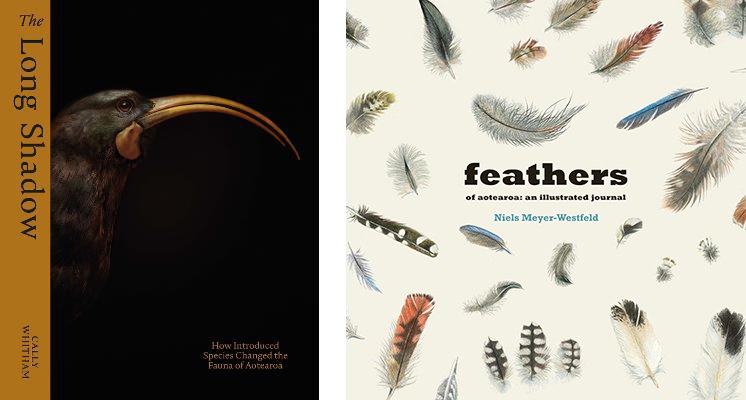
The Long Shadow
Bateman Books
Blurb: When European settlers first arrived in Aotearoa New Zealand, they brought with them more than dreams of a new life – they brought plants and animals that forever altered the ecosystem. The Long Shadow explores the captivating and complex history of these introduced species and their profound impact on native wildlife. Through stunning 19th-century-style portraits and vivid historical accounts, this book takes readers on a journey through time, from the ideals of acclimatisation societies to the ecological challenges and losses that followed. It is a story of both destruction and adaptation, revealing the delicate balance between humanity's ambitions and nature's inability to keep pace. The Long Shadow is an homage to the unique biodiversity of Aotearoa and a powerful reminder of the enduring consequences of human intervention.
Feathers of Aotearoa: An Illustrated Journal
Potton & Burton
Blurb: As a nature artist, Niels Meyer-Westfeld has drawn horns, hooves, skin, scales, and fur, but nothing is as versatile as feathers. In this book he explores the feathers of Aotearoa’s native birds, from the long wing feathers of an albatross that enable it to soar endlessly over the oceans, to the tiny, insulating feathers of a penguin. Feathers are one of nature’s most remarkable evolutionary developments, an ingenious solution to the countless environmental challenges that birds face. In this book the author showcases examples of feathers from New Zealand birds, including those used for various styles of flight, those adapted for diving and swimming, and others designed for insulation, light absorption or reflection, hearing, sound production, social displays, camouflage, and deception.
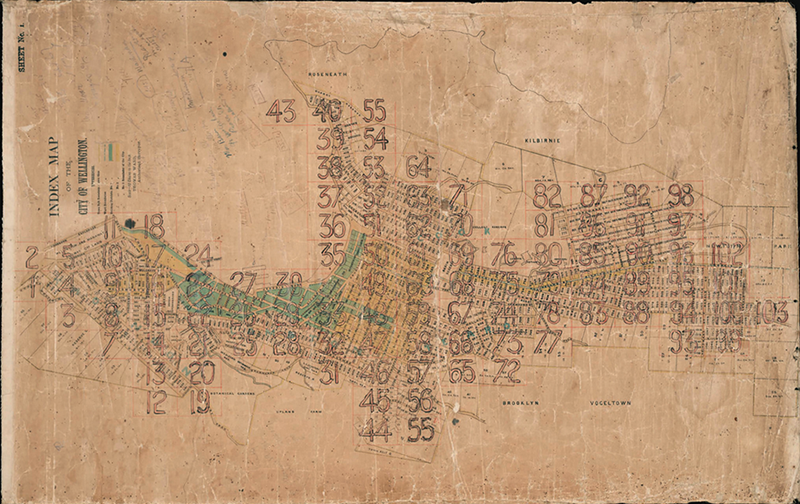
Mr Ward’s Map
Massey University Press
Blurb: In 1891, a remarkable map of Wellington was made by surveyor Thomas Ward. It recorded the footprint of every building, from Thorndon in the north and across the teeming, inner-city slums of Te Aro to Berhampore in the south. Updated regularly over the next 10 years, it detailed hotels, theatres, oyster saloons, brothels, shops, stables, Parliament, the remnants of Māori kāinga, the Town Belt, the prisons, the ‘lunatic asylum’, the hospital and much more, in detail so particular that it went right down to the level of the street lights. Packaged with a cloth case and fold-out jacket, Mr Ward’s Map uses this giant map and historic images to tell marvellous stories about a vital capital city, its neighbourhoods and its people at the turn of the twentieth century.
A final book note: One of the first Writers festivals of 2026 - a sidebar to the Aotearoa New Zealand Festival of the Arts in Te Whanganui a Tara Wellington - will, on 7 March, shine a light on two special books from 2025, when Dr Jessica Hutchings will speak to Pātaka Kai: Growing kai sovereignty (featured by LAA in April) and environmental justice advocate Nadine Hura will do likewise for her “genre-bending essay collection” Slowing the Sun (Bridget Williams Books, 2025).