Enoch Shi: Taking on one challenge after another
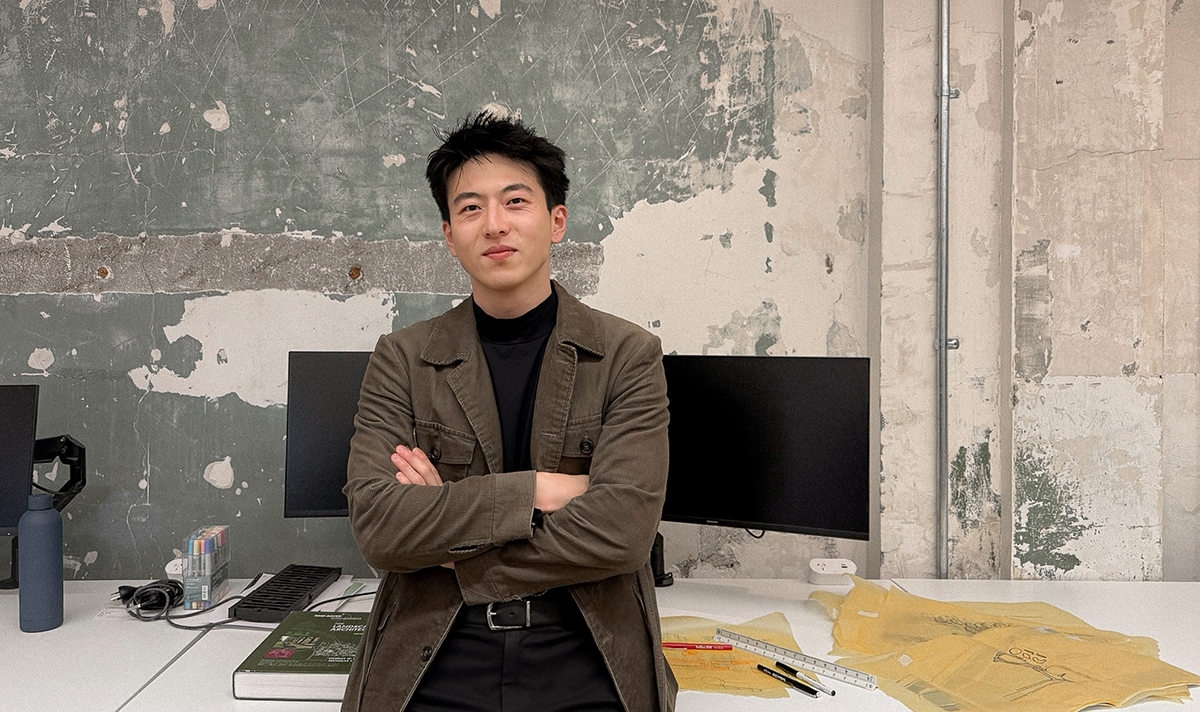
Enoch in situ at the Arcadia studio space at HB Central in Auckland.
Enoch (Yinuo) Shi first came onto the LAA radar this time last year, when he emerged on the winning team at the multi-disciplinary ArchEngBuild challenge - the 13th edition of which is taking place this week in Ōtautahi Christchurch from 30 June to 2 July.
It was the first year that ArchEngBuild included landscape architecture students, and it felt fair enough to lay claim to Enoch given he was in two minds between whether he was heading to being a landscape architect first and architect second, or vice versa.
Enoch's latest news is that, after satisfying an itch to attain a MArch degree from the University of Auckland, he's now flying under well-known landscape architect Mike Thomas's wing at the ambitious Auckland office of Arcadia Landscape Architecture.
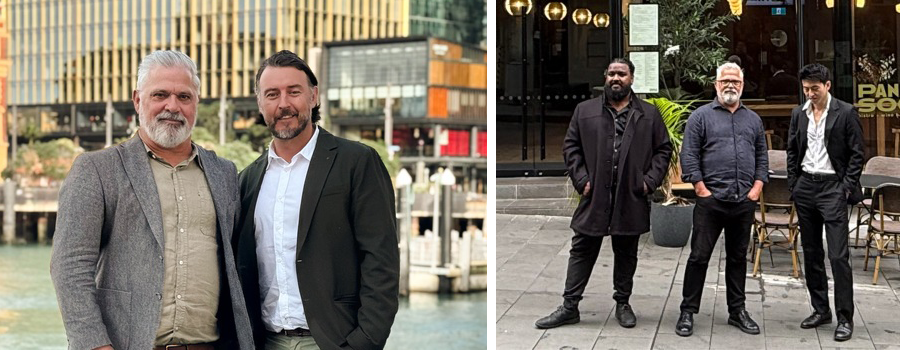
Mike Thomas and Michael Barnett at the NZ beginning for Arcadia Landscape Architecture one year ago (at left) and the Arcadia presence in Auckland today (right).
Brought into being by Alex Longley in Sydney 15 years ago, Arcadia has been having a growth spurt. As well as venturing into New Zealand in July 2025, its network of seven Australian offices now includes a newly established Gold Coast studio.
In a good example of trans-Tasman pollination Alex's fellow managing director, Michael Barnett, happens to be an alumni of Lincoln's School of Landscape Architecture. For last year’s announcement of Arcadia’s move into Auckland - then in Britomart, now in HB Central - Michael commented: "I was born and raised on the Canterbury Plains and while I’ve been based in Sydney for 20 years, I’ve always had the desire to bring Arcadia’s design approach and expertise to projects in Aotearoa New Zealand".
Mike Thomas's many accomplishments include becoming an an NZILA Fellow in 2018, alongside Brad Coombs (Isthmus) and Neil Challenger (Whenua Studio).
After two decades of creating landmarks around the motu with Jasmax, joining Arcadia presented what he has called a "once-in-a-career opportunity" to establish a new design studio. He was ready, Mike told LAA at the time, to inject a new phase into the remainder of his working life, spurred on by "the thrill of the chase". The team building aspect of this 'chase' has seen two new recruits come on board: first Princeton Motupalli and then Enoch - both of whom have spent time learning their trade at Boffa Miskell.
Enoch's studious 'flightpath' to Arcadia
Enoch Shi's flightpath into the profession took off seriously when, confronted with some extraordinary challenges, he completed his Master of Landscape Architecture degree across 2020-22 with Te Herenga Waka Victoria University of Wellington.
In that period the unplanned-for effect of unforeseen Covid travel changes and subsequent country hopping saw Enoch stranded overseas and moving across four continents. It was a complicated journey that began with a visit to his mum in the Middle East and was rounded out by an unexpected stay in Nepal.
His longest span of time without a fixed abode was spent in Istanbul, with thesis note-swapping going back and forth across the ether with supervisor Bruno Marques. Enoch’s chosen project spanned nothing less than an attempt to arrive upon a new idea of what a church could be if it moved beyond the dominant historicity of the built form, and into a form of sacred space that could be more compatible with nature.
Remarkably Enoch was able to leverage and incorporate his temporary life in Istanbul directly into the substance of his MLA thesis (see further below) and its site choices, closing it off with a small addendum of photos depicting the melancholic city - taken on a grandfather’s old film camera and paired with this narrative: "I saw the soul of Istanbul, the energy and comfort the city provides... Its evolution can be seen in the streets, the architecture and the people... The gathering point between east and west, Islam and Christianity, secularism and religion".
Once finally back at home in Auckland the pursuit of a MArch grabbed hold of Enoch, and saw him return to completing another impressive thesis project, this time focused on the relationship between early Chinese goldminers and the contemporary landscape of the Otago goldfields.
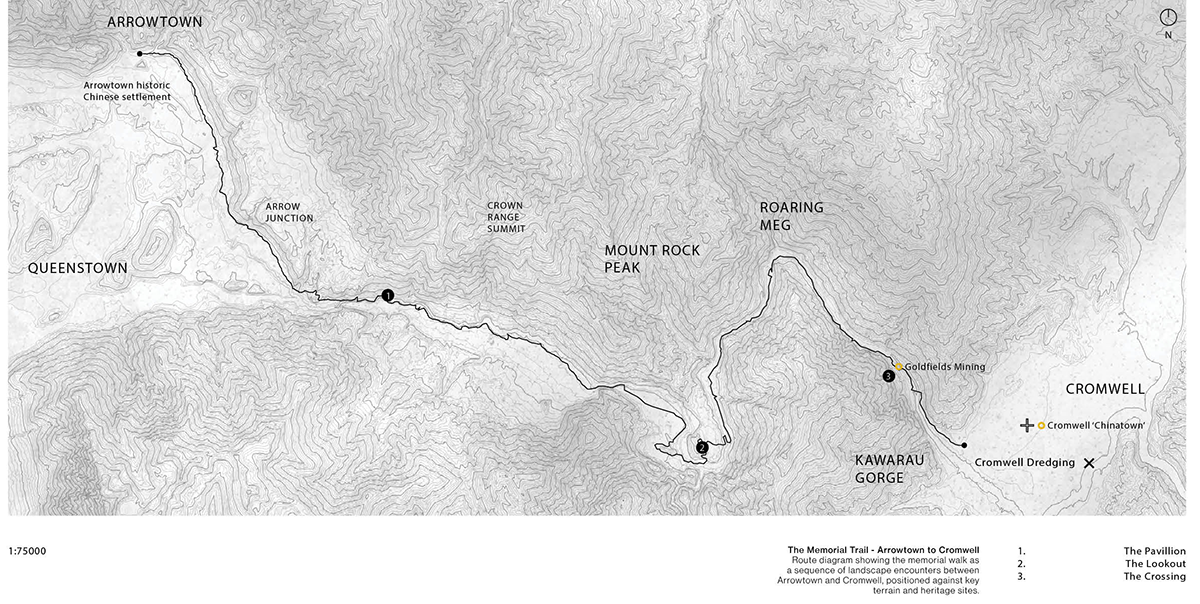
In this project, titled 'Grounded Memory: A memorial trail dedicated to the Chinese gold rush migrants', Enoch concentrated on embedding interventions that were in keeping with remnant traces that can be found dotted along the Arrowtown-Cromwell corridor/ trail to bring "histories back to the surface" through a sequence of experiences, and to "establish the landscape as an active archive".
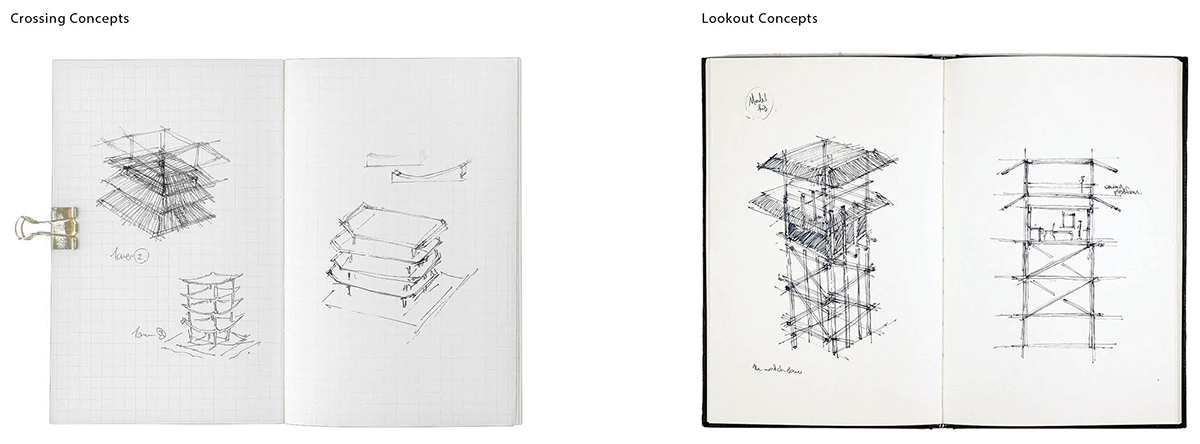
Enoch admits that initial sketches and iterative model studies that were produced to test early intervention forms proved to be too detached from the worked ground of the site, too abstract or too formal.
"This eventually pushed the design away from any literal cultural representation and towards a more infrastructural and mining informed design language," he notes, adding "the most meaningful moments of design in the project happened when the architecture did less".
Each spatial intervention was designed to be instrumental in shaping a different way of memory "to support a legible journey of labour, movement, rest, and remembrance" - including a Pavilion to engage with the landscape, a Lookout to gather in the view and present stillness and a Crossing to turn memory into a physical act of passage.
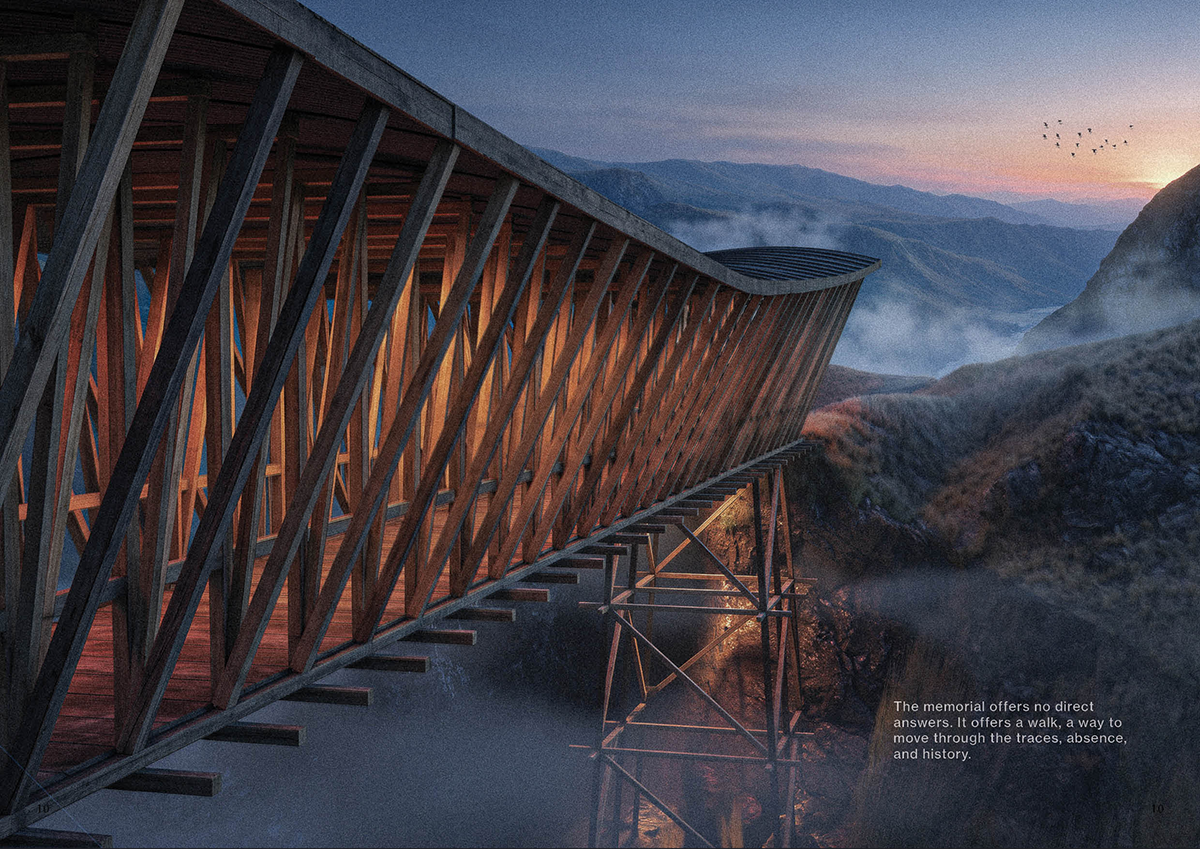
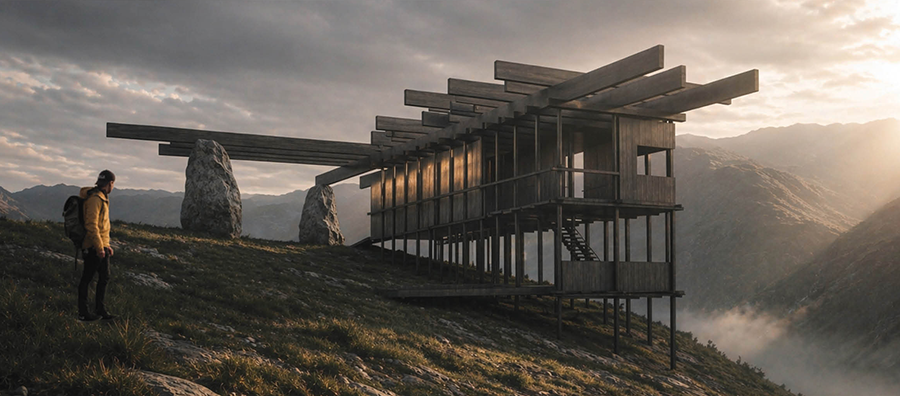
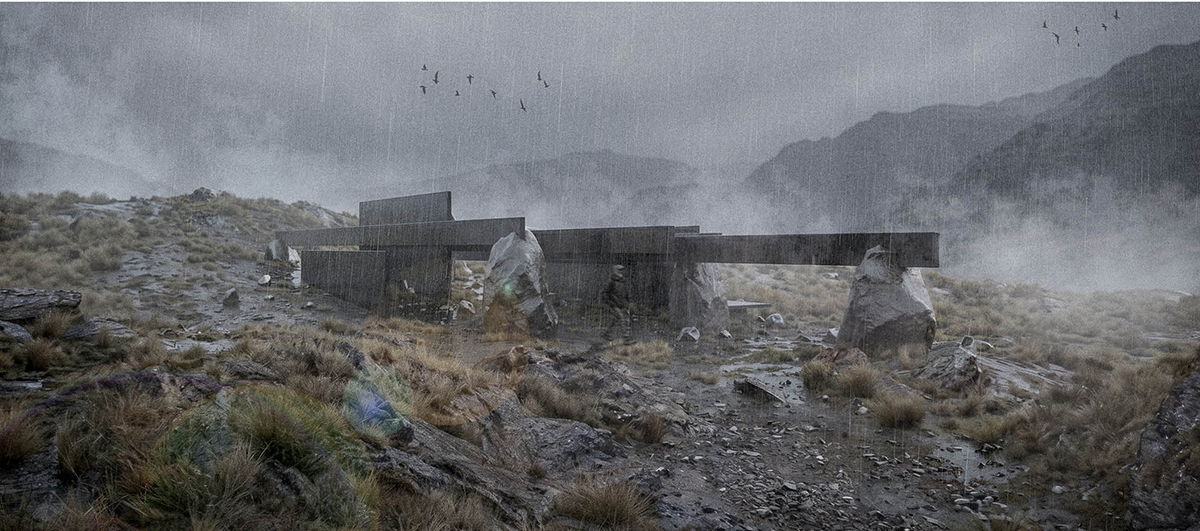
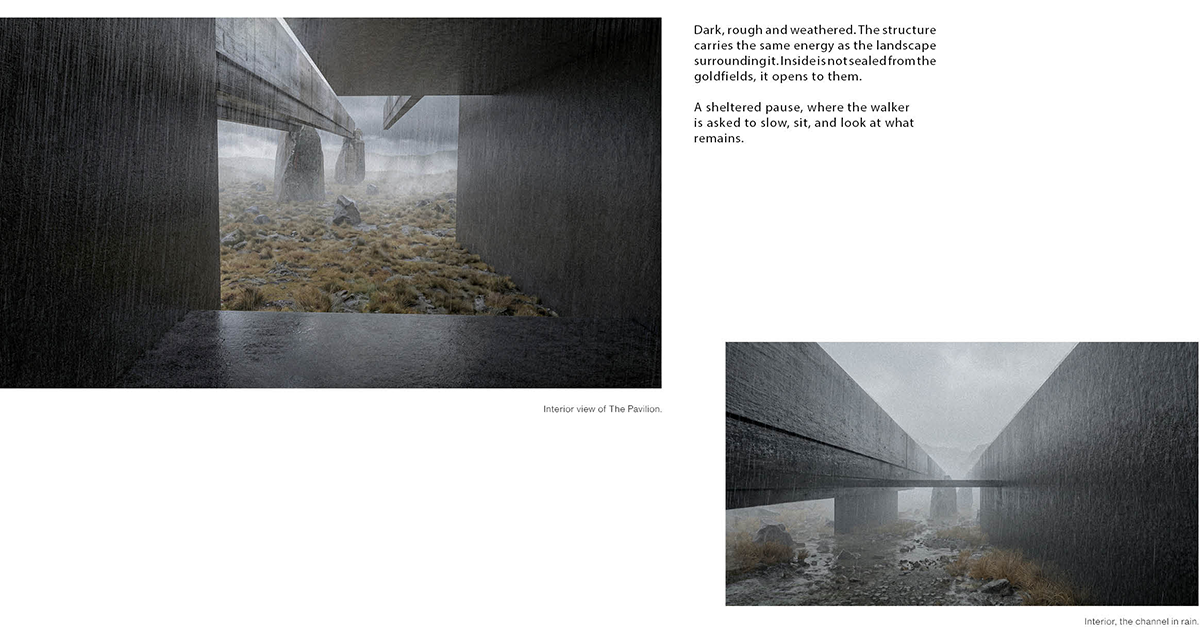
In his completed thesis, supervised by Dr Marian Macken, Enoch makes the point that this was an opportunity to interrogate the integration and adjacency of the two disciplines of architecture and landscape architecture.
Enoch is firm in his premise that the absence of any cohesive records of the Chinese participation in the Otago goldfields constitutes a call for a further memorial response, and that "a landscape-led approach offers an alternative to memorialisation as discrete object. It allows an expansion".
Under the heading Personal Motivations, Enoch relates his own experience of cultural dislocation to a motivation to underscore a more integrated visibility for the growing diaspora of Chinese immigrants in New Zealand.
Enoch: "Growing up as a Chinese person in New Zealand, I often felt positioned between identities, neither fully belonging to one nor the other. This sense of being 'in-between' persisted throughout my education, shaping how I understood both place and identity".
He writes that encountering the history of early Chinese gold miners in Central Otago, when he was around 21, revealed a connection between past and present that he had not previously known about or recognised. It has seeded a broader desire to address a gap in how national identity and senses of belonging are represented and communicated - "not (as) an attempt to reconstruct history, but to create a framework through which it can be encountered and reinterpreted".
[Editor's note: LAA thanks Troy Fan (a landscape architect at WSP) and Michelle Wang (the founder of Asia Kiwi Architects - AKA) for drawing our attention to this project which has been entered for a BEST Award in the Spatial category. AKA welcomes new additions to its network from all disciplines and interests].
Sidebar: In the beginning
Awarded in 2023, Enoch's MLA thesis, titled 'Upon this rock, I will build my Church', required some deep dives into landscape theory and ideas of contemplation and transcendence.
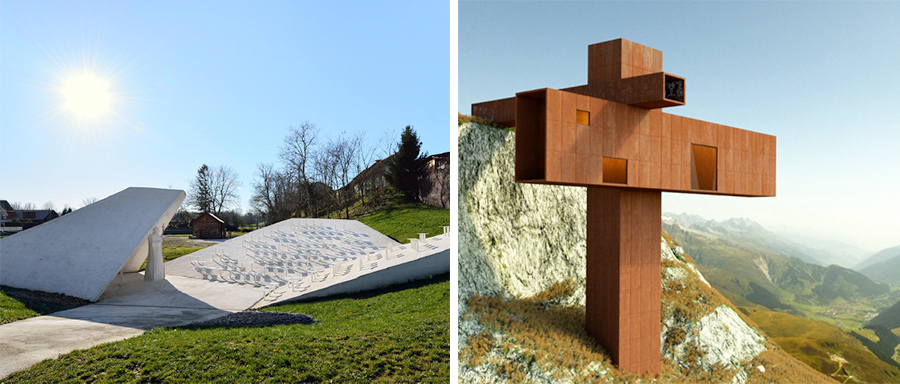
It uncovered precedents as varied as the UNESCO protected Pearling path in Bahrain, the modern example of a small sacral chapel in Slovenia (left, above) and the XYZ house in Wengen, Switzerland (right, above).
Enoch also explored the architectural works of Rudolf Schwarz and the 'non-church' stance of architect Edward Anders Sovik, topped off with inspiration for his final design from English artist Richard Long's influential use of the circle.
All worthwhile thinking, perhaps, for whichever team receives this year's chalice for reimagining what a future design for Whiti-reia Cathedral Square in Ōtautahi Christchurch could contain, church and all!