Thinking about Green Belts
Having commenced publication in Autumn 2007 the quarterly Journal of Urban Regeneration and Renewal - a premier peer-reviewed journal focused on the physical, economic, and social transformation of urban areas - has reached 75 editions, but hasn’t often featured New Zealand connections.
Its Spring 2026 issue - ‘Green Belts - Challenge or Opportunity?’ - is an exception.
Jonathan Manns MBE, an internationally recognised leader in both urbanism and real estate, is its guest editor as well as being a member of the journal’s editorial board.
Additionally he is a Londoner who successfully relocated to New Zealand in 2021, and has now entered his second year as the chief executive of Te Toi Mahana, a Charitable Trust established by Wellington City Council in 2023 and the city’s largest Community Housing Provider (CHP).
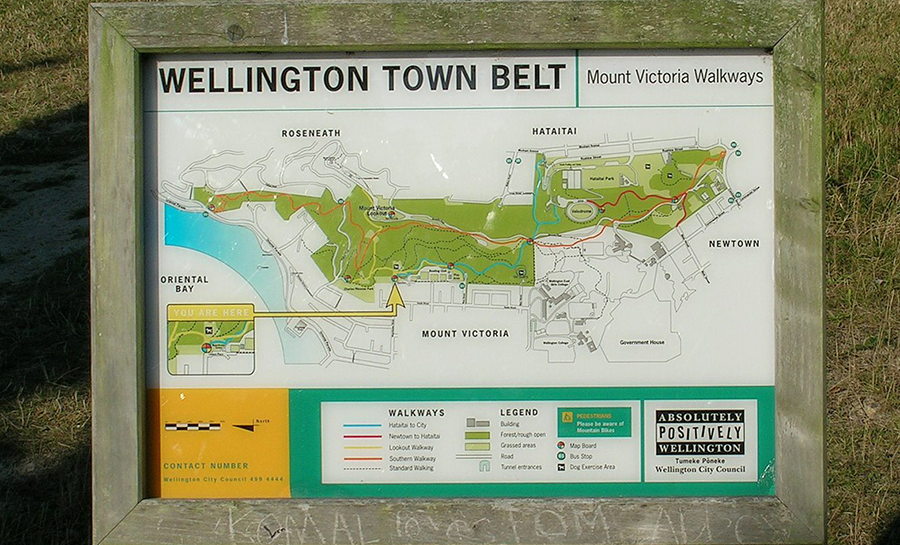
Credit: Brett Taylor, CC BY 2.0
In his opening editorial Jonathan considers the “mixed but instructive picture” of Green Belts reached by the issue’s different authors.
He acknowledges that in some cities, such as Wellington, the historically distinctive Town Belt has remained substantially constant in its form and is a widely valued public asset, before adding that “elsewhere (in places) such as London, a vast Green Belt encompasses diverse landscapes that have become an increasingly contested focus for debates around housing supply, social equity and environmental protection”.
Further points he summarises about the journal’s special issue on Green Belts are:
Green Belts have enduring public and political popularity but are most often blunt policy tools. Questions are, therefore, increasingly asked as to whether the status quo could be improved.
Critics bring a range of perspectives. Some will argue that rigid protection can increase land prices, constrain housing supply and reduce affordability, reinforce spatial inequity, create ‘leapfrogging’ of development and unsustainable commuting patterns, promote one historical or cultural narrative over another, prevent the optimum use of land, and prioritise commercial farming practices over biodiversity.
Supporters may contend that Green Belts remain popular and essential for protecting local character, maintaining areas of landscape and green space, supporting the agricultural sector, promoting compact urban form and providing leisure and amenity space.
Such competing claims are difficult to reconcile and have the potential to slip easily into entrenched, binary and emotive positions. Very often, irrespective of national context, the cases being made by critics and supporters alike are anchored in reasons which sit outside of the specific statutory or policy basis for Green Belt.
Both are, nonetheless, often united in their desire to drive the best possible outcomes for those within and beyond the urban areas defined by their boundaries. Both find compelling and attractive reasons to consider whether we could, or indeed should, do better.
With permission, a lengthy excerpt from Jonathan’s editorial is reproduced here:
Green Belts have played a significant role in shaping patterns of urban growth, regeneration and land use for more than a century. At their core, they are public policy instruments intended to prevent or constrain the development of land, often in pursuit of urban containment or amenity objectives.
Early pioneers of Green Belts frequently conceived them as parks, reserves or processional routes designed to improve the quality of life in rapidly growing towns and cities.
Over time, however, their form and function have very often evolved in response to changing economic conditions, environmental pressures and social priorities. As the context has shifted, so have the expressions of Green Belt policies around the world.
What were once conceived solely as ‘belts’ have become buffers, fingers and wedges, shaped by local histories, governance arrangements and cultural values. Their purpose, also, has evolved.
…
These contrasting experiences highlight the adaptability and public popularity of Green Belts worldwide over a period of nearly two centuries, as well as potentially inevitable tensions surrounding their application.
From colonisation to professional practice, Green Belts have become a global planning paradigm. Inspired by early European and North American models, they have been adopted and adapted in a wide variety of settings, from Copenhagen’s well-known ‘Five-Finger Plan’ to newer initiatives across parts of Asia, Africa and Latin America. This has occurred alongside trends towards accelerating urbanisation, climate change and widening socio-economic inequality.
Green Belts are more than static lines on a map; they are dynamic and multifunctional landscapes that shape social, economic and environmental outcomes well beyond their own boundaries.
Much attention is given to England, one of the world’s most rigid models, characterised by strong legal protection and enforcement but with limited adaptability to address housing pressures, opportunities for multifunctional land uses or proactive environmental enhancement.
These are contrasted with perspectives from New Zealand and Australia, which have similar intellectual origins but different planning systems, tending to adopt more flexible growth boundaries and zoning regimes that allow for greater integration of urban development while facing comparable and equally persistent equity challenges.
In (this issue of the Journal of Urban Regeneration and Renewal) Crystal Olin (Senior Lecturer, Victoria University of Wellington and Associate Researcher, University of Otago) takes the example of Wellington’s Town Belt. She argues that, while well protected, it creates an illusion of equity through poor everyday access to green space and masks Māori histories, making the case for reappraisal to shift emphasis from edge preservation to accessible and culturally grounded green infrastructure.

In Australia, Zeyu Li (PhD candidate, RMIT University), Marco Amati (Professor, RMIT University & Professor, Te Herenga Waka/Victoria University Wellington), Andrew Butt (Professor, RMIT University), and Kelly Donati (Vice-Chancellor’s Research Fellow, RMIT University) propose that Green Belts should be re-conceived from static containment boundaries into active regenerative landscapes that repair broken ‘urban–rural metabolisms’. Through the example of community-based urban agriculture in Melbourne’s Green Wedges, they show how soil care and collective governance can reconnect ecological cycles with public life.
Nicholas Falk (Executive Director, The URBED Trust) takes a similar approach in England and seeks to refocus the debate on ways in which green space can better support the towns and cities in which we live. Urban extensions in well-connected locations, it is suggested, offer the greatest opportunity to knit new development into accessible green infrastructure.
The challenges faced by reforms such as this are set out by Ian Mell (Professor of Environmental and Landscape Planning, University of Manchester) and John Sturzaker (Director of Careers and Education, Royal Town Planning Institute). They argue that not only do recent reforms that seek to define a new ‘Grey Belt’ in England expose the limits of treating Green Belt land as uniformly sacrosanct, but also reveal deep contestation over housing, power and decision making in the planning system.
Some critiques and defences of the Green Belt cover well-trodden ground. Here, however, they are clearly and powerfully argued.
Paul Cheshire (Professor Emeritus in Economic Geography and Associate, Centre for Economic Performance, London School of Economics) makes a rational economic diagnosis: the Green Belt is an inefficient allocation of resources which distorts markets, under-provides new homes and incentivises more ‘wasteful’ land uses such as golf courses.
Alice Roberts (Head of Campaigns, Campaign to Protect Rural England) pushes back. She argues that the housing crisis is an affordability crisis, not a housing shortage, driven by land speculation, financialisation and the loss of social housing rather than Green Belt constraints per se. Blaming the Green Belt, she suggests, distracts from key challenges and further entrenches them.
An appetite for change is nonetheless apparent. Opportunities are presented by Lachlan Anderson-Frank (Policy and Projects Manager, Town and Country Planning Association), and Adam Gailitis (Senior Planner, SLR Consulting) and Charles Goode (Assistant Professor in Urban and Regional Planning, University of Birmingham).
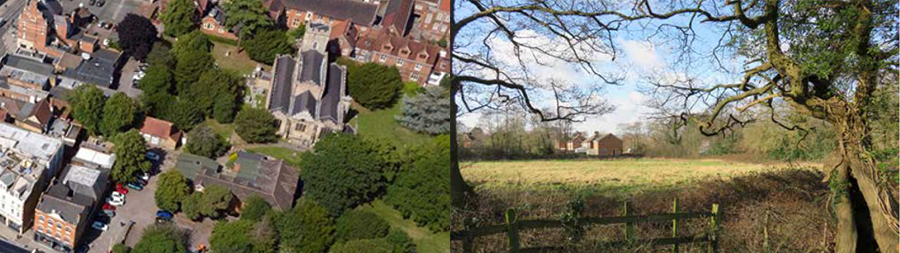
Anderson-Frank explores how the London Borough of Enfield is seeking to adapt its local policy approach to deliver greater biodiversity, recreation and green infrastructure benefits. Meanwhile Gailitis and Goode use the example of the Metropolitan Borough of Solihull to illustrate the possibilities for geographic information systems (GIS) in supporting a multi-criteria assessment (MCA) of land to support considerations of benefits in terms of protection and release.
Cross-cutting themes and possible solutions
Jonathan points to a range of cross-cutting themes that suggest solutions to varying challenges and priorities:
periodic and formal boundary reviews
integration of strategic land release with urban intensification
greater emphasis on multifunctional land uses supporting ecosystems, recreation and climate adaptation
differentiation between areas requiring core protection and those capable of greater flexibility
enhanced transparency and public participation to strengthen legitimacy and accountability
clearer alignment with infrastructure provision and commuting patterns
more explicit consideration of social equity impacts related to housing access, history and culture, amenity and employment.
relevant remarks
Jonathan Manns concludes his editorial overview with a timely observation that responsibility for managing these trade-offs frequently sits with local government, even where the cumulative impacts of incremental decisions are strategic and long-term.
This raises broader questions about governance scale, institutional capacity and the mechanisms available for resolving highly contested land-use debates.
Jonathan: “In some contexts, particularly where Green Belt reform has become deeply politicised, it also demonstrates the importance of finding independent and evidence-based review processes that are capable of legitimately balancing nationally significant challenges around environmental protection and enhancement with housing supply and social equity considerations”.