In brief: A glimpse into some highlights of NZPIC26
The programme for NZPIC26 - the annual conference of Te Kōkiringa Taumata | the New Zealand Planning Institute (NZPI) held between 25-27 March - focused on a full gamut of pressing issues, opportunities, and challenges shaping planning in Aotearoa.
The venue was the Tākina Wellington Convention and Exhibition Centre and the five themed topic streams were:
He Aronga nui – Our Central Direction
He Tāone Whānui – Our Urban Environment (aided by UDIA)
He Taiao – Our Natural World
He Ao Hurihuri – Our Evolving World
He Māngai nui – Our Voices
The conference kicked off with its 2026 NZPI Awards and Scholarships Ceremony on the opening night, while NZPI’s supreme award, the Nancy Northcroft Planning Practice Award, was announced at their Gala Dinner on the Friday night.
And the supreme award winner was … the Te Pātukurea | Kerikeri- Waipapa Spatial Plan, by Far North District Council, Beca and Boffa Miskell. This project is a 30-year, non-statutory spatial plan for the Kerikeri–Waipapa area that sets out how the place should grow and evolve over time to work well for people now and for future generations.
Boffa Miskell planner Jaimee Cannon and urban designer Jane Rennie accepted the award with project team members from Beca and Far North District Council. The project also won the NZPI Best Practice Award for Strategic or Non-Statutory Planning. It is Boffa Miskell's fifth Nancy Northcroft Award.
Guest speakers from the USA
Photos by Stephen Olsen
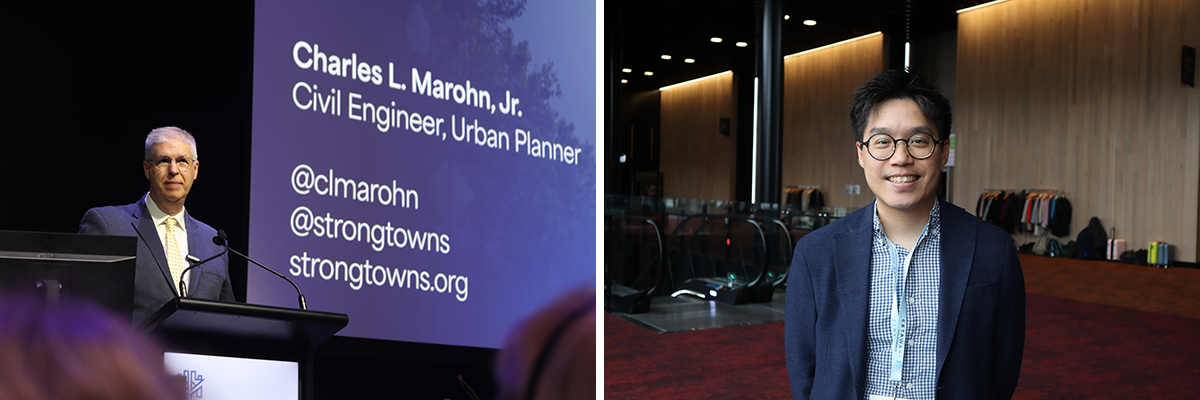
Among the keynote speakers at NZPIC26 were two manuhiri from the USA: Charles (Chuck) Marohn, founder and president of Strong Towns, and Steven Duong, a principal and vice-president with AECOM.
A land use planner and civil engineer from Minnesota, who has been ranked as one of the world’s most influential urbanists by Planetizen, the talk Chuck delivered was titled ‘Strong Towns: A bottom-up revolution to build prosperity’.
This contended that throughout North America and countries across the globe, cities and towns are struggling—roads are crumbling, budgets are strained, and the standard playbook of chasing growth no longer delivers the results we need. It challenged conventional development patterns and set out to explain why financially productive neighborhoods often aren’t the ones that look the most ‘new’.
Chuck has authored three books:
Strong Towns: A Bottom-Up Revolution to Rebuild American Prosperity (Wiley, 2019),
Confessions of a Recovering Engineer: Transportation for a Strong Town (Wiley, 2021)
Escaping the Housing Trap: The Strong Towns Response to the Housing Crisis (Wiley, 2024).
Steven Duong's specific expertise is focused on the intersection of transport and regional planning, urban design, and city resilience. Working out of Texas, he also serves as AECOM’s Global Urbanism+Planning practice leader. U+P is a collective of urban strategists comprised of experts in areas such as urban design, infrastructure business case, civic policy, data analytics, economic and real estate advisory, climate and resilience planning, and community
Steven’s keynote talk was titled ‘Building Better Business Cases: Case studies of stagnation and growth in urban and transport investment thinking’ and was focused on how to build stronger, future-ready infrastructure business cases by discussing and confronting the forces that have made delivering major U.S. transit projects exceptionally difficult.
Breakout Sessions
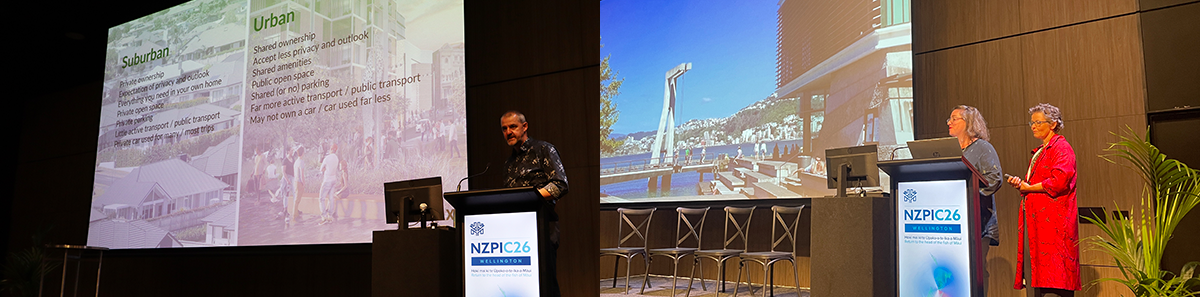
Alistair Ray at left; Anna Wood and Josie Schroder at right. All three are members of the Urban Designers Institute Aotearoa.
Some of the notable breakout sessions under the Our Urban Environment stream were talks delivered by Alistair Ray (‘What Makes A Successful Urban Place’) of Jasmax, and an enlightening and humorous talk-through on what it takes to protect your wellbeing as an urban designer presented by Anna Wood of Hastings District Council and Josie Schroder of Urban Opera.
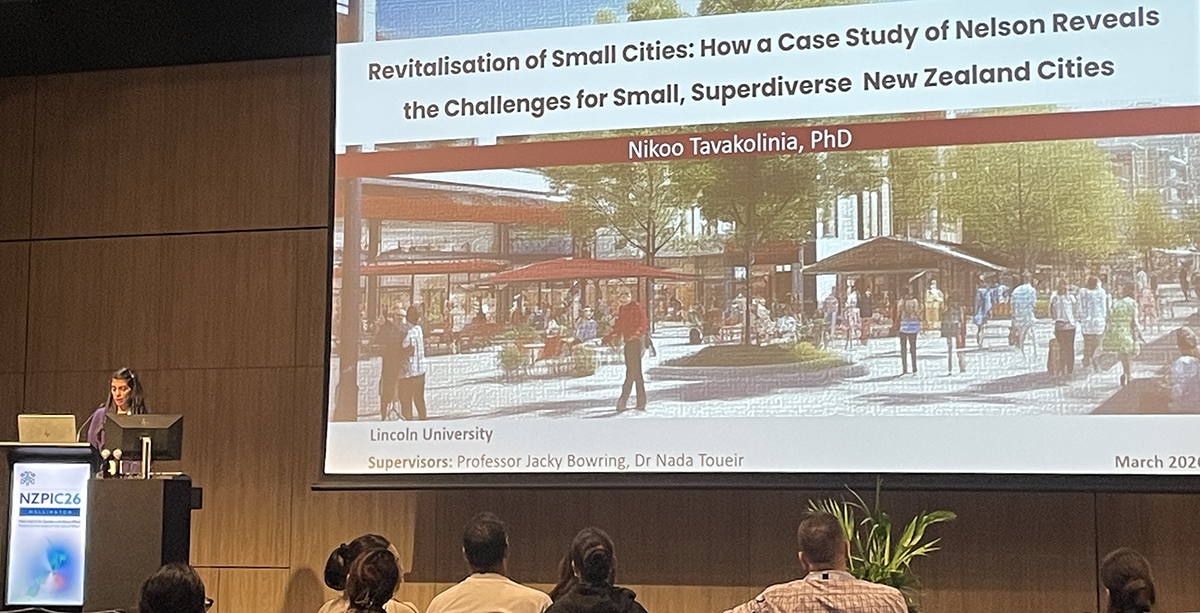
In addition Lincoln University PhD candidate Nikoo Tavakolinia (above) delivered a well-received paper about the status of Nelson as a small and “superdiverse” city. Nikoo’s thesis is being supervised by Professor Jacky Bowring and Dr Nada Toueir.
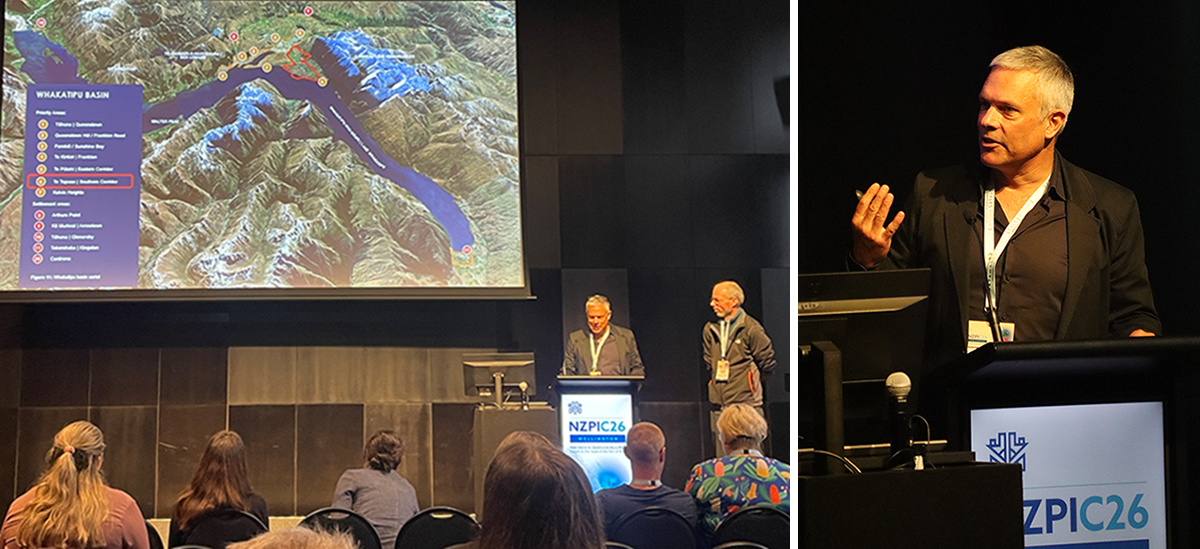
Another well-received presentation - under the separate theme of Planner Skills/ Leadership - focused on Te Tapuae / Southern Corridor, one of six priority development areas in the Queenstown Lakes Spatial Plan, and one of four within the Whakatipu Basin, alongside Tāhuna / Queenstown, Te Kirikiri / Frankton, and Te Pūtahi / Ladies Mile. This was spoken to by Boffa Miskell’s Tim Church and Cameron Wood, QLDC Senior Strategic Planner.
With a projected need for up to 10,000 households within the corridor, the integration of existing development, enhancing the Blue Green Network, demand on three waters infrastructure and providing sustainable transport services are under mounting pressure from rapid population and tourism growth.
The Te Tapuae Southern Corridor Structure Plan, developed by Queenstown Lakes District Council in collaboration with the Grow Well Partnership, Boffa Miskell and others, provides a framework for managing this growth. It integrates land use, transport, infrastructure and open space planning to create a connected, vibrant and sustainable community. The plan responds to key challenges including natural hazards, fragmented development, limited social infrastructure and mix of public and private infrastructure.
The Politicians face off
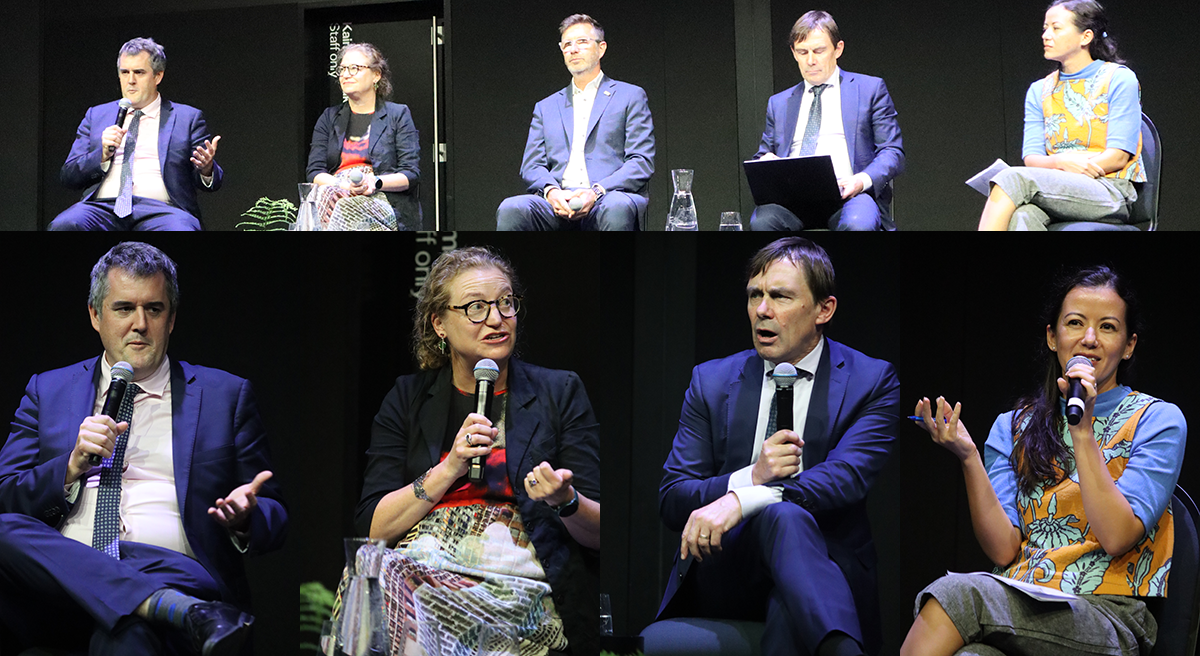
The final afternoon of the conference brought politicians Chris Bishop (National), Rachel Brooking (Labour), Simon Court (ACT), Andy Foster (NZ First) and Lan Pham (Green Party) together for what was pitched as a debate but, as leapt on by the MC, journalist Miriama Kamo, was more of a seesaw between an over-friendly side-chat session (Bishop and Brooking) and a half-hearted fight club (Bishop, Pham).
All joshing aside there were serious and constructive views put forward about the Planning Bill now with the Environment Committee, including the importance of catchments.
Simon Court in particular became very heated in his defence of the bill’s regulatory relief component. He expressed an adamant hope that, once achieved, the replacement of the Resource Management Act should “never be the subject of a planning conference ever again”.