Mick Abbott’s Designing with Nature: The book and a conversation
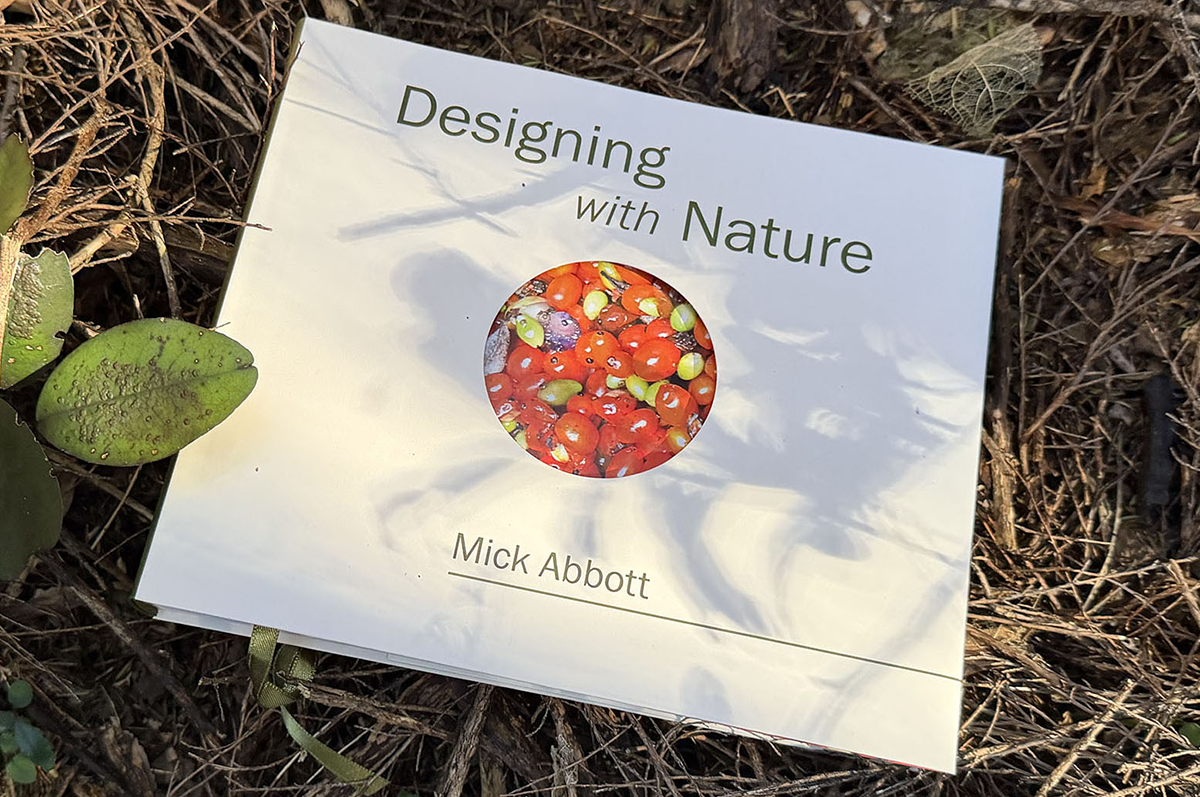
As featured on Radio NZ, Mick Abbott’s new book, Designing with Nature, draws on decades of journeys, projects and teaching.
The founder of WildLab, Mick is a restless spirit who gained early notice for an epic solo traverse of the South Island in 1988/89 (as recalled in a conversation format a decade ago with Kennedy Warne of New Zealand Geographic).
Whereas engineering and architecture followed each other as dominant disciplines of the 19th and 20th centuries, Mick says the 21st century beckons as a time for studio-based landscape architecture to “snowball” because of its capability to envision and enact better options for what the future could look like. This perspective on design and an understanding of nature as a verb that shapes people and communities are core to his purposeful worldview.
In the extended conversation below, Mick talks about his book with Simon Swaffield, a Life member of the New Zealand Institute of Landscape Architects Tuia Pito Ora.
Their kōrero encompasses who the book is for, what shaped it, and how designing with nature might play out, from a wetland planting to a city, as well as then turning to Mick’s approach to design collaboration, handing the future to students, and how design changes when places are understood as a living presence.
Former colleagues, Mick and Simon both taught at Lincoln University’s School of Landscape Architecture and are now Emeritus Professors.
Designing with Nature ($48) is out now. Stockists include Unity Books Wellington, Scorpio Books in Christchurch, and selected booksellers. You can also order online at wildlab.org.nz – for a limited time, LAA readers can use the code LAA2026 to receive a $10 discount. Shipping is included for all non-rural addresses.
Mick Abbott and Simon Swaffield in conversation
Images supplied by Mick Abbott
Thriving because of each other
Simon: Mick, who’s your intended audience and what is the key message of Designing with Nature?
Mick: The key audience is every one of us. In this country it’s our relationship with nature that defines us. It underpins our sense of identity. It’s who we are. You know, we even call ourselves Kiwis.
But growing up in this country I inherited a relationship with nature that’s basically a dichotomy. On the one hand, we passionately preserve the nature that belongs here. Yet on the other, we also feel an urgent need to develop it, to take the easy pickings. And I think that’s the thing that’s really holding us back at the moment, that split between the two.
The real challenge, and it’s really a question, is how do we grow a society, a community, an economy, and an environment where people and nature are thriving together? Not thriving alongside each other, but thriving because each looks after the other.
It was me that was changing
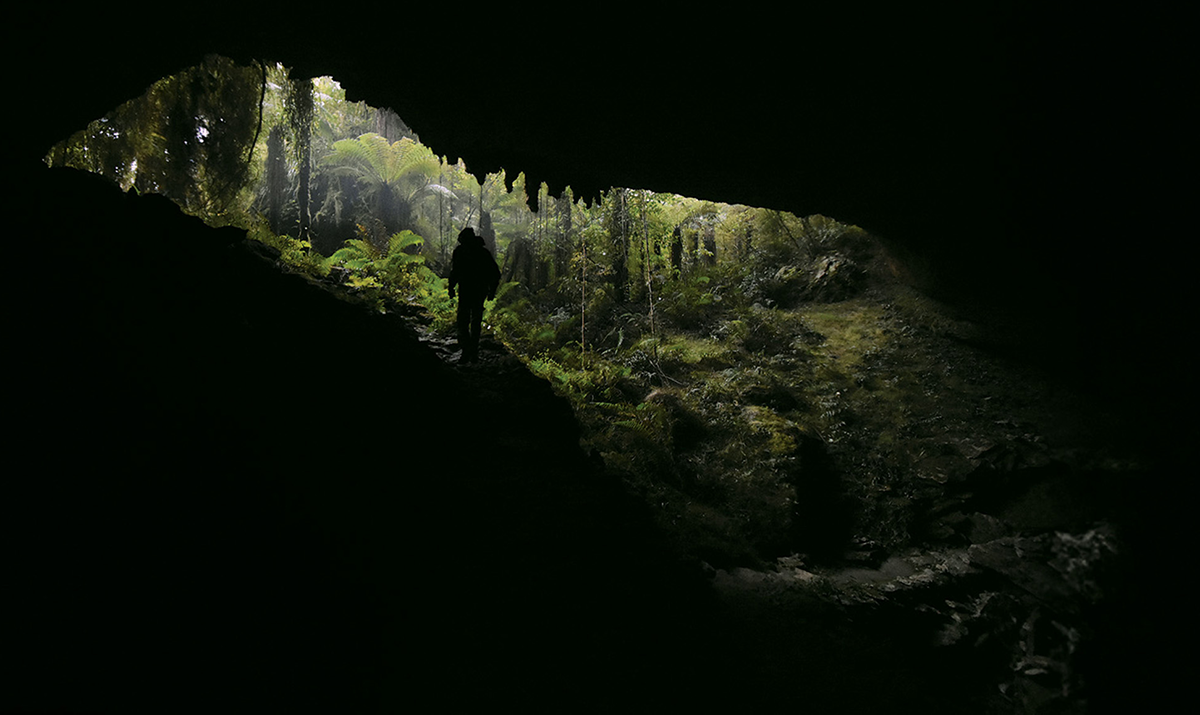
Simon: The book opens with some challenging personal moments in nature, including mountaineering and a major trip along the Southern Alps. What was the most compelling lesson you drew from these experiences?
Mick: These journeys fit within a much longer journey that’s been taking up my life. The first long journeys described in the book had a different quality from those I take at the moment. To begin with, going into the hills was really about me testing myself. What were my limits? How far could I push myself? Then, when I was designing gear for Fairydown and Hallmark, it was about outdoor equipment being tested by nature.
Over time I realised that actually it was me that was changing. I was the one being shaped and moulded by this country’s environment. Places that might have seemed strange and tough became places I felt very comfortable in, as I discovered a pleasure in returning to them again and again.
Digging where you stand
Simon: How might less adventurous landscape architects prepare themselves for collaborating with nature?
Mick: We all have ways in which we’re connected with nature, and for landscape architects even more so. Just as important for me have been the connections I have with nature in the place where I live, the old farm we’ve been reforesting.
We have this particular horoeka, a lancewood, on a part of the track that we’ve been walking past for over 30 years. It’s easy to sense the changes in the tree as it grows and morphs, and when you get home and look in the mirror you see that you’re changing too. That’s the sense of nature we can all connect with. You don’t have to go off on some epic journey to find it. The pivotal condition is groundedness, that sense of digging where you stand.
Landscape and designing, both verbs
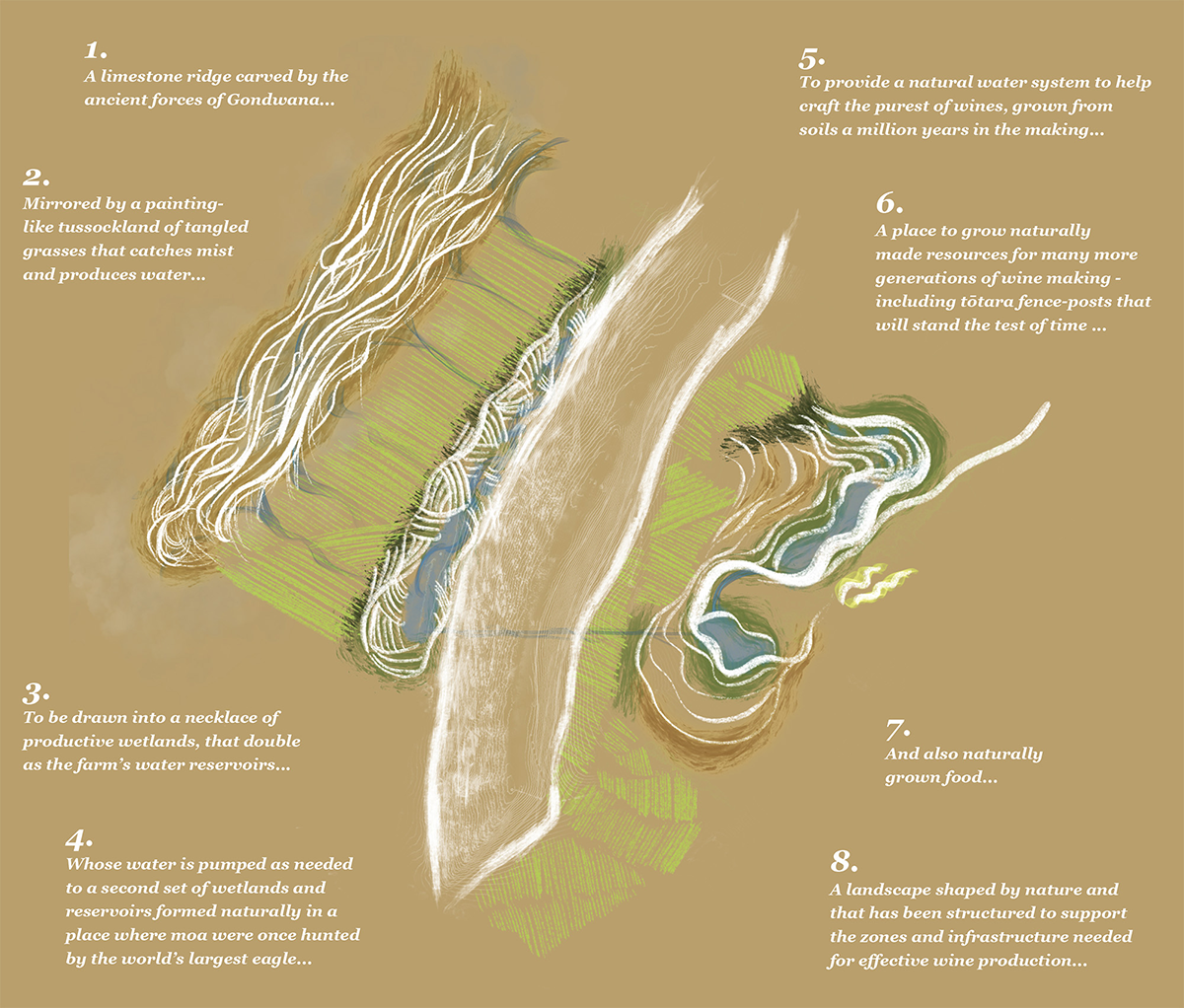
Simon: The title references Ian McHarg’s seminal Design with Nature, widely recognised as one of the most influential books in landscape architecture. Are you building on McHarg’s approach? Or is Designing with Nature intended as a counterpoint, or even a critique?
Mick: I do feel a little bit cheeky using that title. I did have another working title, The Future Wild, and I liked that, but it didn’t feel as invitational to the people this book is for, which is all of us, not just people who love the outdoors. And whenever I explain to people what I do, it’s always designing with nature.
For me, the process of designing is much more important than the outcomes. I think McHarg intended that too, but I wanted to emphasise design being a verb – something we do rather than produce. I started out as an architect, moved into product design, and came to landscape architecture in my late 30s and early 40s, because it seemed to me that our environment was the design context that matters most to this century. And the thing I picked up very early on is that landscape’s richest qualities are expressed through time.
The second part of the book title too – growing a place where people and nature thrive together – stresses verbs. That comes out of my affection for Tim Ingold’s thinking, and his work on how landscape is a living process that’s always under construction.
Planting as an event
Simon: Like McHarg’s, your book is very much project-led. Which project best shows the collaboration with nature that you’re seeking?
Mick: Towards the end of the book I make the point that I see place and nature as animate, as a living presence. So I don’t see a lot of these things as projects, I see them as collaborations with communities and partners, and places. Asking which one best shows it, is kind of like asking which of your children is your favourite.
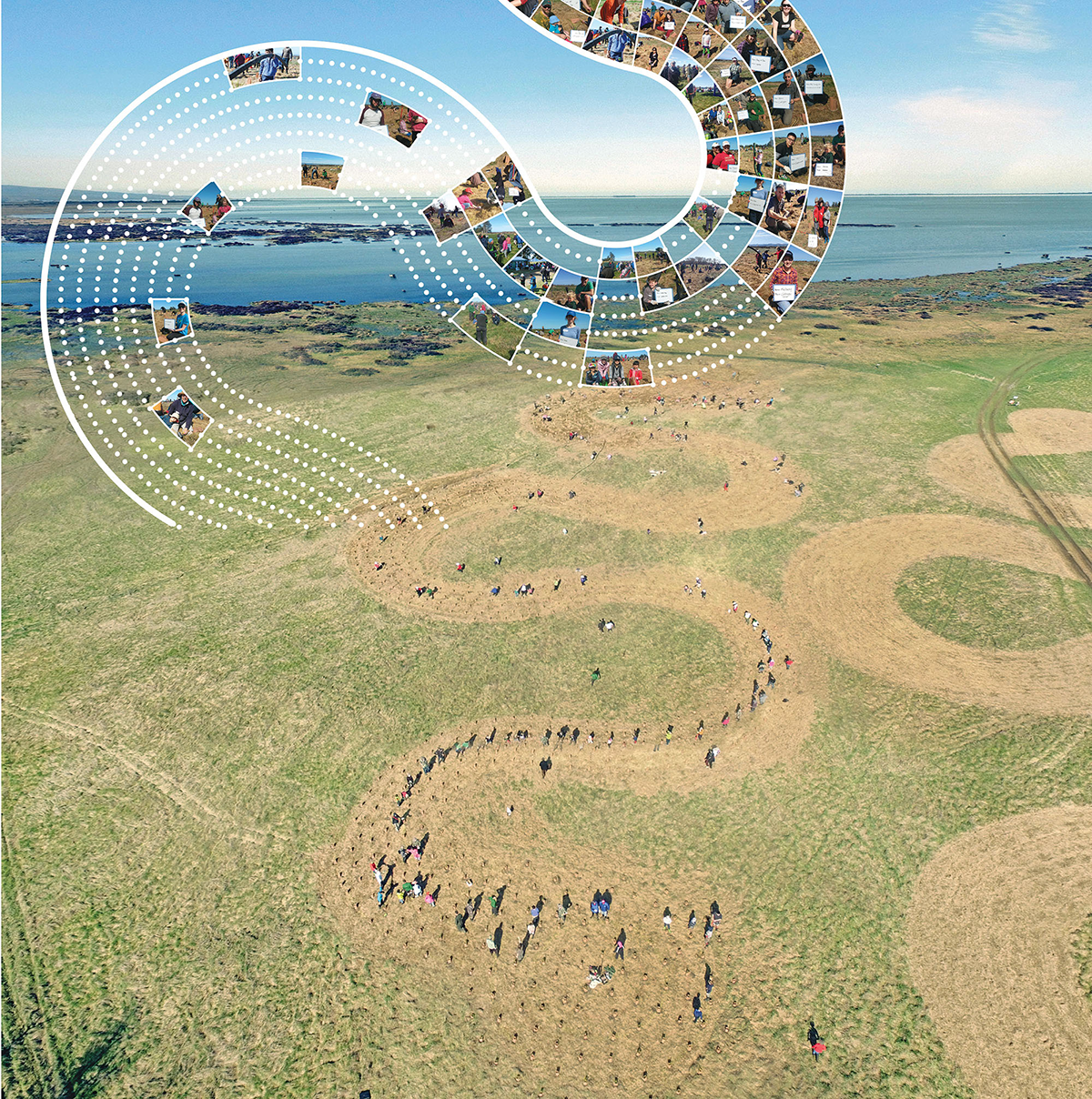
But I have a personal one, the first design project in the book, at the Ararira wetland, by Te Waihora, Lake Ellesmere, out the back of Lincoln. That was the project where I shifted from my past approaches as a designer and became immersed in landscape. I was really taken with Doreen Massey’s idea of landscape being an event, a form of ‘throwntogetherness’. It was a collaboration with the Department of Conservation, with ecologists from Lincoln, with iwi, local schools, volunteers and all manner of supporters.
We were asked to come up with a landscape design. But we only drew up that design after the project was planted, because what we actually designed was an event where everyone came together and planted. Ingold talks about how with music you can’t separate the music from the guitar and the hands and people’s listening – they’re all part of the same thing. It’s the same with planting – as a volunteer’s hand cradles a plant and embeds it in the soil, the person, the plant, and the land and all its possibilities become interwoven, part of the same thing.
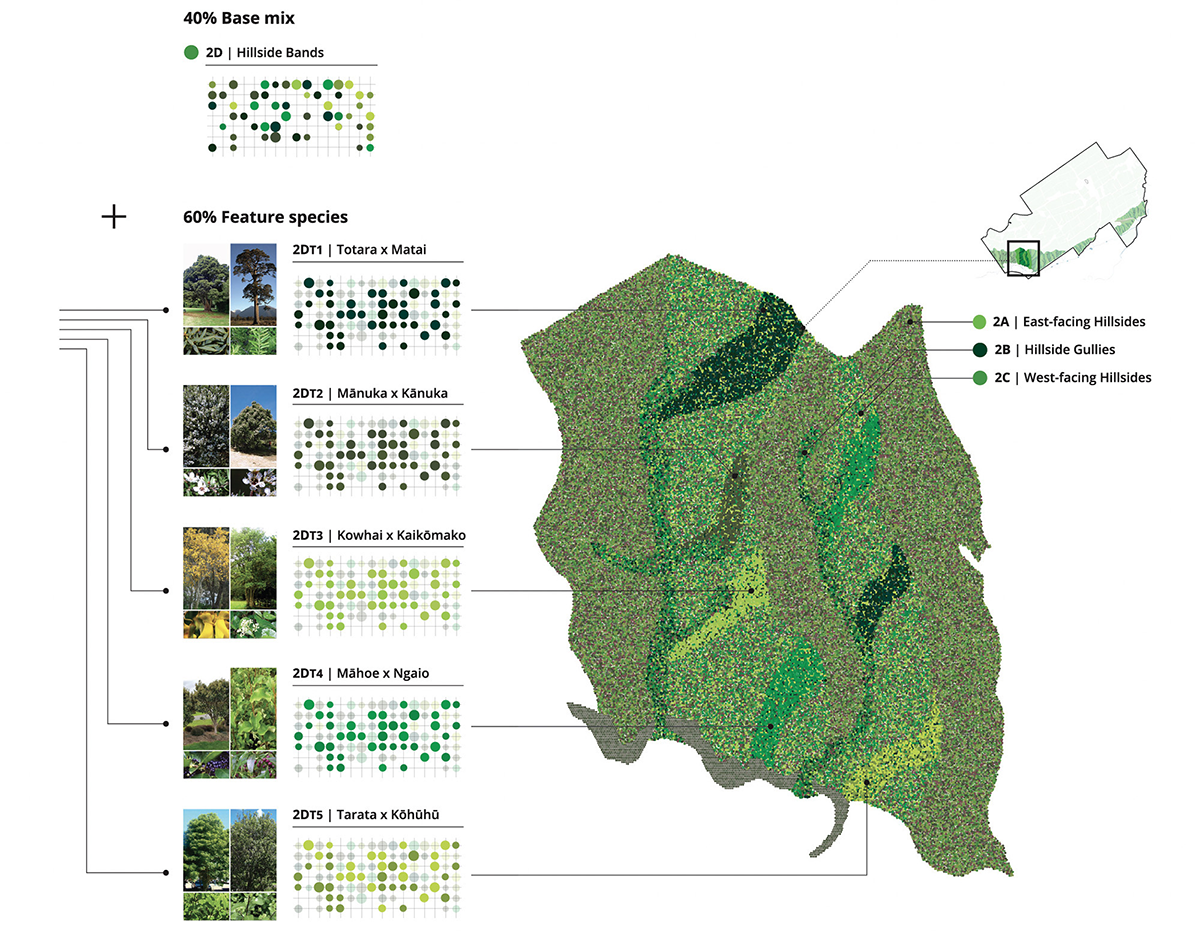
The planting was also a deliberate statement, on public conservation land. It questions why every restoration planting has to be ‘faux-naturale’, as if the authentic position is a dream of a past Gondwana before people. Instead, it explores future relationships between us and nature. We only had 2,000 plants to play with, and we did a very figurative design. Out of that, it helped recruit funding and momentum to extend the planting, such that the original form is now nearly invisible as nature takes over and the community plants the hell out of the area. We don’t need some grand piece of landscape architecture to have an impact.
A garden city, in an endemic way
Simon: Many of your projects are in rural and wild settings. How would you envisage collaboration with nature taking place in a more urban environment?
Mick: Although I trained as an architect, I was pretty clear by the end of my studies that I wasn’t solely going to design buildings. I’ve long rejected architecture’s implicit professional premise that the answer to every design challenge is a structure.
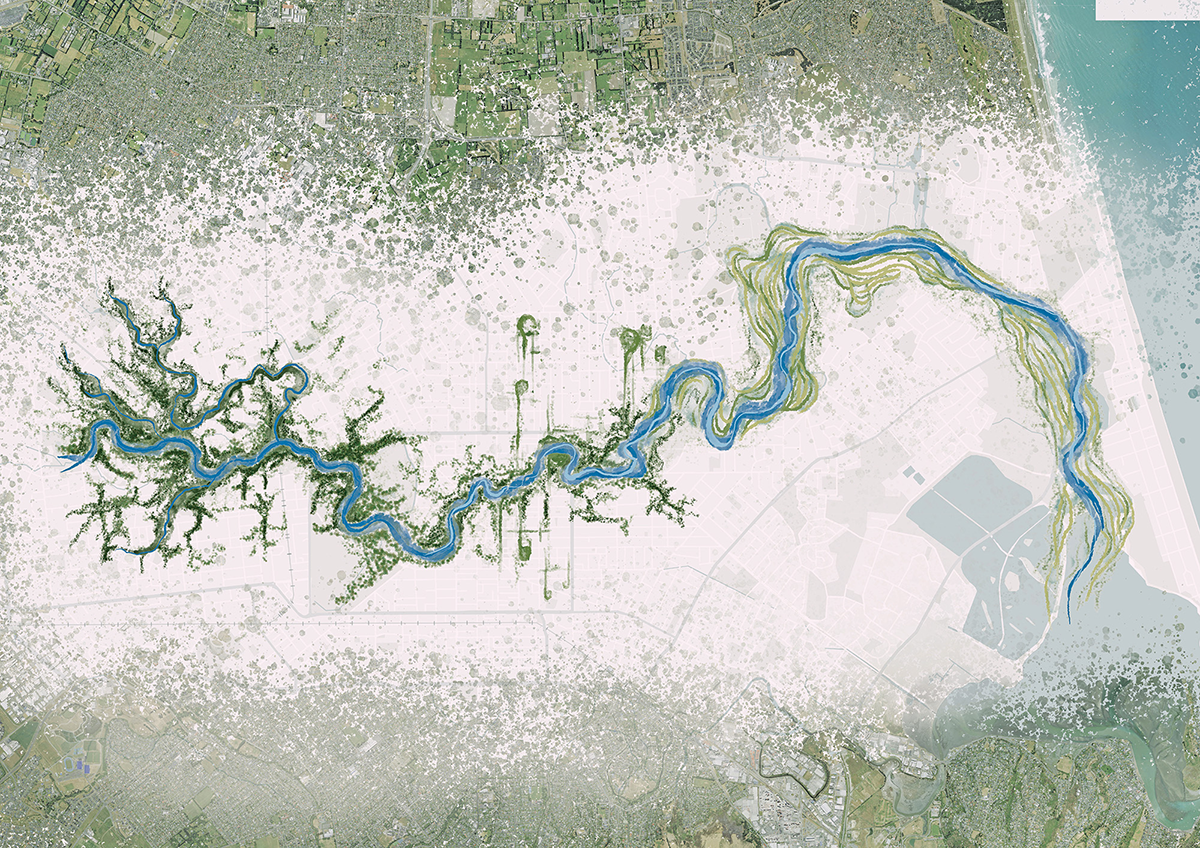
The type of projects I’d love to be doing in urban environments are all about people: How do you bring together nature and communities to activate these much-lived-in places, in terms of their mixed identity and distinctiveness? I think of the lovely work that happened post-earthquake with the Ōtākaro Avon River. The challenge is how to keep the sense of community action that was at its heart as the explicit means by which the city is shaped. And there’s the potential to bring together the equivalent of the Ararira wetland at scale and over time, so that Christchurch, the city I grew up in, is a city where the nature that’s always belonged there activates it and becomes its fundamental identity. A garden city, but in a contemporary endemic way. For that to happen, it has to be motivated around community, not around buildings and parks. Maybe that’s the challenge this book lays out to people who are passionate in such spaces.
Simon: The Dutch have been experimenting with designing with nature in urban settings for centuries.
Mick: Yes, the work going on there is fascinating. We did an interesting project with our students and colleagues at Wageningen, looking at how a population the size of the Netherlands’ 15 million might play out as landscape cities within Canterbury Waitaha, which is a similar area. But thinking of the work I’ve been involved with in China and a few other places, what Aotearoa is able to bring to the world is also another dimension beyond the urban, namely how, on a global scale, our protected areas could be woven into the places we live in each day.
Put the bird in the middle
Simon: You’ve worked with a wide range of clients. What have you learnt about gaining people’s confidence in engaging in a collaboration with nature?
Mick: First, I no longer use the word client. The reason I returned to university was to get away from the commercial imperatives that had driven a decade of product design work. I left because the designing, the products, and in turn me, were becoming predictable. Kind of successful, yes, but everything began to feel the same. University is driven by a search for knowledge and opening up possibilities – it’s something you can’t do effectively on your own. So I always frame everyone I work with as partners and collaborators.
As landscape architects we each have that ability to express nature’s presence in a place, in a way that allows people to make tangible what they sense already. So we remove that idea that nature is just a resource to extract value from. It is a partner in the process, and we’re all in this together.
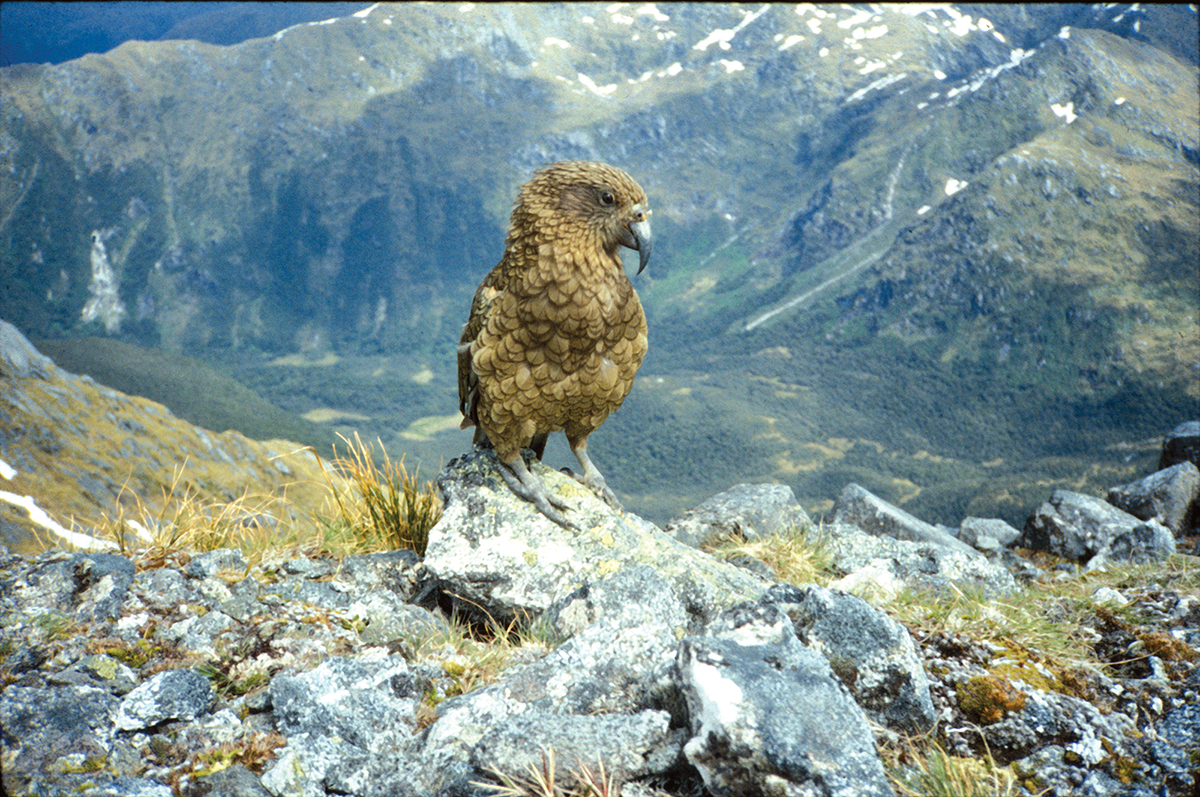
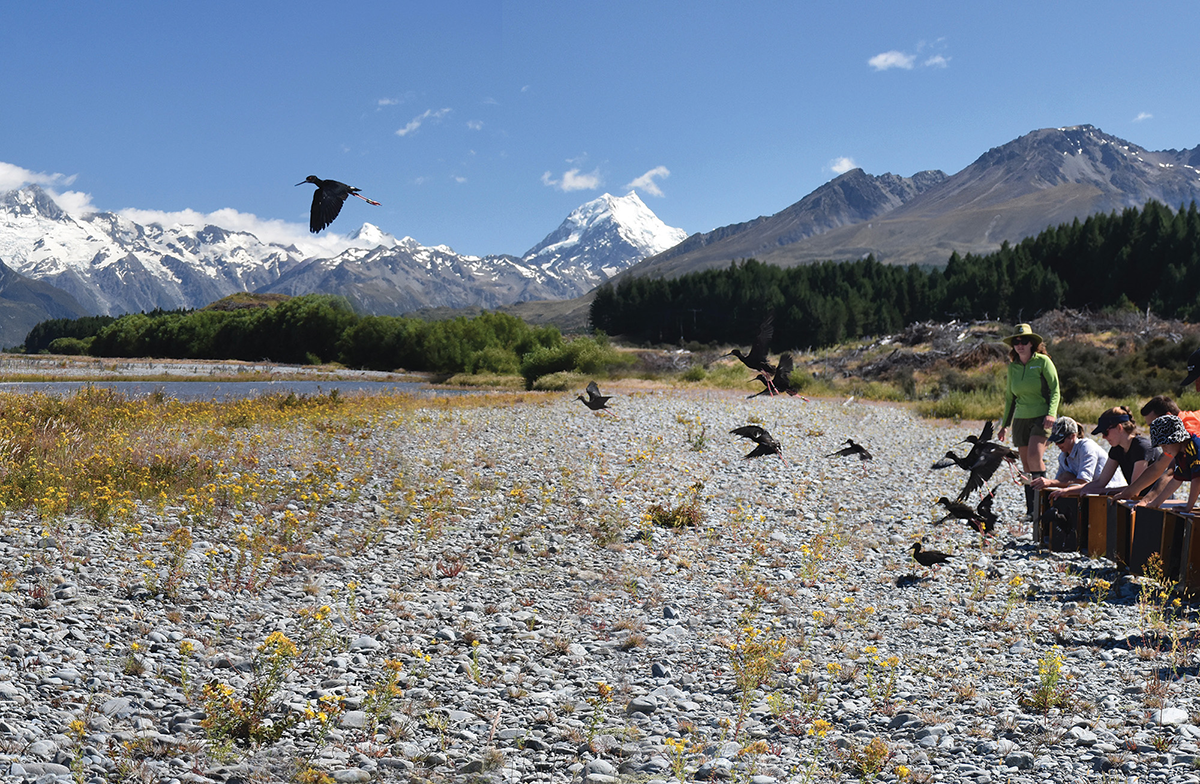
Yvette Couch-Lewis taught me a wonderful lesson that I hold to in every project. When I was on the Canterbury Aoraki Conservation Board we were very concerned about the ongoing decline of one of our rarest birds. There were a lot of well-intentioned activities going on, but they weren’t well aligned. And she said, “Just put the bird in the middle.” It’s not your group that’s the reason we’re doing this, or your group, or yours. It’s this bird. I think one of the things I bring to projects is the capacity to make sure nature stays the foundational reason for what we’re doing. And because landscape is so time-deep, it’s something we’re doing not so much for ourselves as for the generations to come.
I’d add that I’m not an artist, I’m a designer. There are a number of projects where the thing I get the biggest buzz from is when every idea I’ve put into the design has been deleted, intentionally. I put them forward to provoke the better idea that often comes from the partners we’re working with. Once all my outsider assumptions have been removed, that’s when we’re getting close. My job as a designer isn’t that of a hairstylist saying, here’s the look you need. It’s to bring a process that will draw out what those invested in the place and the work intuitively feel.
Designing with a small d
Simon: McHarg had a big presence. However wonderful his work was, he was front and centre. It was his process. What you’re articulating is a much more subtle role for the designer. It’s designing with a small d. You could almost retitle your book with a small d.
Mick: Well, in early drafts I did! Nature was capitalised and designing was small d, and then it was like, oh, that’s a bit cute. But in my head, that’s what I do: very much designing with a small d. I think landscape architects have a greater humility, because we’re a small part of a big world, and can only influence systems with a nudge here or there, whereas some of the other design fields can make their projects quite big – think starchitecture, and product designers with chairs you’d never want to chill out in.
Maps that make things happen
Simon: McHarg used a lot of very powerful images. Your book is also graphically very powerful, but you distance yourself from seeing nature as scenery, through 19th-century European eyes. How do you see the role of graphic representation in designing with nature?
Mick: With Janet Stephenson and Jacinta Ruru, I co-edited a book called Beyond the Scene, because in this country we tend to like to show photos of nature which have no people in them, even though every photo has got a person in it. They’re just behind the camera rather than in front. So I have a suspicion of landscape photos holding some kind of self-evident truth.
But as a communication tool, I think they’re really important. What I love about design is that it’s quite associative. It’s non-linear. You can’t just write an essay saying how a design should be. You have to put forward something with layers of meaning and form that people can value in different ways. And I find graphics to be much more inclusive. You don’t need to be able to read a 5,000-word report to engage with an idea. Everyone has strong visual literacy, so all voices, all ages, and all perspectives can join in the process.
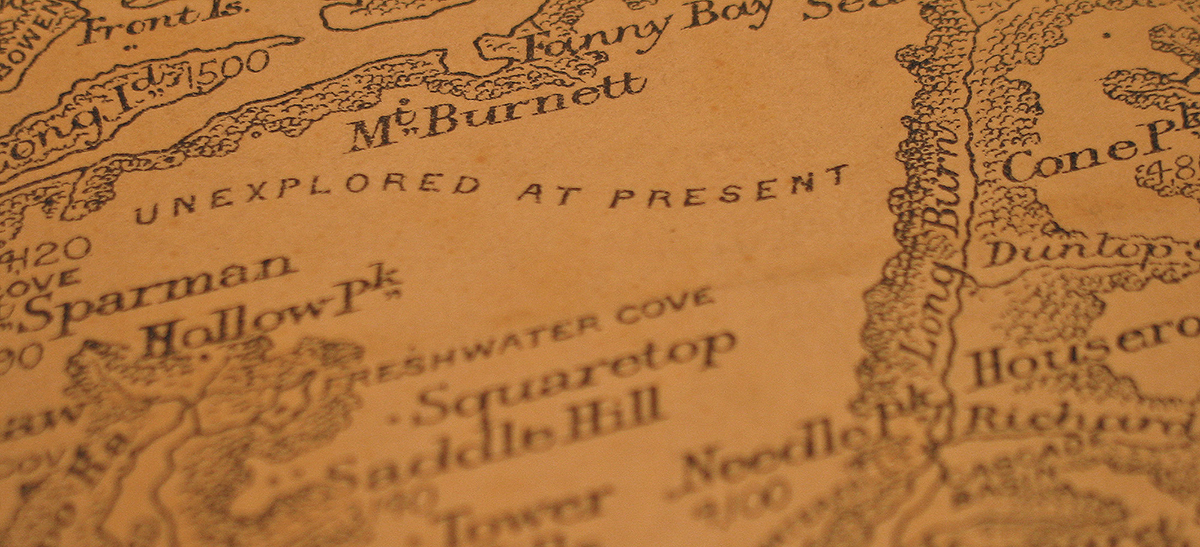
The other thing is that graphics are not just ways to communicate an idea. I’ve always been fascinated with Moir’s map of Fiordland from 1925. Across a blank section are written the words “unexplored at present”, which of course it wasn’t. But that “unexplored at present”, on a printed piece of paper, meant that for the next 15 years or so, many parties went off into that place and did something. So in our visual representation of design, we’re not just trying to describe something, we’re trying to make something happen. In our own design process, graphics help us uncover fresh ideas in ourselves. And presented to others, they can become the catalyst to get things underway, an invitation to engage.
The questions belong to the young
Simon: Students are a passion for both of us. How have you encouraged them to move away from wanting to make a design, towards the process of designing?
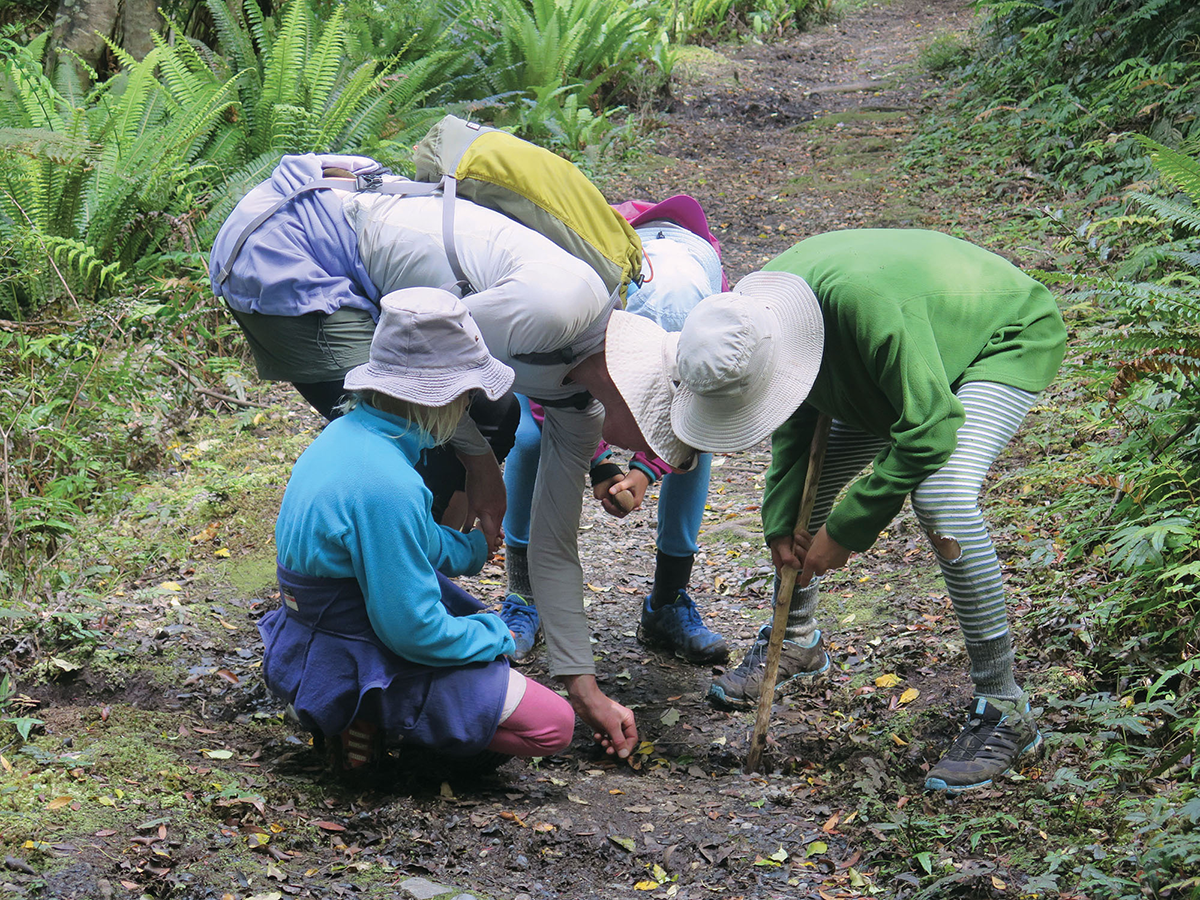
Mick: When it comes to teaching landscape architecture, it’s more important to be teaching the questions that drive us, and which we’re struggling to answer, than what we know. It’s for that reason I very rarely repeat a design project. I see students as super-motivated colleagues who bring keen insights, grounded knowledge of place, and a desire to make a difference. They’ve chosen to take out a loan, and not earn money. The people I teach have been attracted to design because design is a positive way of using the future to find out what we should be doing today. They might not yet have all the theoretical positions or the range of skills, but their fresh perspectives are something that’s harder for me to bring.
The challenges that face nature and our environment belong to our young people, and our job is not to say, here’s what we’d do, now go copy that. It’s here are the questions, and we need you to be an active player now. Not years from now. I’d much rather work with a cohort of young minds focused on that than on my own.
Every river has its own presence
Simon: Has writing the book shifted anything for you?
Mick: It’s certainly helped me understand the places and ideas that raised me. When I share my pepeha, I tend to say I came from Christchurch as the city I grew up in wasn’t Ōtautahi. It was a very English type of upbringing with what seemed a narrow view of the world, and of nature – the rhododendrons, camellias and roses, including those that I later found had come from my great-great-great-grandfather’s 19-acre nursery in Papanui.
But because of some very generous people and mentors, I’ve had the opportunity to work with a number of hapū, rūnaka and iwi. In the book I talk about my attempts to climb Aoraki, though back then I called him Mount Cook. And how, in my own clumsy way, close to the summit I chose not to stand on the top.
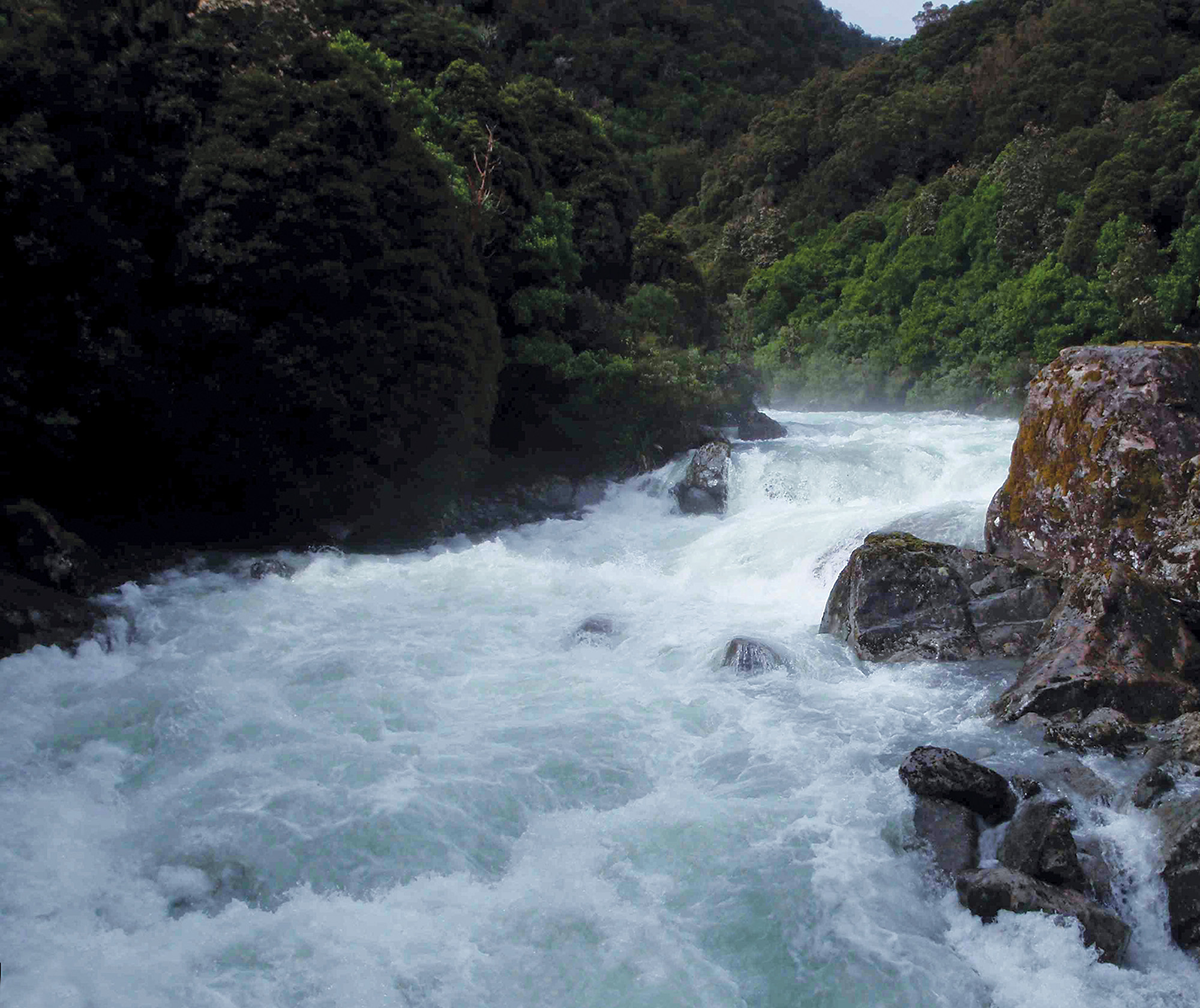
I’m now absolutely convinced that places are a living presence. There’s Aoraki and Taranaki, of course. But there’s a much more local side to this presence of nature and landscape. Since doing the book, I’ve been reflecting on all the rivers I’ve met, because I’ve certainly crossed a lot of rivers. Every one of them has a different quality, a particular sense of movement. You can’t confuse the Rakaia with the Rangitata or the Landsborough when you’re crossing them. They each have their own personality. That’s an enormous privilege we have in this country, to be living in a world that is actually alive, that’s so animate.
A small thing with a big friend
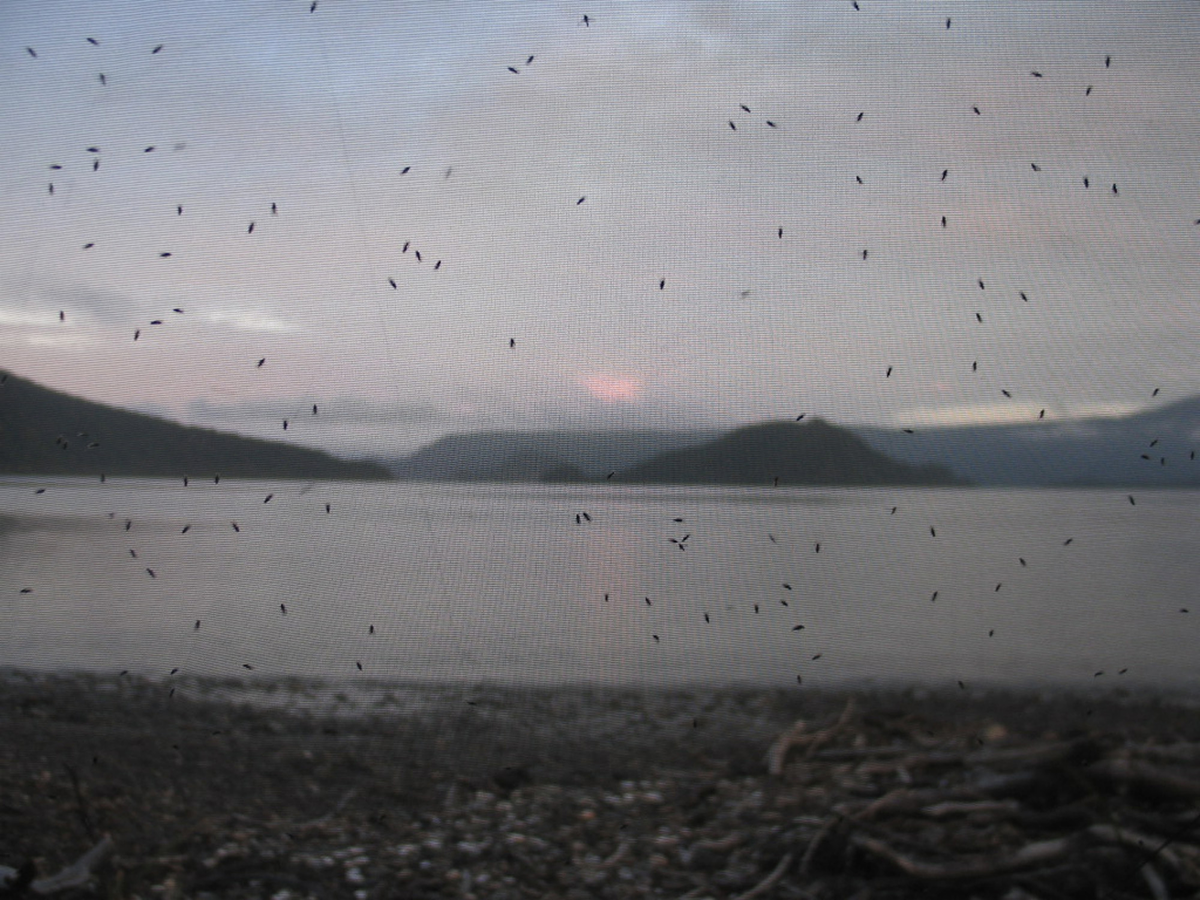
Mick: I don’t think nature’s presence is something that needs to be made human – though personality metaphors can be helpful. Being swept down in an avalanche taught me we’re not equal partners in this. It’s a bit like a flea on a dog’s back, and me as the flea giving all these attributes to the dog, when really the dog’s just going to bite me and chomp me without so much as a second thought.
This is why I ended up going off into the hills on my own so much. It wasn’t because I was lonely. Rather, I just wanted to hang out with nature as a small thing with a big friend who didn’t really notice me, if that makes sense. I would love just spending a whole day sensing this big presence without having to put it into language. I could feel the weather and make decisions without actually having to verbalise, oh, I think it might rain, oh, I think the wind’s coming up, oh, I think I should wait for better visibility before crossing the pass. Silence, yes, but not emptiness. I’d just be the animal I am, moving without words.
And that’s why I like design, because, again, it’s a time in which language plays second fiddle. It’s making, drawing, and connecting, with words just one of the playful tools we can call on.
What’s next
Simon: Where are you going now?
Mick: I like doing stuff. I’m not a person steeped in the nuances of philosophical positions in landscape. I’ve found some really useful ideas and spent a lot of time exploring how they can be useful. I live in a country that I love and a place that I love, so my focus is how do I contribute in that place in a useful, meaningful way.
Two things especially stand out for me now.
Our public conservation lands are the size of Denmark and Switzerland combined. We have enough taxpayer resource to fund about 2,800 DOC staff, and it’s naive for us to believe that so few people working alone can deliver on our nature conservation ambition. We have five million people who live here, four million people who visit, and over 100 million people who eat of what this land produces. How do we activate that community to support the conservation mission? And it’s not just our lands: with our oceans and Antarctic territories, as a country we govern 2.4% of the planet.
We really need to master how to bring us all together about what we love, rather than fight over what we disagree on. When the kitty gets low, as it seems to be at the moment, there’ll always be a few that say, hey, there’s a pantry here we could take a bit more from and no one would notice. I think it’s a view that comes from the limits of our imagination, not the limits of nature’s ability to provide for us in ways that can make us all thrive.
My motivation is how do you take that sense of community that restored the Ararira wetland country-wide, where everyone is contributing and growing something, getting a sense of identity and value through that process, and nature is going from strength to strength.
At the other end of the scale, we live on a 45-hectare place just outside of Ōtepoti that was a rundown farm when I got it some 34 years ago. I’ve watched it change from pasture to gorse to broom, with the neighbours complaining about what we were doing to it. Now I walk through a six-to-eight-metre canopy of mānuka and kānuka, and some of the old podocarps, and underneath them there are just so many miro and mataī seedlings. So I enjoy just being in this place, maintaining the tracks, and it watching me get old as it grows more and more vibrant, and what will be far beyond my time.
Simon: It’s also a validation of local agency, of doing what you can, where you are, when you are.
Mick: Yes. And the other thing I have to say on what’s next – one of the things I did pick up at architecture school was that the best architects did their strongest work in their 70s and 80s. So it’s still ahead of me!
Simon: You’re looking forward.
Mick: I’m still looking forward.
__________
Designing with Nature ($48) is out now. Stockists include Unity Books Wellington, Scorpio Books in Christchurch, and selected booksellers. You can also order online at wildlab.org.nz – for a limited time, LAA readers can use the code LAA2026 to receive a $10 discount. Shipping is included for all non-rural addresses.
__________
Editor’s note: In recent years Mick’s focus has turned to developing the design and research group WildLab and its work across Aotearoa New Zealand to support nature-positive projects with communities, iwi, industry, and emerging designers.
Prior to Designing with Nature he has co-edited three books of selected essays on landscape themes - all published by Otago University Press.
M. Abbott and R. Reeve (eds.), 2011. Wild Heart: the Possibility of Wilderness in Aotearoa New Zealand.
J. Ruru, J. Stephenson and M. Abbott 2010 (eds.), 2011. Making our place: exploring land-use tension in Aotearoa New Zealand.
J. Stephenson, M. Abbott, and J. Ruru (eds.), 2010. Beyond the Scene: Perspectives on landscape in Aotearoa New Zealand.
Mick is a member of the New Zealand Alpine Club, the New Zealand Conservation Authority, and the New Zealand Geographic Board.