Music & the City: A provocation for Place, People, and Possibility
“It’ll be underground, really well ventilated, with a sprung wooden dance floor in the style of a basketball court or an old ballroom, so it’s nice on your knees and legs. A world-class sound system. Disco balls. The bar is off to the side, so people can drink and talk or move onto the dance floor. A really nice entry and exit, and a beautiful green room for performers to decompress before and after.” —Martyn
______________________________
by Nick Kapica
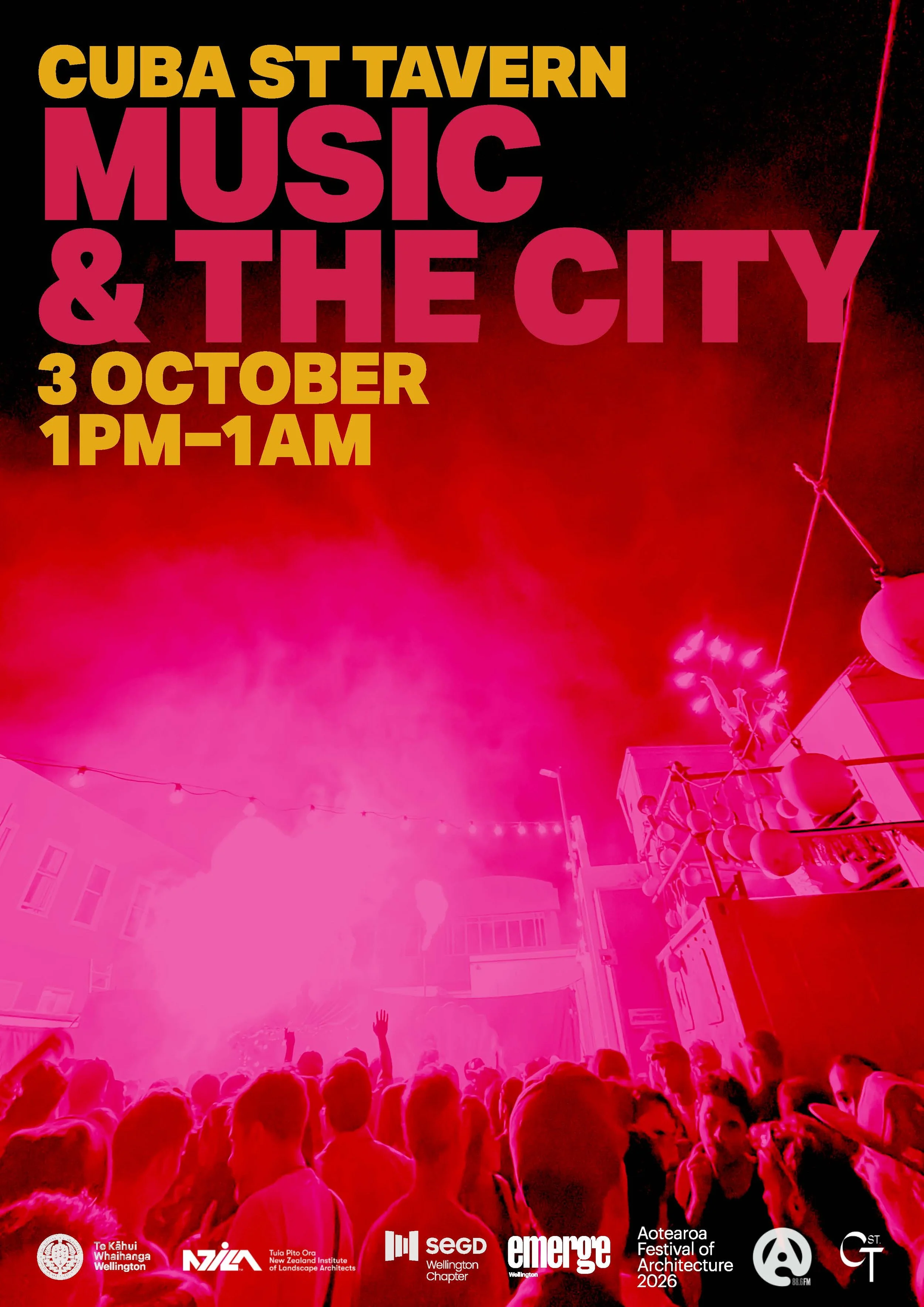
& the City is a collaboration of the New Zealand Institute of Architects, the New Zealand Institute of Landscape Architects, and the Society for Experiential Graphic Design.
As part of its urban-shaping and design event series in Te Whanganui a Tara Wellington, the collaboration was extended to include RadioActive.FM to explore Music & the City, marking the final weekend of the Aotearoa Festival of Architecture. (The previous themes were Highway & the City and Models & the City).
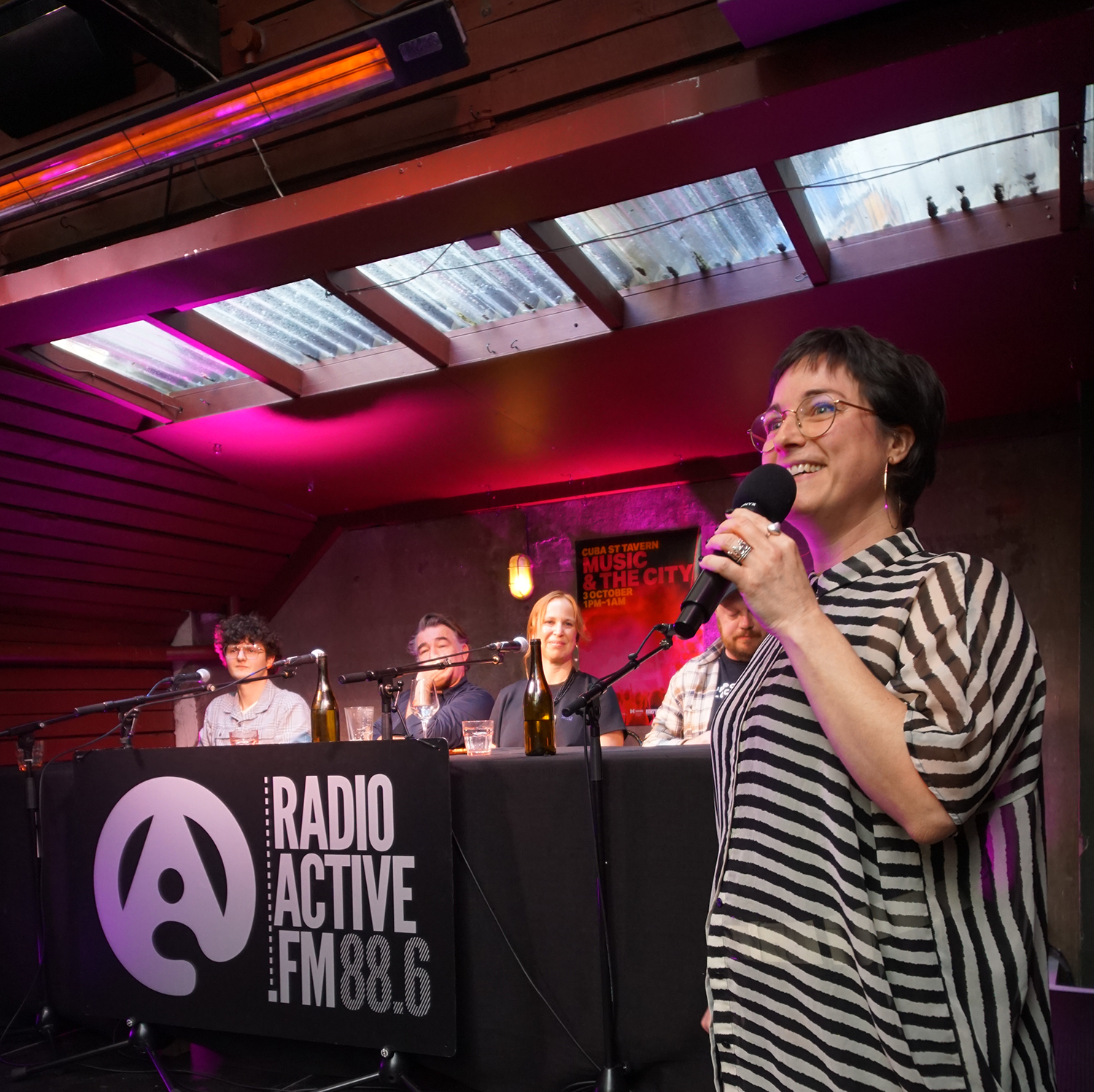
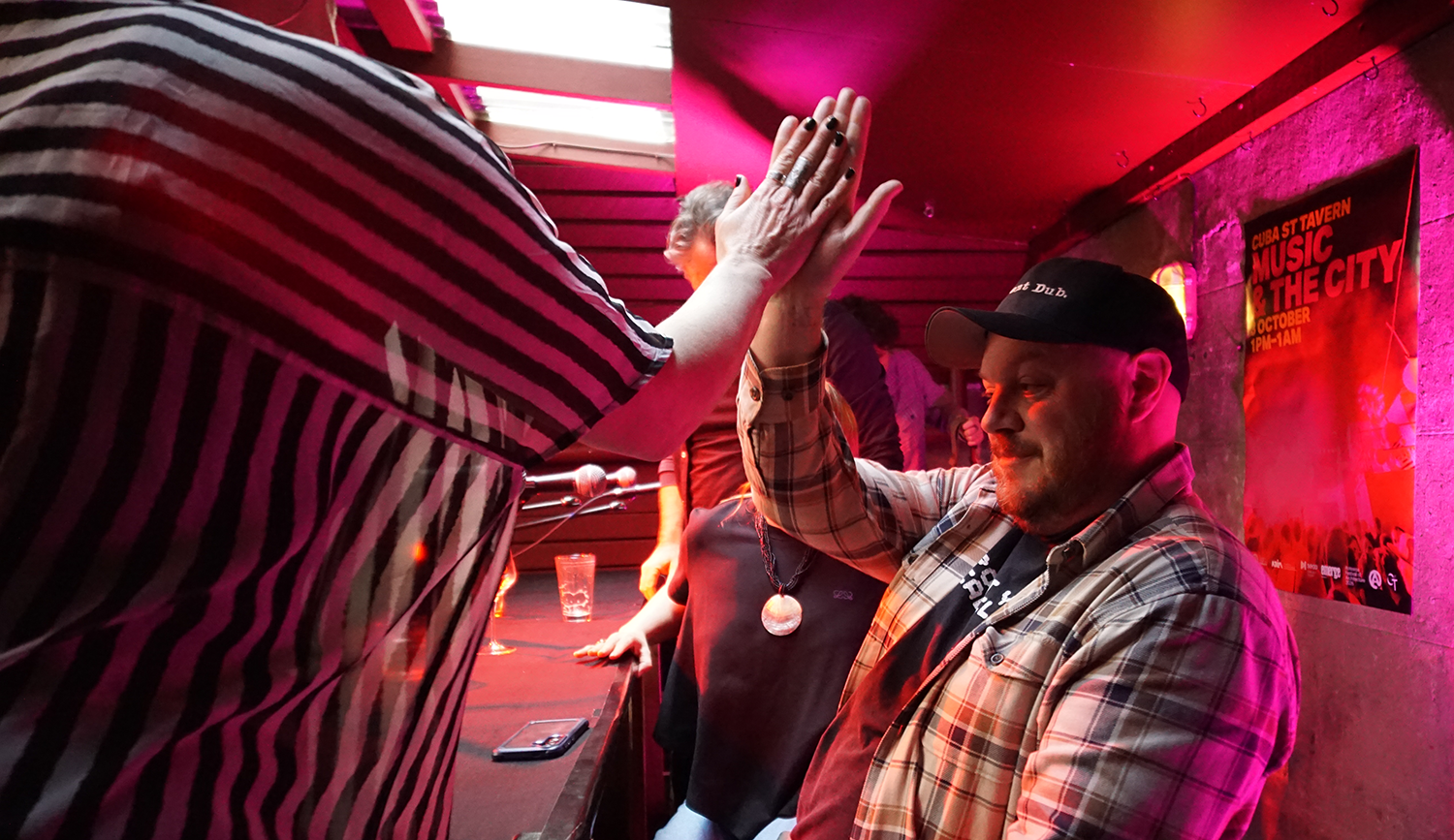
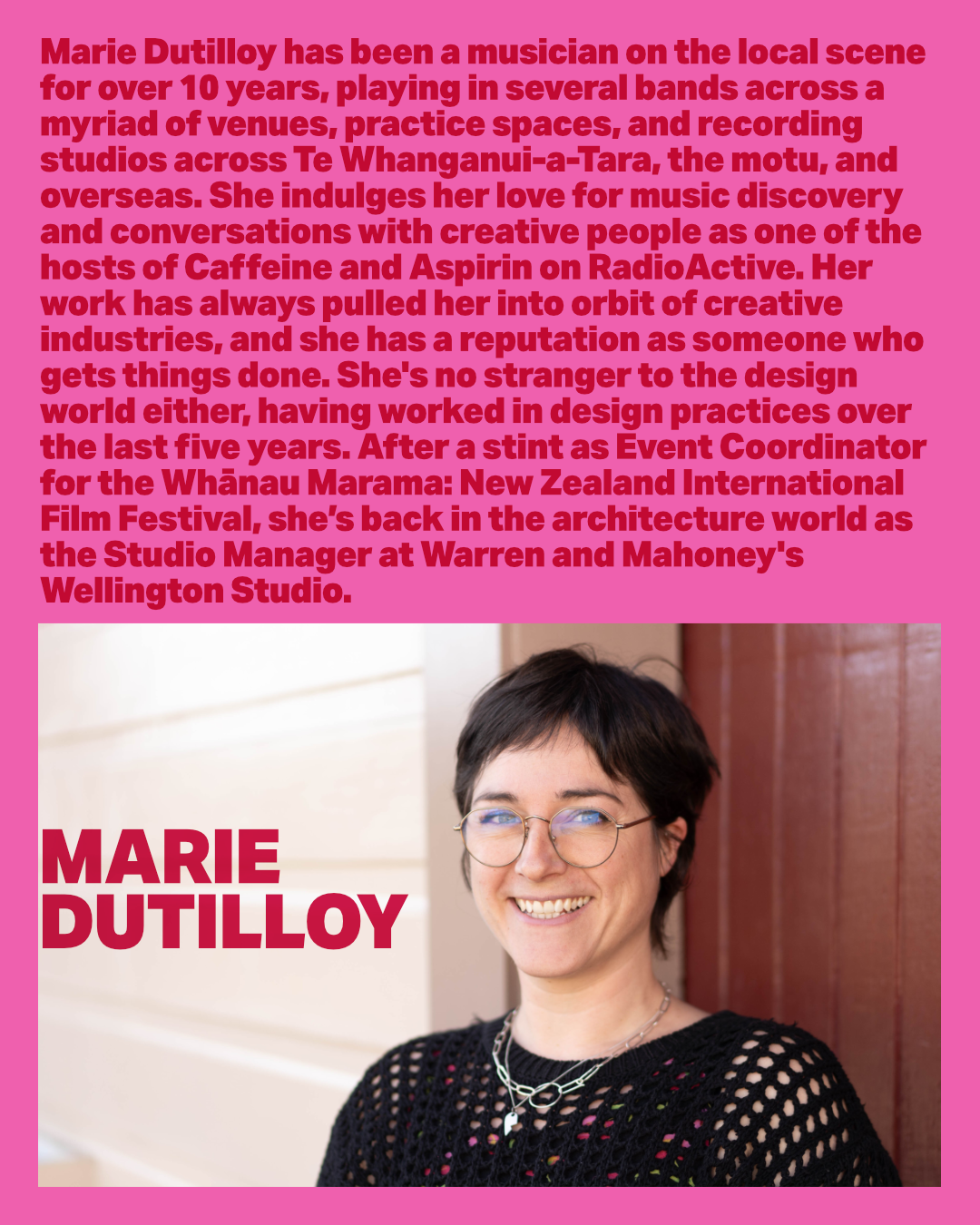
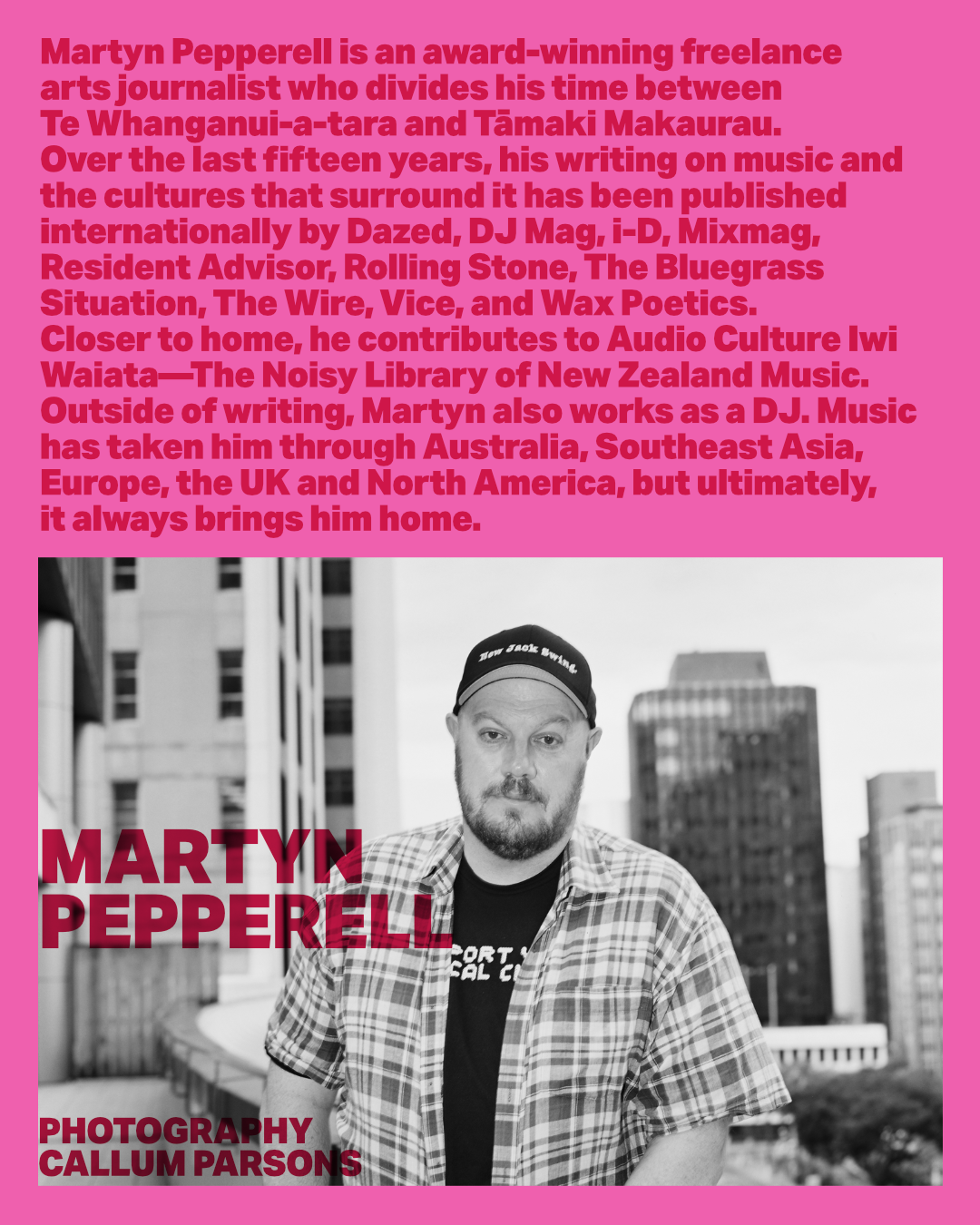
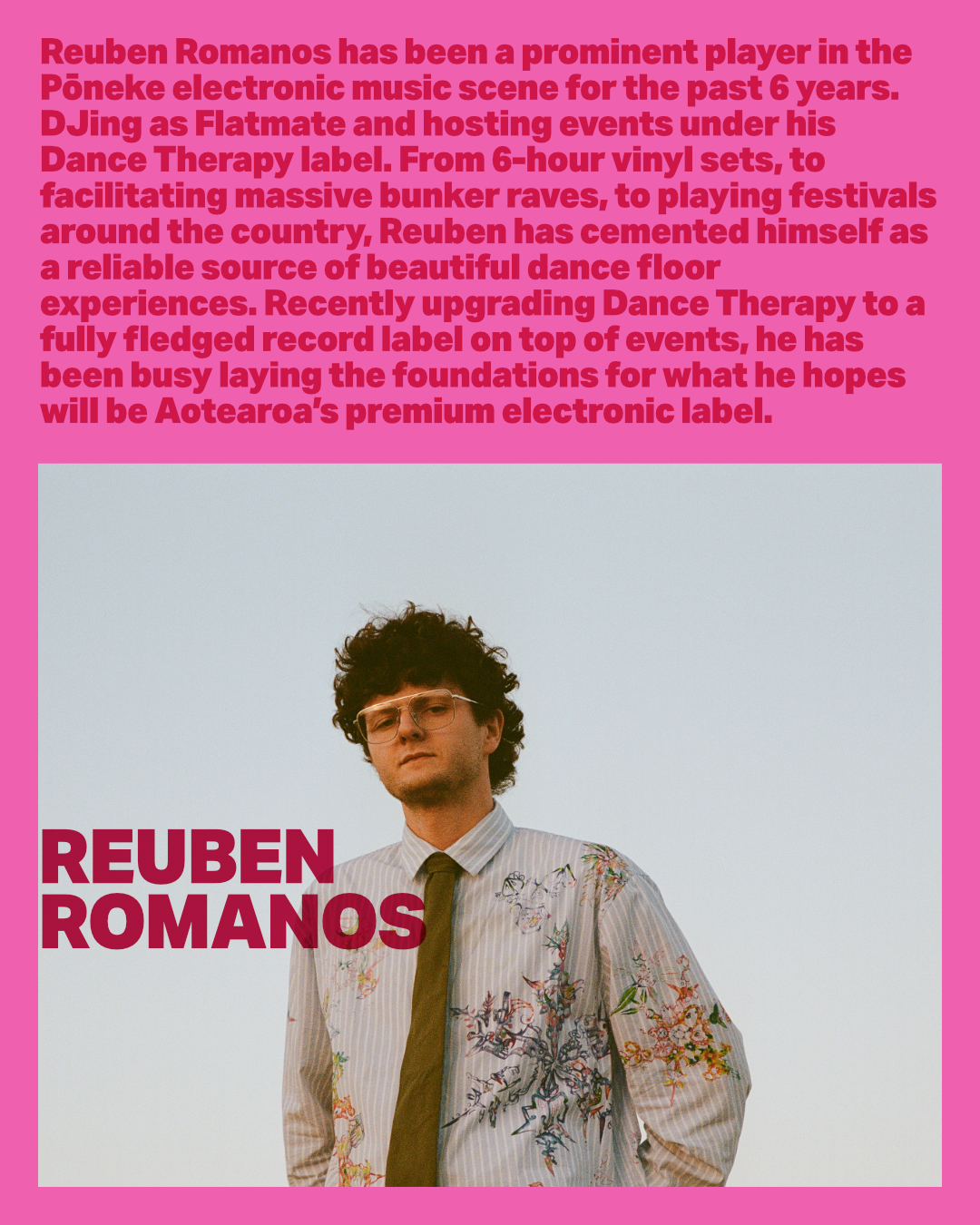
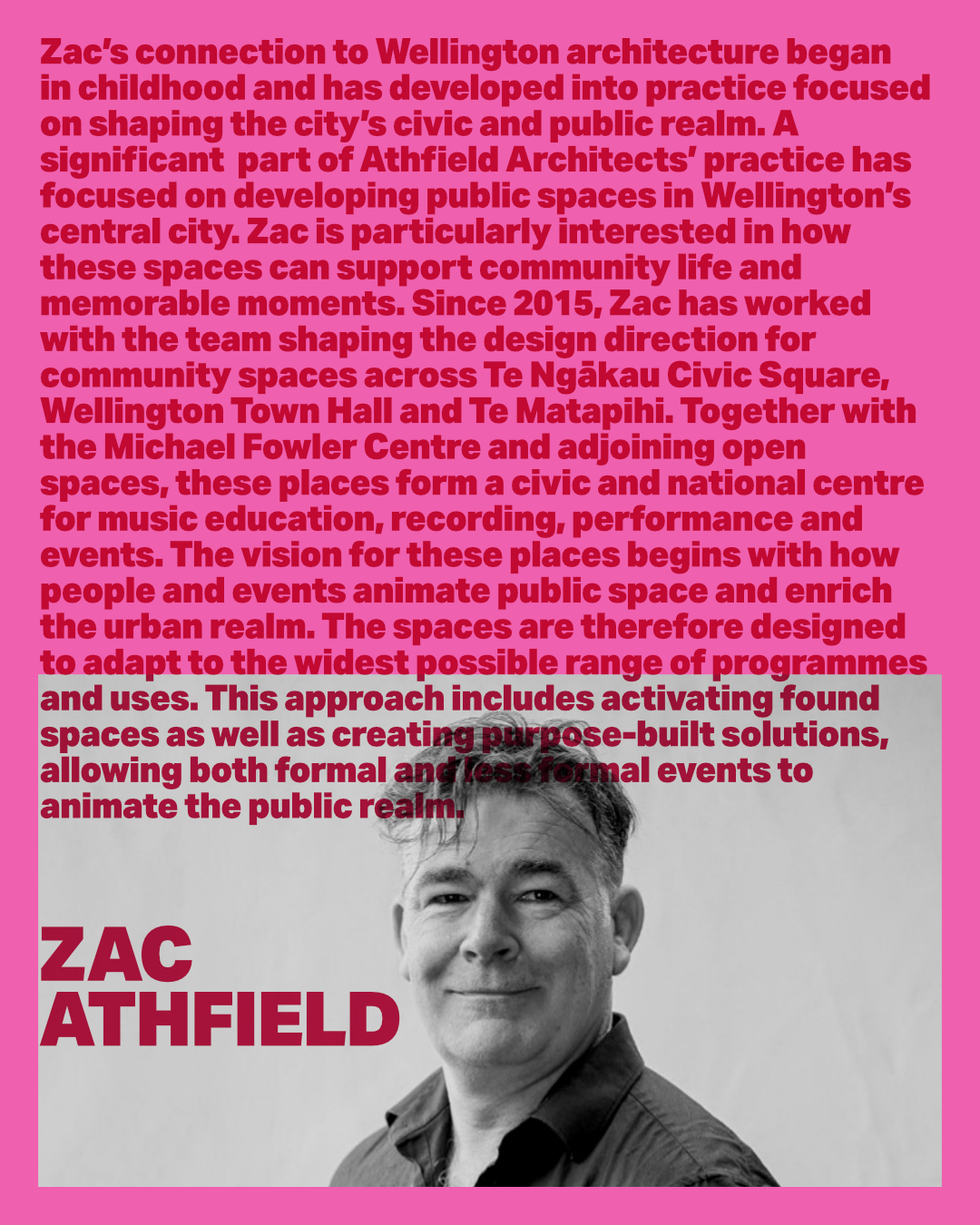
At this latest event on Saturday 3 October at the Cuba St Tavern, DJs played from 1pm through to 1am. A pause from the music mid-way provided time for a panel discussion hosted by Marie Dutilloy (pictured above) with Reuben Romanos, founder of Dance Therapy and DJ Flatmate, Zac Athfield of Athfield Architects, Rahine O’Reilly, co-owner and operator of Meow and Meow Nui and freelance art journalist and DJ at large Martyn Pepperell.
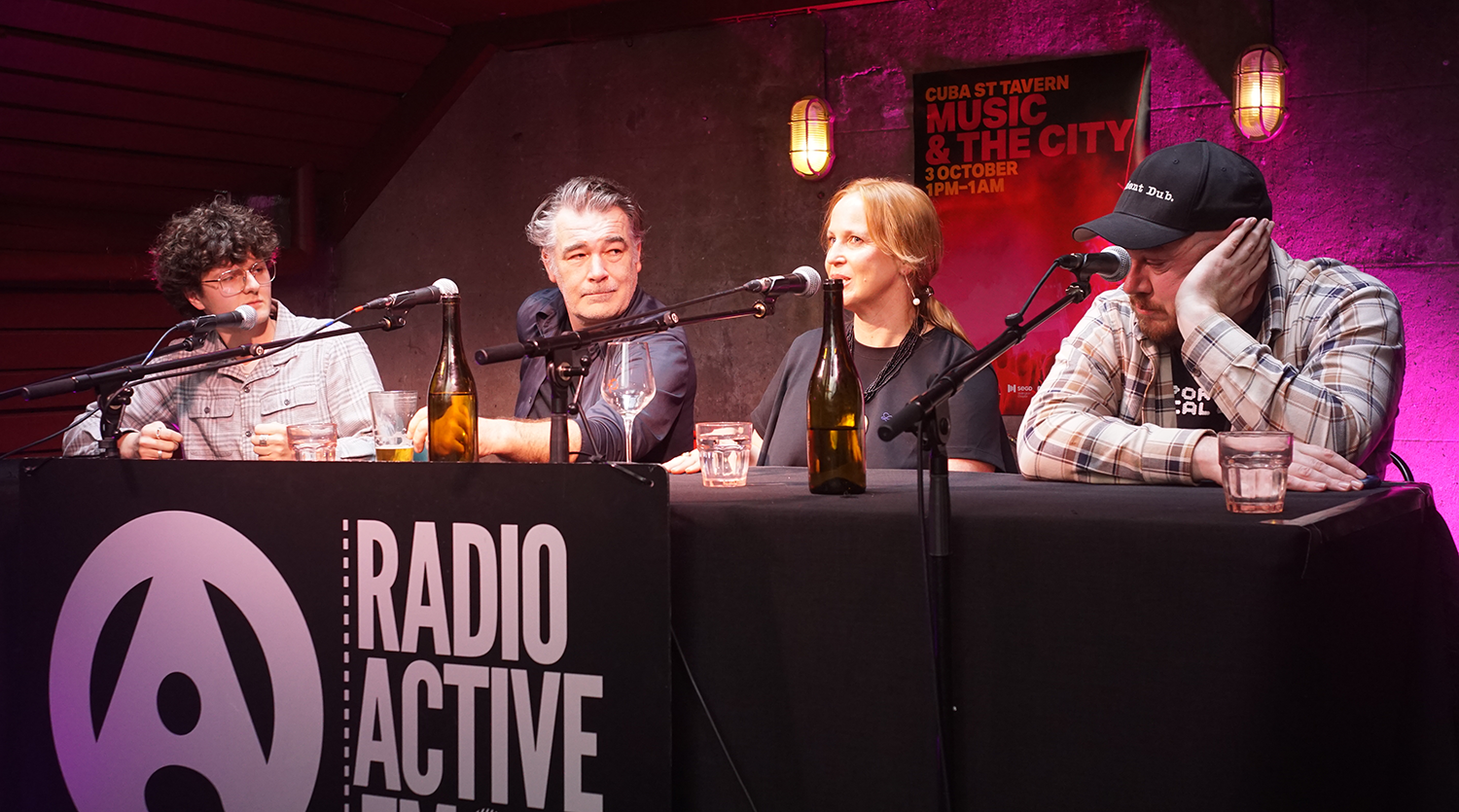
The Capital city is fortunate to have a dedicated set of recorders and protectors of the genius loci at hand like Geoff Stahl, whose paper titled Mapping the wax and wane of a ‘creative capital’: A personal reflection on 20 years of researching music making in Wellington, Aotearoa/New Zealand, gave us somewhere to start. Marie distilled the discussion into three prompts: Place, People, and Possibility.
This is what we discovered.
Cultural space is revealed, not built
On the question of place, cultural space doesn’t exist until people use it. How a space is occupied defines what it is, and music sits at the most passive end of the spectrum that runs from performance to architecture.
“Cultural space is only cultural space when it is revealed. Music is a witnessing space more than a performing space. Most of the time it’s the architecture that’s absorbing what’s happening in that space.” —Zac
There is a tension between perfect and improvised
Pristine, expensive, perfectly constructed rooms can feel hollow when empty. Underground raves work for the opposite reason: gritty spaces become warm and inviting because of the people filling them.
Some spaces are built for the purpose, and others are found and made to serve it. Custom builds can be extraordinary, usually the vision of one person with serious resources. But repurposed space has been part of the fabric of Wellington’s music scene for fifty years. A venue in a building designed as a church shows how it works: audiences walk in to Meow-Nui and feel joy, and artists feel the respect the space gives them.
“You almost want a space that’s designed with a bit of room. Maybe 70 or 80% of the way there at most, and then the rest of it is filled with the community and the music.” — Reuben
“There are spaces created for you, like skate parks, and natural environments that feel perfectly designed for skateboarding but weren’t intended for it. It’s similar with music spaces.” — Martyn
Memory is connected to discovery and the spaces in between
What people remember from these places comes from finding them. Discovery happens on foot, not in a car, so it helps to be in a city you can walk around. Venues shouldn’t become McDonald’s, blaring a big logo at passers-by. Seeking them out down an alleyway is part of the joy.
Then there are the spaces in between. Commissions often define a destination, but the real value lies in what people find on the way. Activating streets and lanes, letting buskers play and letting sound bleed from a loud venue across the road all draw people in. It takes disruption as well as opportunity.
“A lot of your memories are created by discovery. It’s not always the stuff that’s in your face. It’s that little corner that catches the light perfectly, or going down an alleyway and finding a little bar with music.” — Rahine
It also takes conversation. Landlords, council and venue owners need to be talking to each other, so everyone knows which spaces are available, for what period, and what can be done with them. Once that is happening, the gaps start to fill in, and a city that can be walked becomes a city that can be discovered.
Making a living, and making room to create
Music is nothing without people. Architecture sets the stage, and music decorates the time people spend in it. But the best building is nothing without people doing something in it. What turns a space into a cultural one is the experience, and experience depends on artists who can afford to keep making it.
That is where the cost of living bites. The idea that creative work should be poorly paid does real damage, because it leaves the field to those who can afford to earn less.
“There is such a myth that people in creative arts should be paid less. What that does is leave it to the middle class and above, because they’re the ones who can afford to earn less and survive.” — Rahine
The consequences show up late in a career. Mid-career and late-career artists have created experiences night after night for huge numbers of people, and many now face serious precarity.
The “starving artist” story has put a lot of them in dangerous situations. The word “community” can make it worse, because it is often a polite way of asking someone to work for free. The people doing the work, the composers, the musicians and the people running the door, need patronage and fair commissions, and they deserve to be celebrated for it.
Money and creativity are not opposites, though. The financial acknowledgement should come from the community value of the work, not be separated from it. Audiences can feel when a venue has got this right.
“You can smell from a mile away when the people aren’t the first priority.” —Reuben
Meow, which is co-owned by a fellow panelist, was the example given: you can tell the music and the people come first. The same freedom shows up at BATS, where a show can be terrible and still be a pleasure, because someone loved it enough to put it on. When art and community are kept apart from the financial pressure, people go to a gig to escape the burdens and structures of everyday life, and the venue celebrates that.
Creative people also need an audience that meets them halfway.
“What creative people need is curiosity. They need a curious audience. Being willing to experience new things and take risks means they get a chance to try something new out. Maybe some of these people evolve into something pretty awesome.” —Martyn
A city that’s allowed to be loud
There is tension between city and suburb mindsets. Venues struggle to get licensed because one or two apartment residents complain about noise.
“Residential noise levels in a city centre? That’s what the suburbs are for. It’s a city. It should be loud.”
—Martyn“At 11pm it isn’t noise, it’s sound, and sound is a beautiful thing.” —Reuben
Some of the complaints may not be about volume at all. People who feel left out of a city’s cultural life can resent what they hear through the wall. If a wider cross-section of the city goes to live music, there are fewer people on the outside complaining about something they aren’t part of.
“Wellington can be a city where most of the population go to live music at least a couple of times a month. Some people will go three times a week, and then everything will work.” —Rahine
Live music also has an advantage that recorded music can’t match. In a world of AI-generated tracks, the only way to be sure you’re experiencing the real thing is to be in the room.
The venue ecosystem
Wellington has no shortage of people who want live music. Look at the new rooms opening, the community halls in use, and the bunkers and parks that hosted outdoor parties over summer, and the numbers add up. The question is whether the city can give those people the experiences they want, regularly.
Venues, for their part, already collaborate more than most would expect. Independent operators describe themselves as siblings who sometimes get annoyed or jealous but share a goal.
“Independent venues in Wellington, we all work together and we’re always ringing each other. We’re siblings. Sometimes you get a little bit annoyed, sometimes you get a bit jealous, but our shared goal is more people going to music.” — Rahine
There is a national network of independent venues, and electronic music promoters run a group chat to coordinate gigs. It wasn’t always this way. There used to be venue wars, until more women got involved and the rivalry started to look pointless.
One suggestion goes further: if a gig turns out more popular than expected, a corporate operator should be able to move it to a bigger room without penalty, so one venue gets the full house and the other is covered for the empty night.
The venue operators on the panel described a different experience with the council. Their attempts to open a conversation with the city, they said, have been met with silence, and their view is that the council could join the network and be as generous as the rest of the sector. No council representative was on the panel to respond. Meanwhile the risk falls on individuals: the people opening rooms of 100 or 350, running events in halls and chapels, and fighting for licences.
Possibility: using the spaces we have
The room described at the start is a vivid answer to the question of what Wellington is missing: a purpose-built space designed around the people using it, and set underground so as not to disturb those who aren’t.
Perhaps the city already has something like this. Beneath Te Ngākau sits a 1,400 square metre space, seven metres high, with a ceremonial mountain above it and a story about the discovery of Aotearoa.
“… that space doesn’t quite have a purpose, but it’s just there, it could be an art space for six months, a theatre space for two months, a gig space for two weeks, a social venue for a speech. Accessible space.” — Zac
That is the 70 to 80 per cent idea in practice: a generous room, finished enough to be inviting, and completed by whoever uses it next. It also depends on access.
One panelist encouraged the council to extend licensing hours, because later licences let the nights breathe. You could see live music early, go on to a house party or a club, and catch a theatre show; even shops could open later if there were people around to visit them. Until licensing hours extend, it is hard for existing spaces to be financially viable.
Among the ideas for what to build, a simpler proposal surfaced:
“I don’t know that we constantly need to be building stuff. We just need to use our spaces better.” — Reuben
Past contributions from Nick Kapica for LAA include:
2026 - Starting an early countdown to Te Wiki o te Reo Māori
and from 2020: