Less Time Searching, More Time Designing
New Ozbreed Resources for New Zealand Specifiers
Planting specification is always a bit of a juggle.
You’re trying to get plants that look right, suit the site, meet the brief, work together, and won’t turn into a maintenance headache six months after handover. And most of the time you’re doing it under pressure, with partial information and a programme that’s already behind.
That’s why we have pulled together a set of new New Zealand specifier resources to help speed up plant selection and make it a bit easier to stand behind your choices.
See options faster, understand the differences from one plant and another, and find exactly what you need that will actually work on the ground.
Genus Selection Guides: visualising differences
Plants in the same genus can look similar in a nursery line-up, but behave quite differently once they’re in the ground.
The Genus Selection Guides are simple visual comparisons that show differences in scale, foliage, form, density and texture between related plants. Use them to decide which cultivated variety will actually give you the visual result you’re after.
A fine, compact weeping tuft doesn’t read the same as a broader, more architectural form. A soft grey shrub sits differently against paving than a dense green mass. A mounding plant might work at the front of a bed, while an upright form might be providing screening or structure.
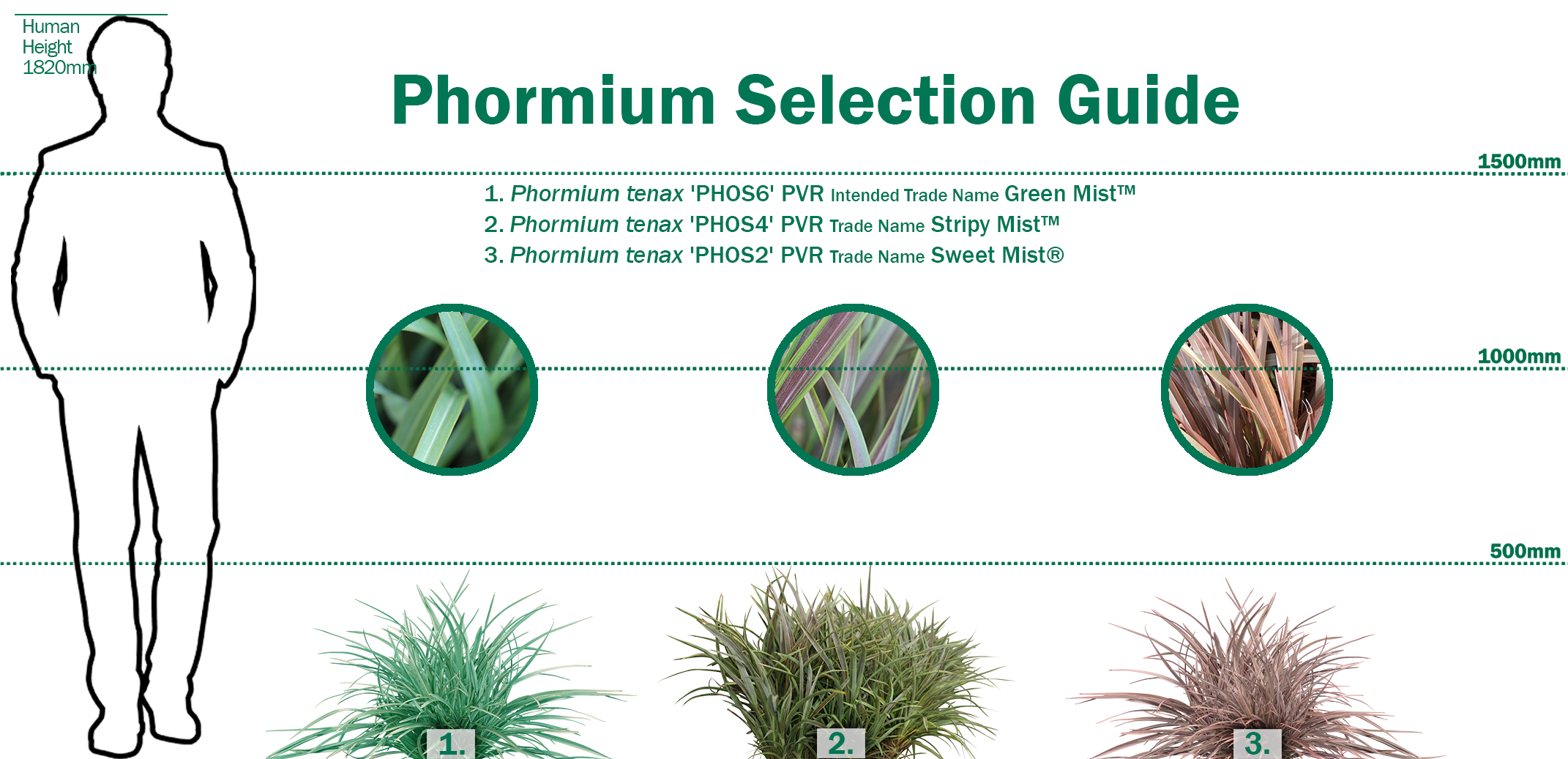
Genus Height Guide for Phormium
Top Plant Lists: function before form
Sometimes you just need to solve a specific job.
The Top Plant Lists are short, practical groupings based on common landscape functions. They are there for when you know what the planting needs to do, but don’t have time to work through every possible option.
Roadside planting, for example, isn’t just about ‘tough plants’. They might need to handle heat reflection, sightline control, occasional vehicle stress, exposure, and often neglect.
A bioswale needs plants that can handle wet and dry cycles without constant intervention. Cascading plants need to soften edges, spill over structures, and help hardscape feel less rigid.
The lists help bridge the gap between site specific challenges, to a sensible shortlist faster, so you can spend more time designing rather than searching.
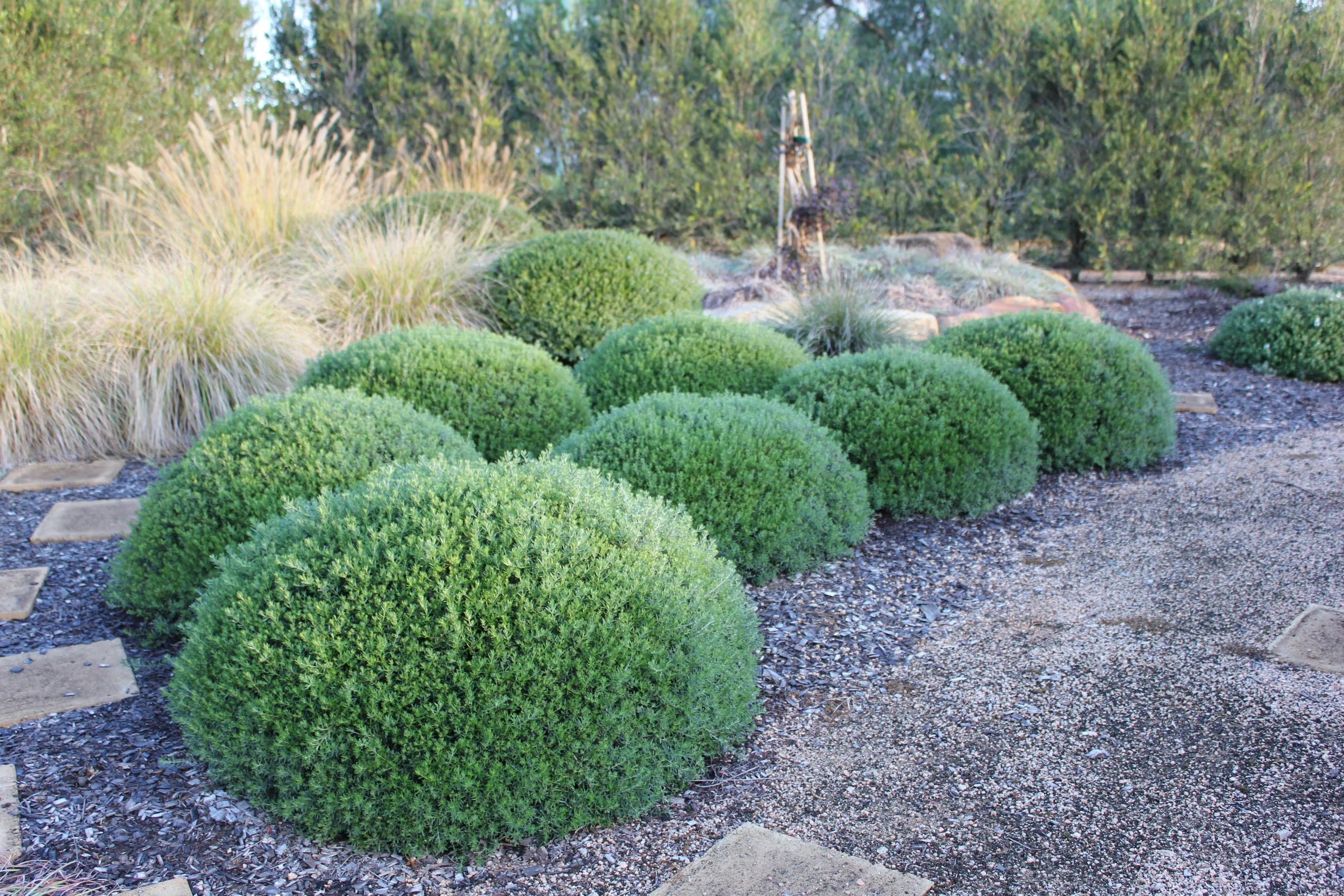
Mundi™ Westringia domes
Plant Palettes: plant communities with purpose
Urban planting schemes with a limiting factor either work together, or they don't.
Our new Plant Palettes are cohesive plant communities curated for purposes like erosion control above and below the soils surface, coastal aesthetic with frontline salt spray tolerance, or the tropical look for NZ's generalised climate.
Each plant community is specifically curated to complement each other in the same position, both functionally and aesthetically.
The NZ Coastal Palette, for example, is about achieving the coastal look with plants that can tolerate frontline salt spray. It mixes low and upright forms, fine and bold foliage, flowering groundcovers and structural shrubs so the planting reads as a system, not a collection of individual plants.
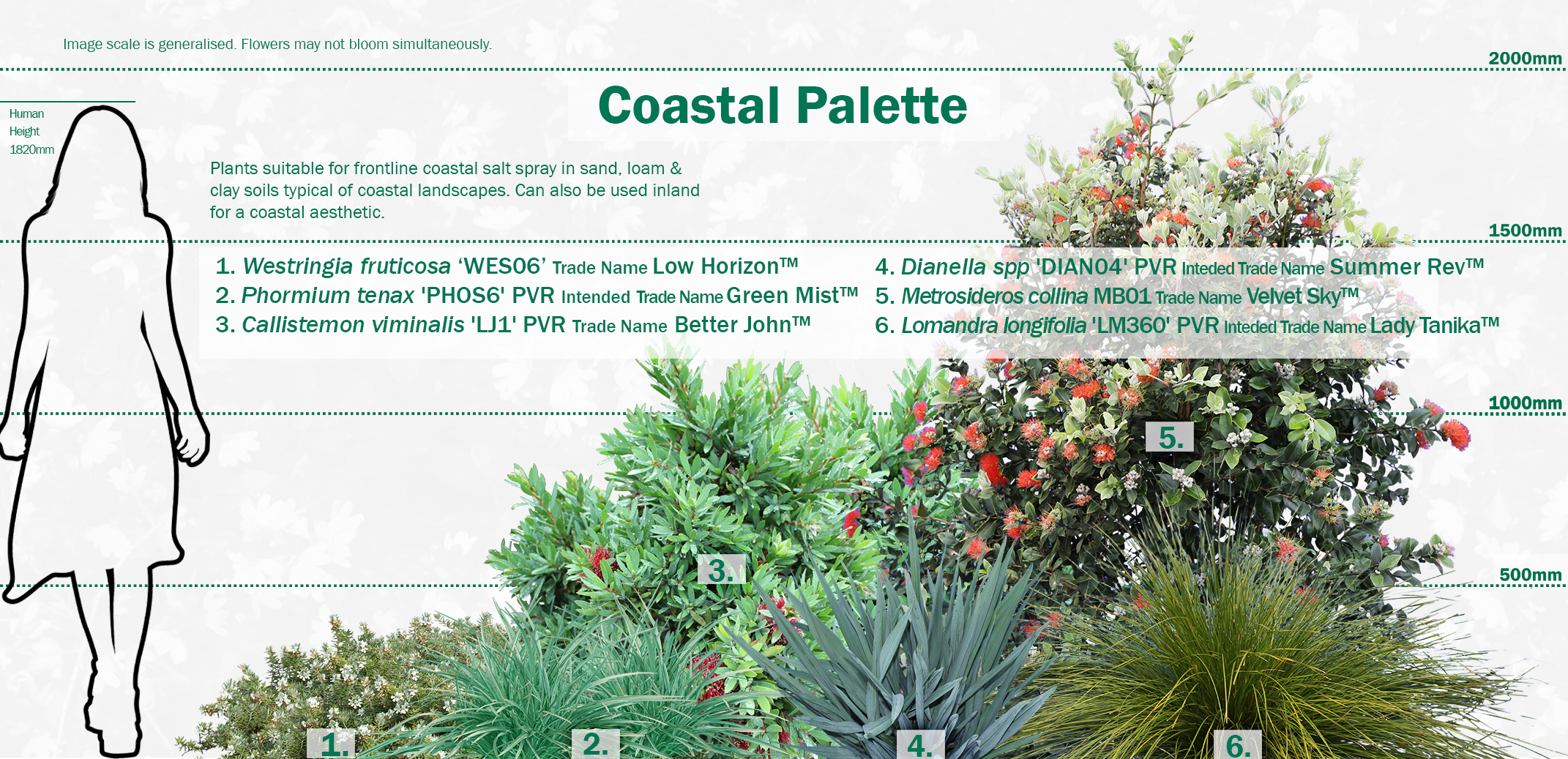
Coastal Palette for frontline NZ positions
Tools for how designers actually work
Trawling through individual plant factsheets to solve every design problem adds significant time to the plant selection process. Ozbreed's new resources are curated specifically for NZ specifiers.
The Genus Selection Guides help you see differences in form and texture. The Top Plant Lists help you start from a function instead of a name. The Plant Palettes help you visualise and build mixed planting that has a clear structure and purpose.
You can find these resources on Ozbreed.co.nz, in the Resource Centre.