Focus on planning reforms: Navigating between a rock and a hard place
There has been no let-up for the Environmental Legislation Working Group of the New Zealand Institute of Landscape Architects Tuia Pito Ora (NZILA) as it mounts a call to action for responding to the newest round of legislation currently on track to replace the Resource Management Act, namely the Planning Bill (PB) and the Natural Environment Bill (NEB).
Joining Voices Together
As flagged here in December, the group convened an important hui on the law reforms for Tuesday 20 January in Wellington.
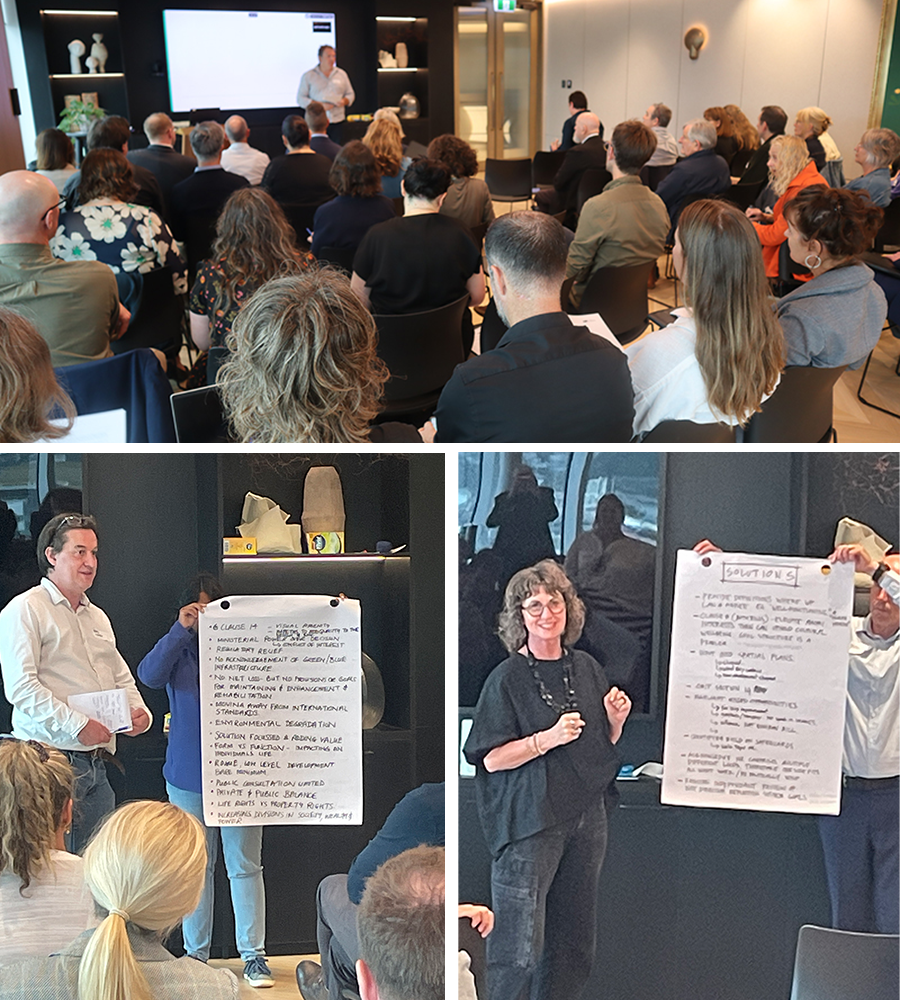
By the end of the day this well-attended event saw more than 40 landscape architects consider as many ramifications of the proposed legislation as possible.
Four workshops were conducted in relatively quick succession in the afternoon to elicit a cross-section of views that were top of mind for the profession in terms of positives in the proposed laws, concerns and challenges, potential solutions and positioning for the submissions stage and beyond.
As well as hearing from featured speaker Simon Court, Parliamentary Undersecretary for Infrastructure and RMA Reform, the morning consisted of informative presentations by representatives from NZILA, venue hosts Russell McVeagh, the NZ Planning Institute (NZPI), Resource Management Law Association (RMLA), Urban Designers Institute Aotearoa (UDIA), the Environmental Defence Society (EDS) and government relations advisors Capital.
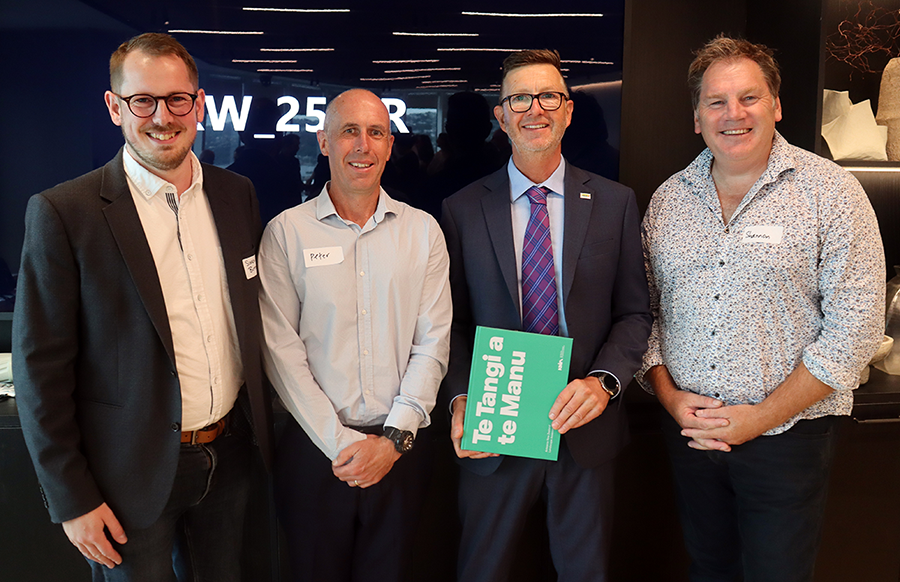
Left to right: Simon Button, NZILA Deputy Chair; Peter Kensington, NZILA Environmental Legislation Working Group Chair; ACT Party MP Simon Court, Parliamentary Under-Secretary - Infrastructure and RMA Reform; and Shannon Bray, ELWG member and hui organiser.
Mr Court was present for NZILA’s opening presentation, jointly spoken to by Simon Button and Peter Kensington. This clearly made the case for not excluding landscape assessment provisions and for the expert role of landscape architects in bringing their design and solution focused skillsets to “ensuring the best outcomes for people and nature”.
In turn Mr Court described the proposed new legislation as a “decisive break from the past”, reiterating how its permissive powers will be wielded, and its shift to “codify much of what now needs to be litigated” and away from values such as visual amenity.
He expressed a view that adapting to the change in process represented by a hard-wired, top-down new planning system could open up room to find smarter, more strategic ways to do things connected to environmental planning and to “save money for clients”. He foresaw continued opportunities for delivering “really good design outcomes for infrastructure” oriented to customer needs and investments in resilience.
Daniel Minhinnick, an environment and planning specialist at Russell McVeagh, brought some humour to the day with his presentation title: ‘A lawyer's view on a developer's view on the government's view on views’.
He quickly zeroed in on clause 14 of the Planning Bill as the “elephant in the room” for landscape architects given the number of effects deemed to be outside the new law’s scope and that must be disregarded by practitioners prior to the granting of consents. In particular he selected:
14(1)(a) the internal and external layout of buildings on a site (for example, the provision of private open space)
14(1)(e) the visual amenity of a use, development, or building in relation to its character, appearance, aesthetic qualities, or other physical feature
14(1)(g) views from private property
14(1)(h) the effect on landscape
Note: Different perspectives and related updates will continue to appear on LAA in 2026; for example see Why Landscape Still Matters Under The Planning And Natural Environment Bills
The Call for Submissions Is Urgent
The fast-looming deadline for submissions to Parliament’s Environment Committee is Friday 13 February, after which the select committee has been instructed by the Hon. Chris Bishop as Minister responsible for RMA Reform to report back to the House by 26 June (at the latest) with its recommendations for amendments or otherwise. The members of the Environment Committee are:
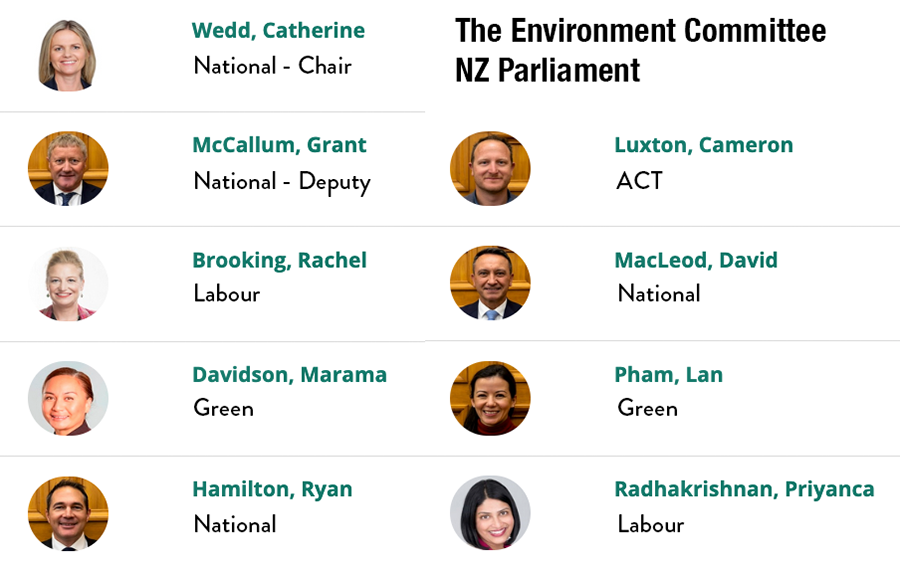
In his brief First Reading speech the Minister gave a succinct rendering of the intent of the legislation.
The Planning Bill and the Natural Environment Bill have been designed deliberately. The Planning Bill: for planning and regulating how land is used, developed, and enjoyed, and another for protecting and enhancing the natural environment. Not every development has an environmental impact and does not need to be caught up in a natural environment regime.
National MP Grant McCallum added some nuance, stating “if the Planning Bill is about enabling things to get done, the Natural Environment Bill is about making sure we do them responsibly”.
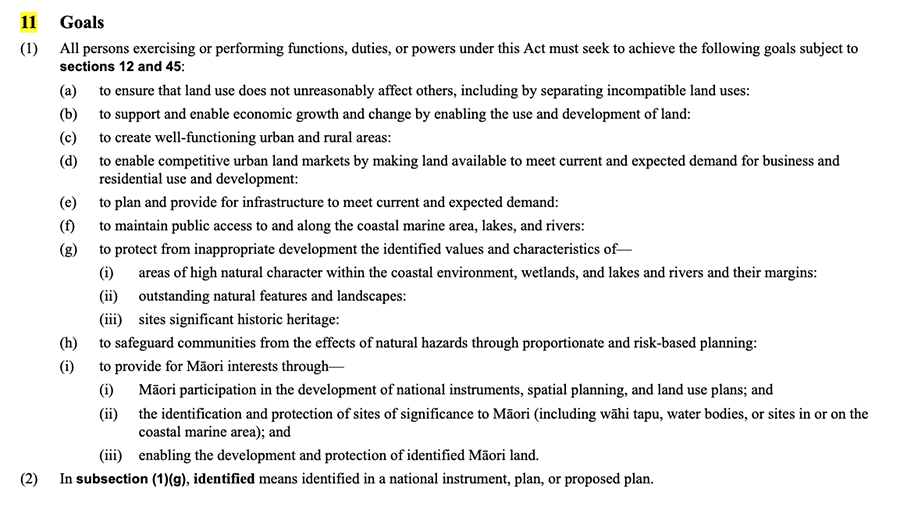
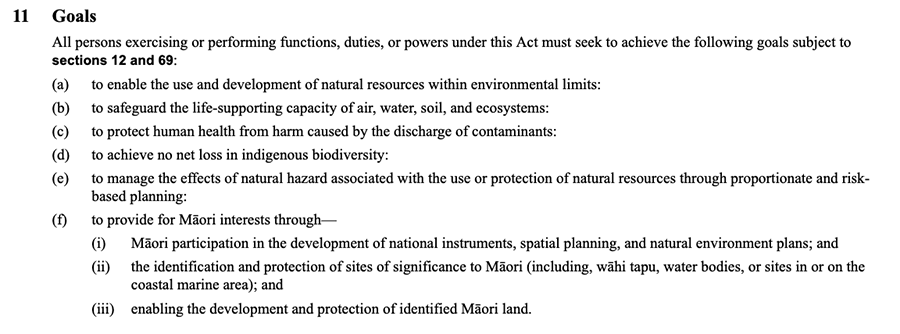
Chris Bishop’s summary of what to focus on in the legislation put a heavy emphasis on the goals set out in each bill.
Mr Bishop said “if it’s not in the goals, it is not part of the new planning system. The goals do not have an inherent hierarchy within them. No goal is more important than another,” adding “we’ve taken great care to ensure that each and every one is required to be in the primary legislation. I have no doubt that the select committee will kick that around, and I look forward to that”. When he spoke to the NEB he also said “we’re up for the debate around the wording of the goals and exactly how they manifest in practice”.
Speaking as deputy chair of the Environment Committee, Grant McCallum said “I'm looking forward to hearing from sectors and individuals as they make submissions on this bill, and I encourage them to do so. Your insights will help us get this right, so the system works for communities, for business, and for the environment”.