Keeping the flame alive: Lyrck Maiava
Two factors have kept the flame of Unitec graduate Lyrck Maiava's passion for entering the landscape architecture profession burning brightly: her personal determination and the mentorship of people like Unitec senior lecturer Sue Wake.
When LAA first spoke with Lyrck - pronounced 'lyric' - in the first quarter of 2025, she was, in these tightened times, finding it difficult to land a pathway into the profession, while at the same time remaining encouraged by the feedback she received on her final research-by-design project.
Her project, 'Decolonised Play', was influenced by an earlier article she authored, 'Are Designers Diluting Culture? Connecting Theory to Practice', published in the Unitec School of Architecture’s Asylum Magazine [link to PDF] in 2024.
This coincided with Lyrck being selected as best student presenter in the Pacific strand of the ITP Rangahau & Research Symposium, followed a year later in December 2025 with an award for best student presentation at the 58th Annual International Conference of the Architectural Science Association (ASA) held at the University of Melbourne.
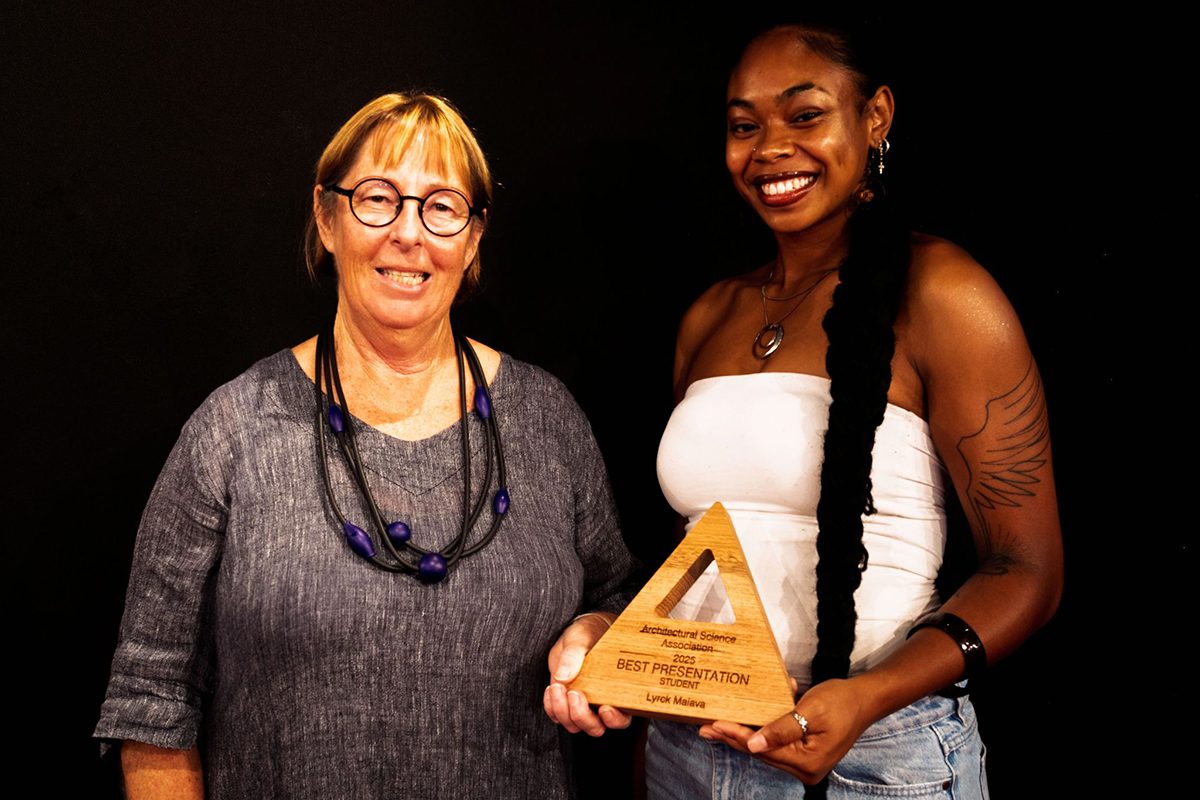
Sue Wake and Lyrck Maiava in Auckland. (Lyrck's uncle, Demian Maiava, travelled from Sydney to be with her in Melbourne for her ASA presentation).
Culture has been integral to Lyrck's personal life and academic journey. Born in Auckland to parents of Niuean, Samoan and Nigerian heritage, she has also lived in Niue and Australia - experiences that have shaped her perspective and design thinking.
As featured on the Unitec news page earlier this year, Lyrck found researching decolonisation has brought her "a sense of relief, peace and understanding".
"It was reassuring to see such positive responses from peers, lecturers, mentors and international scholars at the conference [in Melbourne], all agreeing on its importance and the need for continued discussion.”
Her paper, co-authored with Sue and titled 'Making cultural connections through decolonising play' [link to PDF], examines colonisation and decolonisation through a Pacific lens focusing on Niue. It addresses the universality of play with the aim of designing a decolonised play space that preferences nature, youth and culture.
The issue of homogenous and uninspiring public urban spaces shaped by colonial paradigms informed the decision to apply decolonisation as the overarching design concept. While there is extensive research about both play and decolonisation there is little written that merges the two.
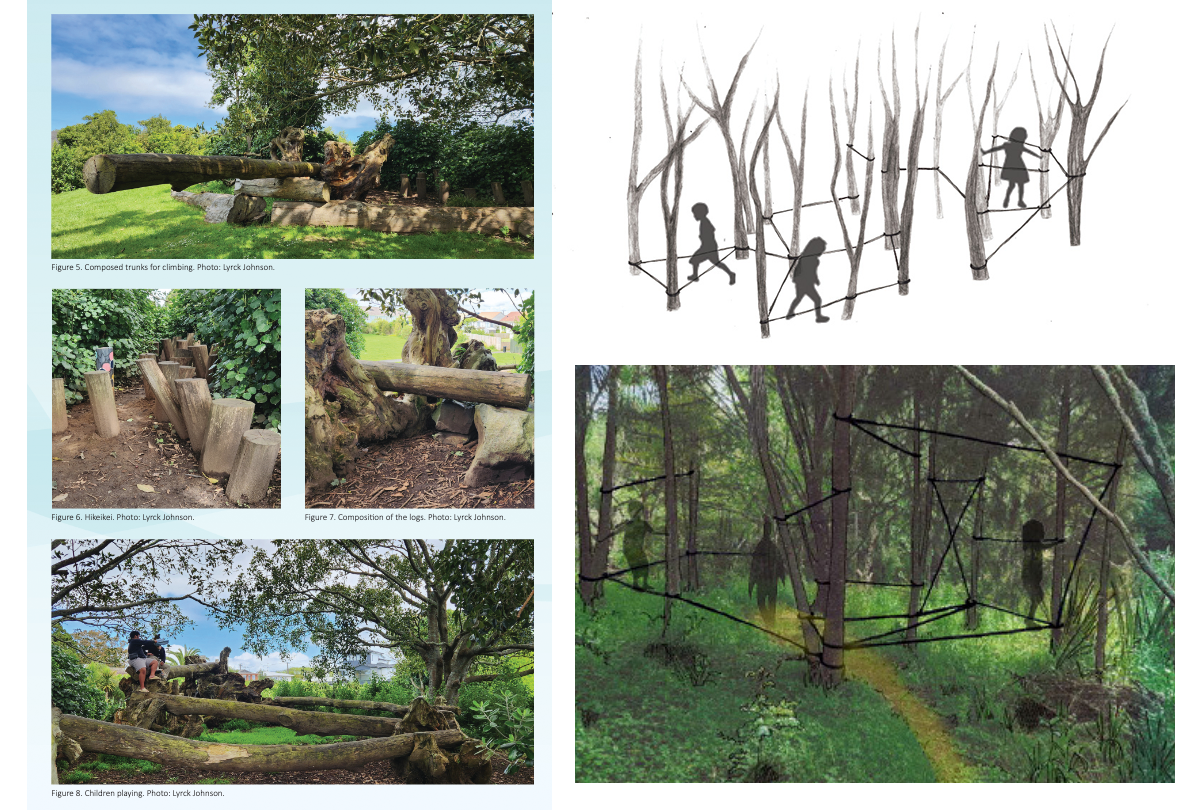
Some play zones scoped and illustrated by Lyrck for the Wiri Stream Reserve that was chosen for her design-by-research, were grounded in her memories of traditional Niuean games and on expanding the definition of play into less conventional equipment and structures and less scripted play moments. ‘Spirit’ and ‘essence’ are seen as defining elements in creating playspaces.
Sue Wake has specialised in designing children's environments, planting design, botany and ecology, and has a long term research interest in children and youth environments, especially their participation in design, environmental learning and engagement in natural and human-made landscapes.
Sue is a Fellow of the Architectural Science Association (ASA / ANZAScA) and has been a regular attendant at ASA conferences for a number of years. She rates the conference's focus on the user experience of architecture highly, adding "they're amenable about mixing it up".
"I was so impressed that Lyrck was up for travelling to and speaking at the event, made possible by Unitec, and so pleased I could support her to take a lead on this research".
Lyrck's drive to stay in a role adjacent to landscape architecture has seen her diverge into working at the Pukekawa Auckland Domain gardens as a Horticulturist since November.
One of the former 100 & 200 metre athlete's ultimate goals is to work as a landscape architect in Niue - getting there may not be a sprint but we have a feeling that she's sure to stay the distance.