The New Planning System and Urban Design
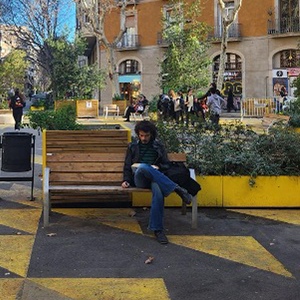
Urban designer Anthony (Ant) Vile shares his take on New Zealand’s planning reforms, looks across the Tasman to New South Wales and asks a fundamental question: How do we create a collective city when most of the land within it is privately owned?
Read More
Law change is an invitation to unintended consequences
Taking a stand on the need for thoughtful law-making: Do the effects of development stop at the title boundary? Are our lives confined to parcels of real estate? Aren’t new laws that separate ‘growth’ from ‘environment’ more likely to harm than help our economy?
Read More
Garth Falconer: The sad story of Shoal Bay
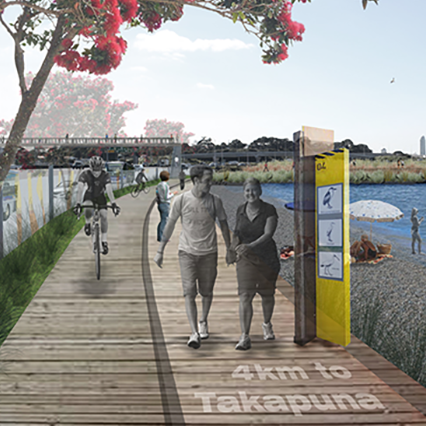
LAA contributor Garth Falconer puts his pen to work on the sad story of a forgotten landmark, renewing an argument that “with imagination and some determination, Shoal Bay could become one of Auckland’s great waterfront landscapes”.
Read More
Landscape, Subjectivity and Relevance
Is the distinctive contribution that landscape architects make something larger than legislation? In this thinkpiece, Shannon Bray, positions the profession’s long-term relevance on its ability to bring differing perspectives together and to explain why landscape matters in the first place.
Read More
Beyond masterplans: regional spatial plans will reward decision clarity, not beautiful ambiguity
With the progress of RMA replacement legislation fast approaching the end of its Select Committee stage, Matthew Prasad of Harrison Grierson offers a timely independent thinkpiece on the shift to regional spatial plans, and away from 'masterplans'.
Read More
Opinion: Time for resetting Cathedral Square
‘Outsider’ Garth Falconer puts forward a set of ideas for reconsidering the structure of Cathedral Square in Ōtautahi Christchurch. His proposition consists of what he describes as a “series of practical moves that could breathe new life into this cherished civic space”.
Read More
OpEd: Viewpoints on harvesting Tropical Rainforest Hardwood
The cumulative impact of logging, even when certified, raises significant concerns about the long-term sustainability of the Amazon Rainforest. Martin Thompson, of LMA Timber, offers his viewpoint on certification systems.
Read More
Danish Architecture Centre in Copenhagen
For a narrow archipelago, surrounded by much larger countries, the Danes show a quiet confidence in their non-hierarchical work culture and can-do approach to finding solutions.
Read More
Entertaining Magnificence - Vaux le Vicomte
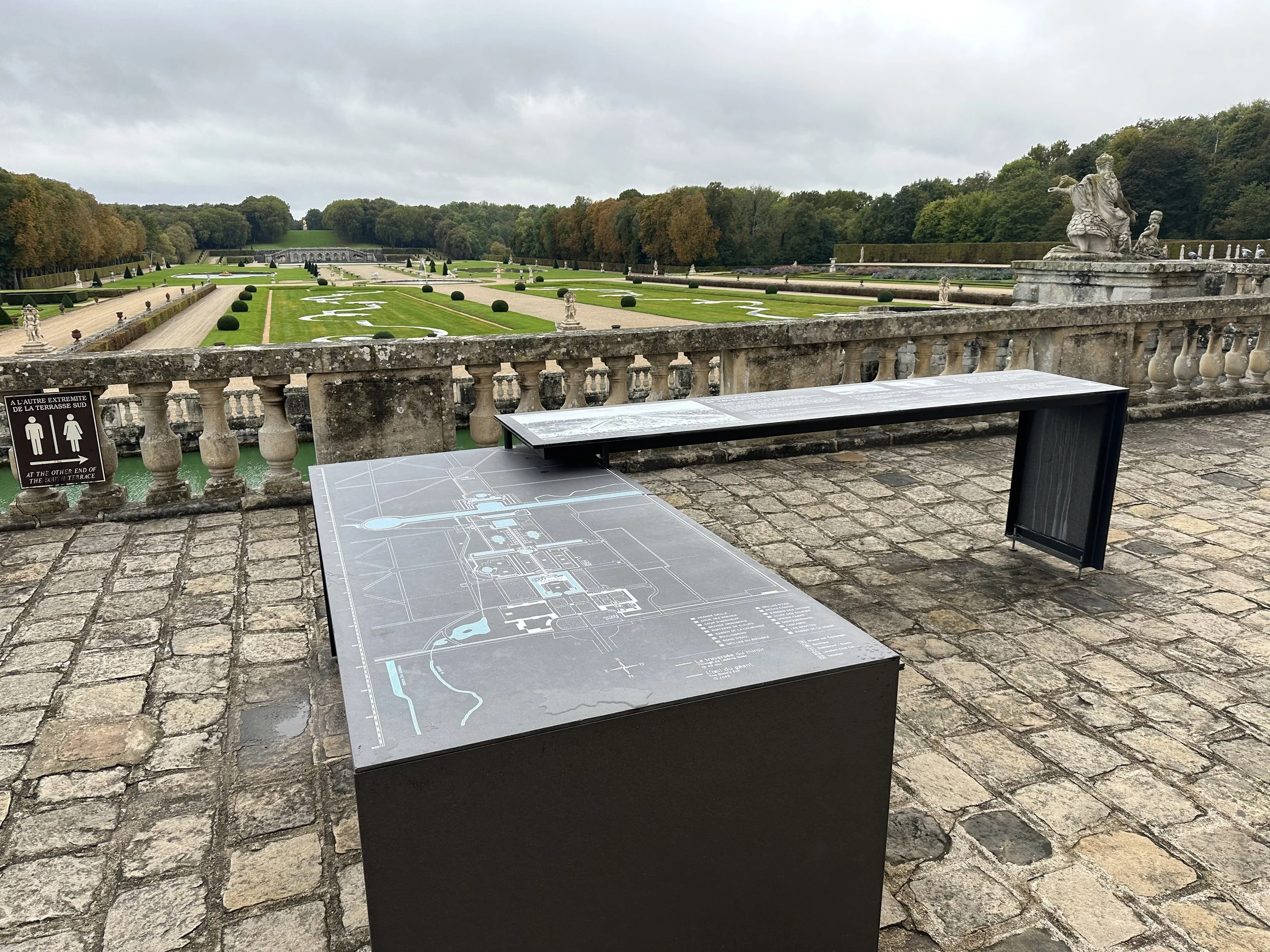
It’s a multi-layered wonder-filled story that has entranced me and brought me back after 34 years to a Chateau and grounds 55km southeast of Paris called Vaux le Vicomte.
Read More
What role do urban forests play in building resilience in a treeless biome?
Tamsin Faragher was recently invited to deliver a keynote address at the World Urban Forest Forum held in Washington D.C, USA. Initial puzzlement at why Cape Town would be invited – a treeless biome – turned to curiosity.
Read More
Garth Falconer - Report on the 75th IFLA Congress Stockholm and Nairobi
In this article, Garth Falconer shares his experience of the 75th IFLA Congress from his recent visit to Stockholm.
Read More
Everyday life: a lens to better shape urban form
Imagine a city seriously capable of looking after its inhabitants. One that allows them to build meaningful relationships and care for each other.
Read More
Place. Making.
Places already exist. They have their own qualities, no two the same. We live, work and play within them, and they’re a product of the layering up of land, people and culture.
Read More
Carey Duncan: Book review of An Essay on the Meanings of Place
Carey Duncan is a landscape architect and urban planner working out of Rabat, Morocco. She recently reviewed the book “An Essay on the Meanings of Place”, by John Dioxn Hunt. Read her article here.
Read More
An everchanging social and regulatory environment
Our profession is uniquely equipped to utilise design to enable cultural considerations, facilitate access and mobility, and foster gender inclusivity. These are measurable equity outcomes
Read More
Adaptive regeneration on the East Coast
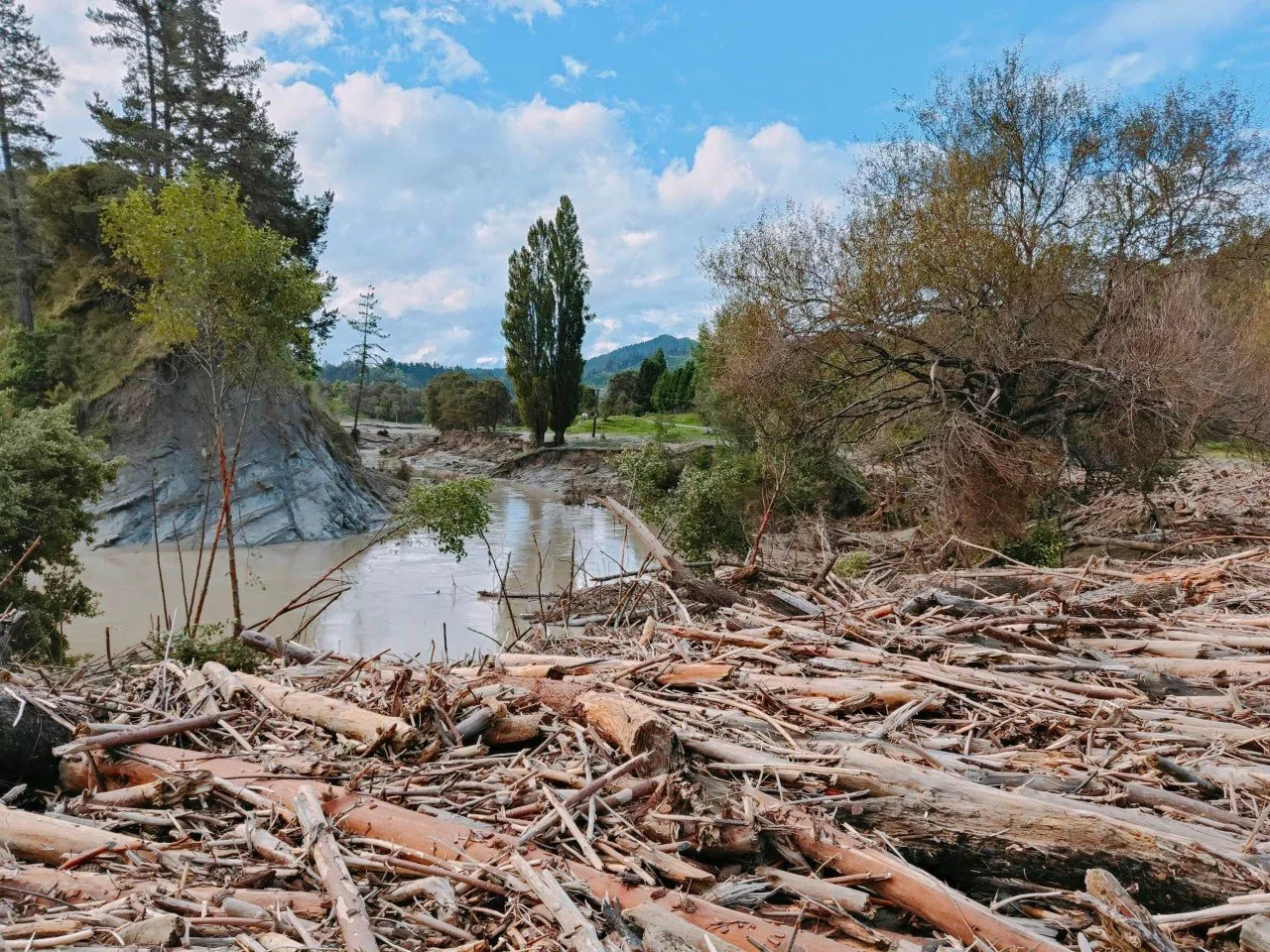
On the East Coast there is important and urgent work going on to respond and recover from flooding and the devastation caused by cyclones. Isthmus Principal Landscape Architect Lisa Rimmer lives in Tairāwhiti and has been thinking about how we could move beyond recovery to adaptive regeneration.
Read More
Auckland's Green Infrastructure
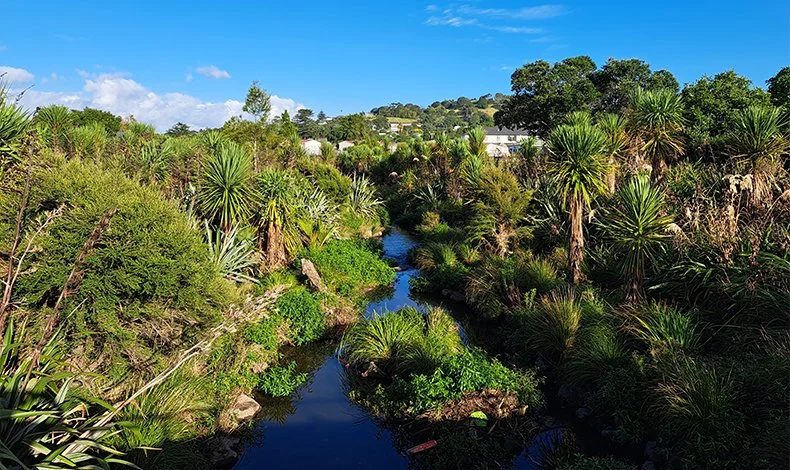
Auckland can be proud of efforts towards investing in green infrastructure, says Boffa Miskell landscape architect Mark Lewis who also says Resource Management reform should seek to support further implementation of blue-green networks.
Read More
Cyclone Gabrielle: Shannon Bray writes from Hawkes Bay
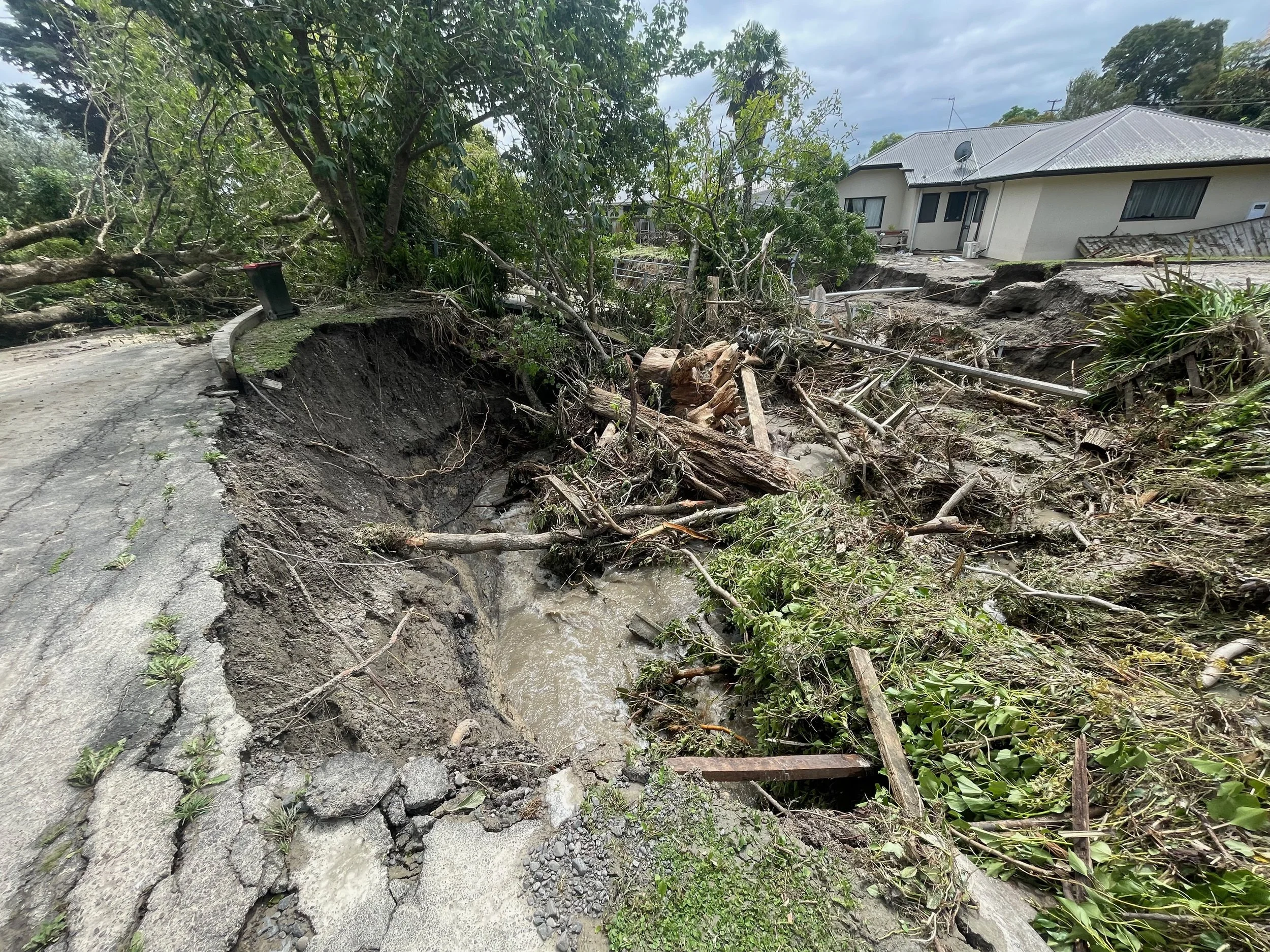
Climate Changed - Landscape architect Shannon Bray writes from cyclone ravaged Hawke’s Bay.
Read More
Northcote’s landscape infrastructure in action
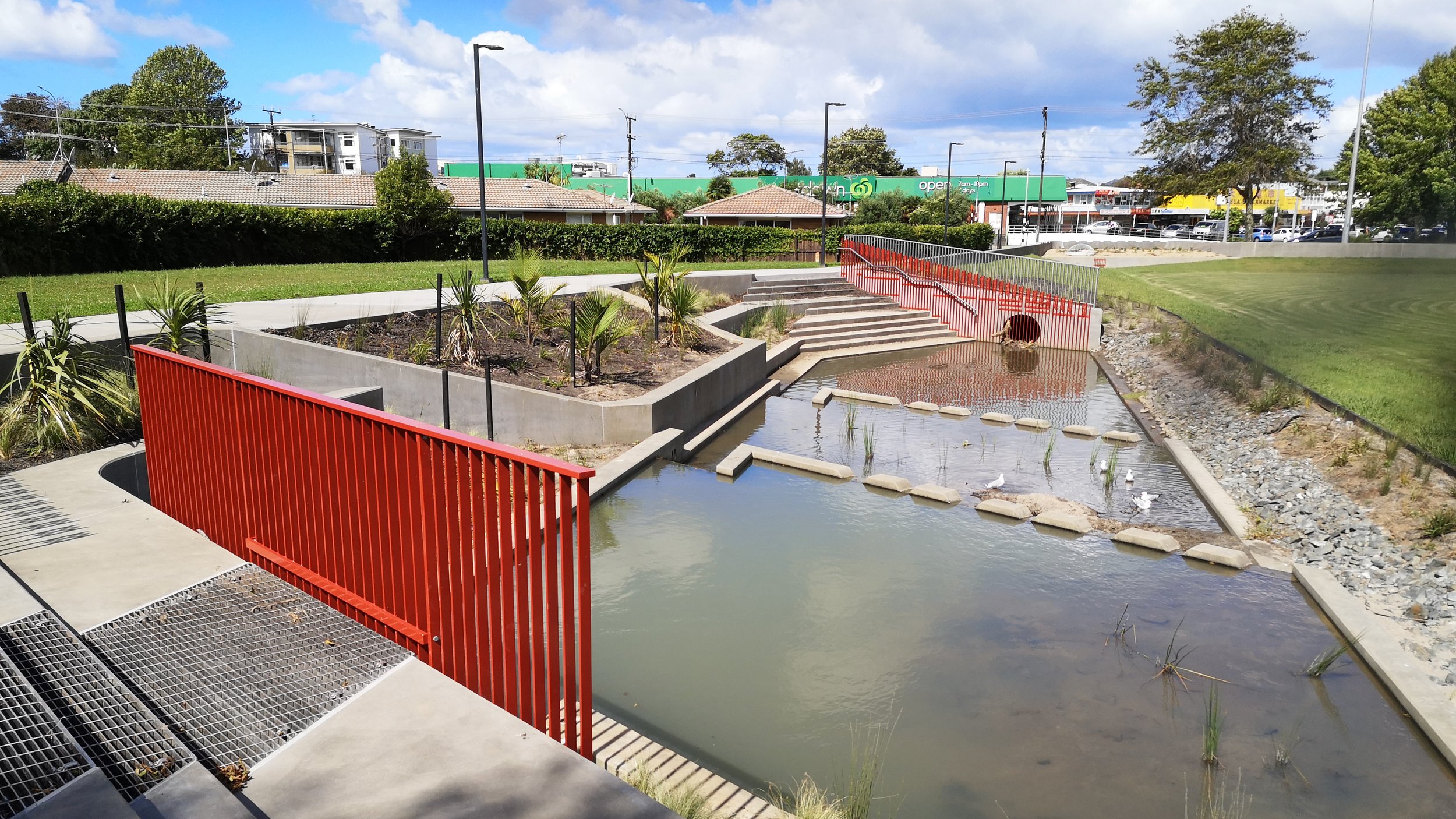
Traditional stormwater infrastructure—often found underground or at the periphery of urban centres—remains largely invisible until the moment it fails, writes Isthmus Senior Landscape Architect Zach Barker.
Read More
2022 NZILA Firth Conference: Climate reflections
“My funky concrete seat walls are cooking the planet.” I love this. They are not my words, they are the words of Martin O’Dea. Words that came from last month’s 2022 NZILA Firth Conference. I love this, because these words drive a stake deep into the heart of the habitual norms of landscape architecture. And I too, am guilty.
Read More